Is there more to Holst than the Planets?

This was the title of a presentation to the Society about this English composer

January 2024

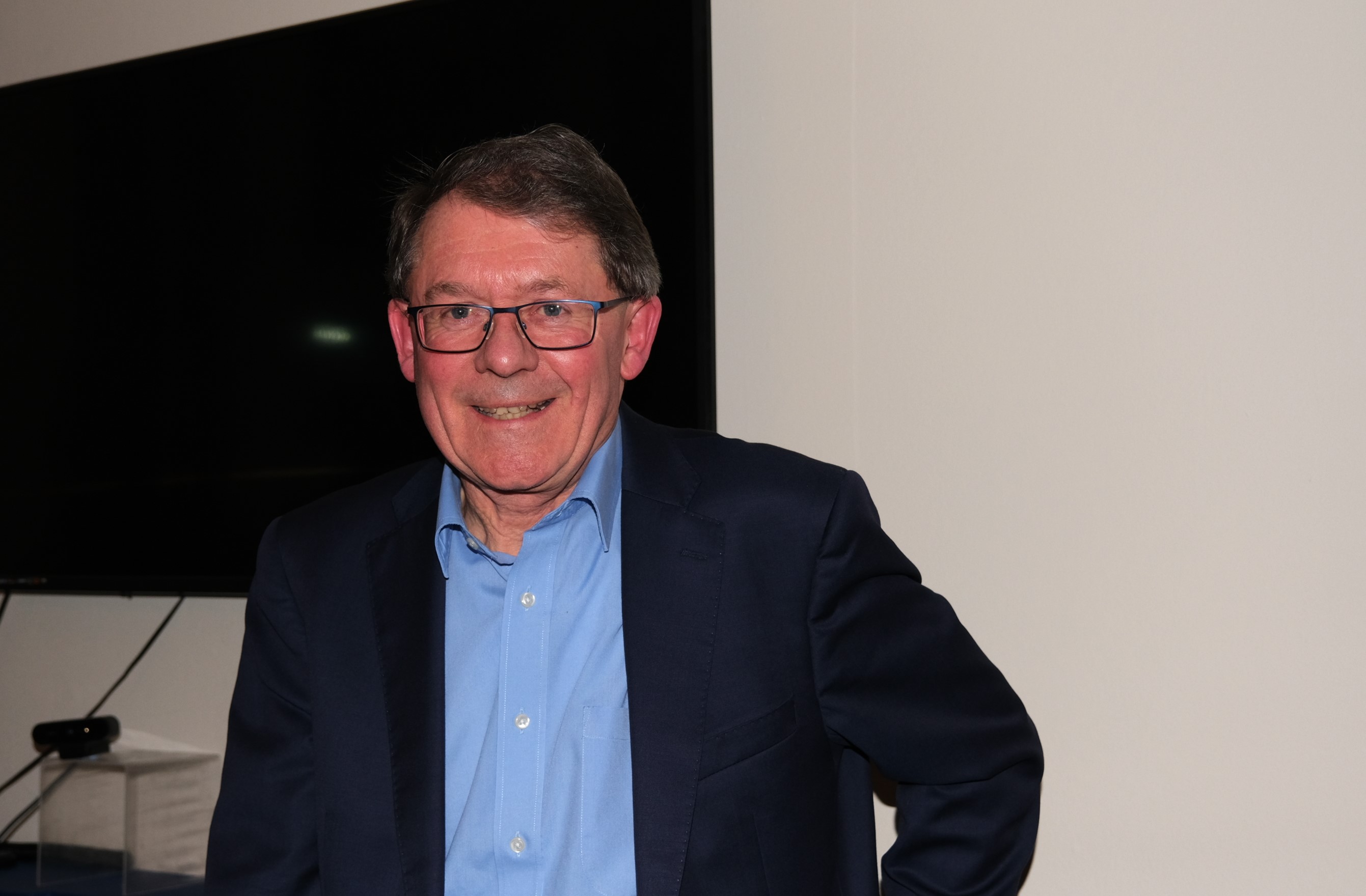
The Society was delighted to kick off the second half of its season with a presentation from the Chairman of the Holst Society, Christopher Cope (pictured). Holst is one of those composers who is almost exclusively known for one work, The Planets. He joins a number of others who are ‘one piece composers’ such as Dukas, Widor and Litolff who almost suffer from the fate of a single piece which crowds out their other works. It has sometimes come as a surprise at Society meetings when other parts of composer’s works are played and we say ‘why haven’t we heard this before?’ 

This was the theme of Christopher’s presentation who gave a history of this important English composer. Yes, English, for despite his name and the ‘von’, he was born in Cheltenham in 1874. The ‘von’ was added by his grandfather Chris said for added kudos. His early work was strongly influenced by Wagner and he was keen later on to distance himself from him. 

He was friendly with Ralph Vaughan Williams who was much influenced by his work. VW gave him a sum of money to enable him to go travelling and he went to Algeria going round on a bicycle noting down musical themes and ideas as he went. A result of this was Beni Mora (An Oriental Suite (a little out place) from which we heard an excerpt. 

He took time off to learn Sanskrit at one point in his life and translated some works by writers of that language and set some of them to music.

So why is he not better known and why only The Planets? Chris noted that it was the 150th year of his birth so there will be interest in his music but it is likely only to be this one piece which is played. One reason might be that he spent a lot of time teaching and conducting leaving little time for composition. The great majority of his oeuvre are short pieces: songs and church music with a strong influence of English folk songs. The lack of a corpus of symphonies and concerti may mean promoters do not want to feature his work. 

The Planets certainly brought him fame and recognition but it seems he found this to be profoundly unwelcome and turned down honours and eschewed what we would today call the ‘celebrity circuit’. 

He was clearly an original and Chris said he was influential with both Vaughan Williams and Ben Britten (and no doubt others as well). He died relatively young at 59 and clearly he still had much to give. He joins a long list of composers who died in their prime. 

Chris played a range of pieces including an Invocation for ‘cello, and an excerpt from West Country Tunes, Swansea Town. 

It is a pity that he has become this one-horse composer: the pieces we heard were diverse and original. One question might be whether there was a recognisable ‘voice’ which led you to know it was Holst even though you had not heard a particular piece before. 

The Chair thanked Chris for his informed, not to say erudite presentation which has opened our eyes to this important but somewhat overlooked English composer. 

Peter Curbishley

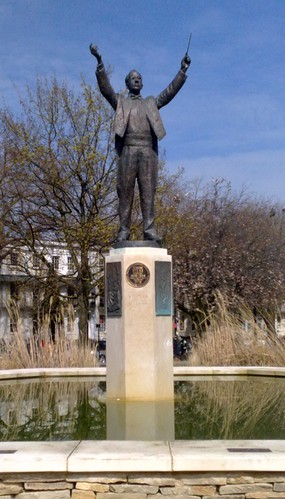
Statue of Holst in Cheltenham

Pictures: Salisbury Recorded Music Society

UPDATE: Readers in the Salisbury area might like to know there is a performance of some of Holst’s choral music on Sunday 18 February at 2pm. They will be performed (with other works) by the Larkhill Choral Society at the Bustard Inn on the edge of the Plain. 2 February

Next meeting

Next meeting and changes to the programme

Due to unforeseen circumstances, we have had to make some changes to our programme involving the next three meetings.

On Monday 6th November, Peter Horwood will be presenting Off the Beaten Track in which he takes us on an informal journey along some less familiar musical byways.

On Monday 20th November, Peter again will be presenting, this time the third in his series on 20th Century Music. [This was due to be presented at the previous meeting].

Our final programme this season is slightly changed and will be Christmas Special in which members of the SRMS committee will present a range of pieces with a seasonally appropriate theme.

We look forward to seeing you at these evenings.

Meeting on 17th April

Note change to programme this coming Monday

It was good to read Peter Curbishley’s report on Robin’s presentation in last week’s Salisbury Journal. 

Our next meeting will be on Monday 17th April as scheduled, but due to unforeseen circumstances we have had to change the ‘running order’ of our coming evenings. Alan Forshaw has very kindly agreed to bring forward his presentation, so our programme now is: 

On Monday 17th April,  Alan Forshaw will present “Like father like son . . .”  and describe how ‘keeping it in the family’ can work a treat.

This will be followed on Monday 22nd May when our guest presenter, Simon Coombs, will now present “Czech music from Smetana to Martinů” .

And then our final session of 2022-23 will be on Monday 5th June when Peter Horwood will present his ‘American Adventure’.

We hope you can join us for all or most of the remaining sessions for 2022-23.

Next meeting

The next meeting is tonight, 13 March 2023, and is a presentation about making recordings during Lockdown. It will be by concert pianist Christopher Guild and this is an extract from his biography:

Born in Scotland in 1986, Christopher Guild studied piano and violin locally before entering St Mary’s Music School, Edinburgh aged 13. He took top honours in the Moray Piano Competition 2001 – he remains the youngest winner to this day.  Christopher entered the Royal College of Music in 2005 as a Foundation Scholar and studied for six years with Andrew Ball, gaining a First Class BMus (Hons), and the MMus and Artist Diploma with Distinction.  He went on to be the Richard Carne Junior Fellowship in Performance at Trinity Laban Conservatoire of Music and Dance 2012-13.  

Christopher teaches at Godolphin School. We look forward to seeing you at 7:30pm

New season about to start!

NOTE: please note that the first meeting does not take place tomorrow, 12th September as printed in Music in Salisbury. We had to change our programme at the last minute due to unforeseen circumstances. The first meeting is on 26th. We are sorry for this sudden change.

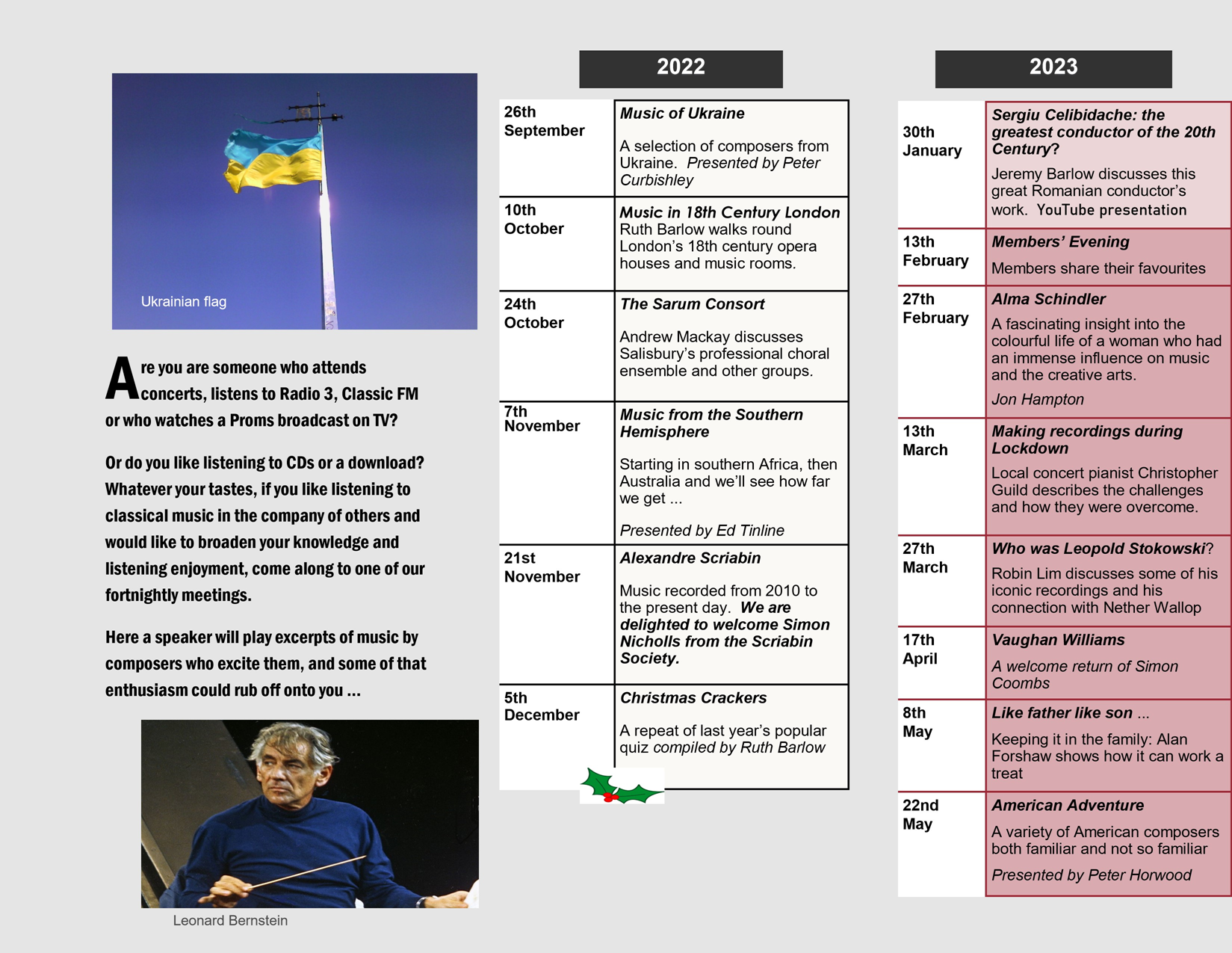
The new season gets underway soon and the programme is printed and will soon be in various locations around town. A pdf version is below. It is a varied and extremely interesting programme so we look forward to seeing you again on Monday 26th September for a presentation of music from Ukraine. We look forward to seeing you again or welcoming new members.

Next meeting

Our last meeting before Christmas – tonight!

The next meeting, the last before Christmas, will be on Monday 6 December at 7.30 when Ruth Barlow will present Classical Music in Animations and invite us to join her in an end of term scamper through some cartoons with great classical music, including considering whether Fantasia was Mickey Mouse’s finest hour and listening to Tom and Jerry playing Liszt.

As before, we ask all attending to follow the Covid safety measures we have in place including signing in and sanitising procedures on arrival, well spaced seating, wearing a mask, minimising moving around and maintaining social distancing.  From recent government announcements, it would seem that provided we follow our current practice this will fit within the latest Covid guidelines, so we plan to go ahead with the meeting on Monday, but if anyone feels uncomfortable and decides not to attend we shall understand.

After Monday we have a break until 31st January 2022 when we shall be delighted to welcome John Challenger to explore the highs and lows, the delights and difficulties of commercial recording on one of the greatest cathedral organs in the country: Salisbury’s own Father Willis Organ

We hope you will be able to come and feel comfortable on Monday 6th December

November meeting

Details of the meeting to be held on Monday 8 November 2021

The next meeting will be on Monday 8th November when Alan Forshaw will present Listening to Beethoven in a different light.

We shall have an interval when we will offer tea or coffee, but you’re welcome to bring your own drink.  As before, we ask all attending to follow the Covid safety measures we have in place including signing in and sanitising procedures on arrival, well spaced seating, wearing a mask, minimising moving around and maintaining social distancing. 

On 22nd November we shall have a Members’ Evening. If you have a piece on CD of around 10 minutes that you would like to bring and have played at the meeting, please would you let us have details, if possible this Monday so we can draw up a play list.

We look forward to seeing you there.

George Lloyd

George Lloyd was born in 1913 in St Ives (Cornwall) and had a traumatic life.  Both his parents were keen musicians and encouraged his talent from an early age.  Illness meant he was taught at home then left to continue his studies in London.

He wrote his first symphony at 19 which was premiered in Penzance.  We heard the Introduction,  Theme and Five Variations and it was music which showed great accomplishment.  Two other symphonies followed as well as two operas; The Serf and Lernin.  The latter was also first performed in Penzance before being transferred to London where it had an unusually long run.  Alan Forshaw, the presenter, played the Duet from the opera and it was an outstanding piece of music.

A crucial event in his life was joining the Marines as a bandsman and took part in the awful North Cape convoys to supply the Red Army in WWII.  A most terrible event took place in many of his fellow marines were drowned in fuel oil.  This affected his mental wellbeing and prolonged hospitalisation with what was still being called shellshock, now called PTSD.

It was physically difficult for him to write music because of the shaking but with devoted care from his wife he was able to start again.  A movement from a subsequent symphony demonstrated a change in style.

He wrote music for brass bands and one such was HMS Trinidad March, the ship he had served on.  He had almost no success with commissions from the BBC with his scores returned with no comment.  A member of the audience suggested this might have been the influence of William Glock and the pressure to use the 12 tone scale which Lloyd has little time for.

He quit the musical life and he and his wife opened a market garden in Dorset.  He began to be appreciated in later life and had some of his work performed at the Proms and he did well in America.  Albany Records recorded several of his works.  We heard a movement from the 4th Piano Concerto and a movement from the 6th Symphony.  Other pieces included extracts from the Requiem, and the Black Dyke Mills Band playing a memoriam following the IRA atrocity in the Royal parks.

For those of us who knew little of this composer’s work it was a revelation.  He had a sure touch when it came to orchestration.  I felt his style would have suited film music where he may have done well.  We were grateful to Alan for his work in preparing the evening.

Peter Curbishley


Please note we now have a page on Facebook – Salisbury recorded music society.

Next meeting on 28 October