The ‘curse of the ninth’

April 2024

This was the intriguing title of a fascinating talk by Alan Forshaw on why the ninth symphony seems to loom large in composer’s lives. Beethoven’s 9th is well known although he did attempt a tenth and he left some sketches. It was with him that the myth started and it does seem to have had some kind of effect on those who followed him. Alan played the second movement in a version with a brisk tempo by Toscanini.

Schubert was second, a composer who died tragically young but nevertheless, left a vast treasure trove of music including – nine – symphonies. It has often been suggested that he died of syphilis but medical research suggests this is not true and it is much more likely, in view of the suddenness and the symptoms, he died of typhoid fever which was common at the time. As is well known, his eighth was unfinished. We heard the first movement from the ‘Great’ Symphony – his ninth. Schubert never heard either of them before his death.

Thence to Bruckner who, as Alan reminded us, was a huge admirer of Wagner and said he only worshiped two Gods and the other one was Wagner. He can’t have heard his symphony though … Bruckner was a famous organist and it was he who played the organ at the opening of the Albert Hall. We listened to one of the movements of his ninth, of which he only completed three, and died before finishing it. There may be something in this ‘curse of the ninth’ after all.

Dvořák next who was helped in his composing career by Brahms and was very lucky to get a very generous appointment in New York which gave him plenty of time for composing. We heard a movement from the famous New World Symphony and – you’re getting the hang of this, his ninth. The symphony was hugely important in the development of American music and was discovered after his death. It was premiered in 1893 in New York. Dvořák’s house can be visited just on the outskirts of Prague by the way.

Now Mahler did believe in the curse and went to some lengths to try and avoid labelling it the ninth. No matter, the curse got him and he died the following year.

On to Glazunov who enjoyed much fame and admiration in his day, both in Russia and in the west. He found the more modern composers, and in particular Stravinsky, hard to swallow and thought Petrushka little more than orchestrated dissonance. He never got far with his ninth and we heard an extract of the piano version – perhaps the world was spared. He did however have a pupil at the Leningrad Conservatory called Shostakovich who did go on to write 15 symphonies.

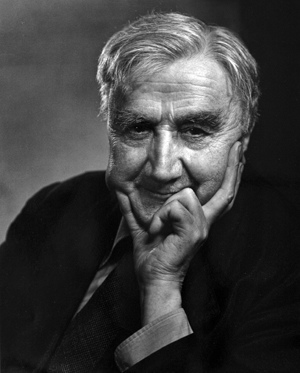
Next was Vaughan Williams who also managed to complete nine and we listened to a movement from it, his ‘last tune’ as he termed it. He died a few months after its premiere in 1958. The symphony is a little unusual in having scored saxophones – perhaps reflecting Ravel’s influence with whom he studied for a year.

And so to Kurt Atterberg, not a name which is that familiar even to keen classical music fans. Swedish, he studied both music and electrical engineering and indeed, it was this latter skill that kept him employed at the Swedish Patent Institute until his retirement. Preferring harmonics to harmony perhaps. He is another composer who had a degree of fame in his lifetime but is little known or played today.

Finally to Northampton born Malcolm Arnold who was a prolific composer well known for his film scores including for example, the St Trinian movies and the Bridge over the River Kwai among many others. An accomplished trumpet player having heard Louis Armstrong play he composed many pieces and including nine symphonies. He was not a pleasant character by all accounts and had a drink problem. He had mental health issues as well. At one point he was given two years to live but manage to live on for another 20. We heard a short extract from his ninth. His musical legacy seems assured.

So is there anything in the ‘curse of the ninth’? Probably not. The idea was created by Mahler who tried to beat it by calling what was his ninth as a song cycle. Looking at the list of composers of symphonies from the nineteenth century onwards it is striking that there is a vast number who wrote a handful, just one, two or three. It is also striking that there are few who wrote between three and 9. Most therefore will compose a small number of symphonies, which consume a significant chunk of time but achieve little success and even less financial reward, and decide to stick to shorter forms.

So how to explain the cluster around nine with few either side having composed eight or eleven symphonies for example? Perhaps the reason is mundane: a modern symphony seems to have taken most composers around two years to complete and not always in a continuous burst. Allowing time between each of say, a year, means each work represents around 3 years out of a composer’s life. Allowing for a productive life of around 40 years which may also include conducting and teaching, means a serious composer of symphonies will end up at the nine or ten mark. So those who do achieve some success at the start of their careers, then go on to reach it: those who don’t stop after one, two or three.

Whatever, it was a really interesting evening and as ever a mixture of the familiar with a handful of rarely heard pieces. The chair of SRMS thanked Alan for putting together an interesting and intriguing topic.

Our last meeting of the current season is on Monday 13 May at 7:30 as usual and is on the subject of Puccini to celebrate the anniversary of his death this year.

Finally, to say we are getting on well with the 2024/25 programme which is all planned and the programme will be available sometime in the summer. For clarity, I should say August since when and if summer comes is not at all certain.

Peter Curbishley
Behold the sea …

It is perhaps not too surprising that an island nation should feature the sea in the compositions of its native composers.  Examples of these – from well known and some less well known composers – featured in the last meeting of the Society on 27 January 2020.

Society member Ed Tinline kicked of the second half of the season with a wide selection of pieces composed by British composers, all with the sea as their inspiration.

We started with part of Vaughan William’s Symphony No 1, A Sea Symphony composed in 1909.  Inspiration for the symphony came in part from Walt Whitman.  It was premiered when he was 38 and established him as a leading composer.

Brighton born Frank Bridge was next with his Symphonic Suite: The Sea composed in 1910.  Then a piece by Judith Weir with her Lament, Over the Sea from her The Bagpiper’s String Trio first performed in 1989.  Judith was the first woman to be appointed Master of the Queen’s Music.

Next – another woman – Ethyl Smyth with her Overture: The Wreckers from 1906.  I wrote ‘jaunty’ at one point with some interesting orchestral colours.  Dame Ethel Mary Smyth attained prominence as one of the most accomplished female composers in a male dominated environment, and as one of the main representatives of the suffragette movement.  Tchaikovsky said of her ‘[she] one of the few women composers whom one can seriously consider to be achieving something valuable in the field of musical creation’.  Source: British Library.

The first half ended with Arnold Bax’s On the Sea-shore And Elgar’s Sea Pictures.

The second half started with the unfamiliar Mass of the Sea composed by Paul Patterson composed in 1983.  Next was By the Sleepy Lagoon written at Selsey by Eric Coates – who like Frank Bridge, was born in Brighton – looking across the bay and is used as the theme for Desert Island Discs on Radio 4.

The Kent coast inspired David Matthew’s Overture: From Sea to Sky composed quite recently in 1992.  The Sea Interludes from Britten’s Peter Grimes are very familiar.  Interestingly, Britten was taught composition by Frank Bridge.

The penultimate piece was The Needles by Matthew Taylor commissioned by the LSE Music Society in 2000.  Finally we returned to Elgar and another of his Sea Pictures composed at the end of the nineteenth century.

A fascinating evening and a wide range of music based on this one idea.

Peter Curbishley


Next month’s meeting is Berlioz’s vocal music and is on Monday 10 February. 


Next meeting

The second half of the season kicks off on Monday 27 January with an evening devoted to the music of Vaughan Williams and other British composers .  Ed Tinline will present the evening entitled Behold the sea.

It starts at 7:30 and where to find us is on one of the tabs at the top of the site.  There is free parking outside and access is reasonable for those with disabilities (a small step).  £3 for non-members.  We look forward to seeing you.

PC

Members’ evening

Members’ evening had a wide range of interesting pieces

Last night’s members’ evening had a wide range of music – eclectic even – from the traditional, to some pieces with jazz influences and a rarity from South America.

The traditional selections were from the Well Tempered Clavier by Bach and the chosen pieces were from Book 4 – the most difficult to perform.  Angela Hewitt was the pianist and her recordings show great skill and fluidity.  The other traditional selection was of Mozart’s first violin concerto the K207.  Composed when he was probably 17 it is one of five that he composed although there are possibly two more.  Paper analysis suggests an earlier date than originally supposed.

Completely different was Michael Torke’s Javelin one of a series of pieces exploring the relationship between music and colour.  Termed a ‘vitally inventive composer’ by the Financial Times, Javelin is a ‘sonic Olympiad composed for the Atlanta Olympics.

Jazz influences were clearly at work with two acoustic guitar compositions by Clive Carroll The Kid from Clare and Black Nile.  Guitar phenomenon Clive Carroll’s masterful compositions, coupled with his versatility and unparalleled technical virtuosity, have rendered him one of today’s most admired and respected guitarists.

Diego José de Salazar is largely unknown and in writing this it was hard to find anything much about him.  If you do know something, Wikipedia would like to hear from you I am sure.  Bolivian, born in 1659 and his music is classical in style but quite unique.  We heard Saiga el torillo hosquillo this was one of the hits of the evening.

Bantock’s The Frogs of Aristopanes would get the prize for the most curiously name piece of the evening but not only that, it was a version performed with a brass band, in this case the Grimethorpe Colliery band, said by Sir Peter Maxwell Davies to be ‘the finest band in the world’.  They are performing in Sturminster Newton in Dorset in June.

The first half ended with Victoria de Los Angeles performing Piu Jesu from Faure’s Requiem.

The mystery piece turned out to be an orchestrated version of one of Debussy’s preludes by Colin Matthews.  Two arias by Caruso, one from Rigoletto and the other from Othello, the latter sung with Tito Ruffo followed and the evening ended with Lark Ascending  by Vaughan Williams from a poem by George Meredith.

A truly amazing selection of pieces and the chair thanked Anthony for skillfully assembling them especially as he would have been unfamiliar with some.  Evenings such as this can be a collection of hackneyed favourites with little that is unfamiliar.  Although there were some well-known items, the unusual ones added considerable interest.

Peter Curbishley


Next meeting on May 13th

Ralph Vaughan Williams

Chair of the VW Society gives presentation

Simon Coombs, the Chair of the Vaughan Williams Society, gave an extremely interesting and informative talk on the music of Vaughan Williams to a packed room at the last Society meeting on Monday.  Regarded as one of Britain’s great composers, he produced a wide range of music, including songs, symphonies, choral works, chamber music and works with a religious theme.  He was what one might call a ‘late developer’ not finding his voice until his ’30s (reminiscent of Bruckner).

Simon took us through his history starting with his childhood in Down Ampney and his later life in Dorking (Surrey) and Chelsea.  He showed promise at school, composing a short piece called ‘The Robin’ aged 6.  Later he went on to study under Parry and Max Bruch.  He spent time in Paris studying with Maurice Ravel who said of him ‘he was the only one of my students who doesn’t try to write my music’.

He was keenly interested in folk music and started to collect these in 1903.  He was not the first composer to be

Vaughan Williams

influenced by the folk song tradition (one thinks of Bartok) and much of his early work was founded on this tradition.  He was friendly with George Butterworth who shared his passion for English folk songs and who offered advice to VW in his early days including suggesting that he write a symphony.  It is a surprising fact but there are no performed symphonies by a British composer before VW and Elgar.  The suggestion by Butterworth is therefore something of a revolutionary suggestion.  Butterworth died tragically young in the Great War.  VW was keen to contribute to the war and served as an ambulance driver and stretcher bearer.  Like many who served in the trenches, the War made a lasting impression including the loss of friends.

He was keen to popularise his music and started the Leith Hill Music Festival (near Dorking) in 1905 and which still thrives.  He had a huge output which included 9 symphonies.

Simon played a mixture of his works, some familiar, others less often heard.  These included the Fantasia on a Theme by Thomas Tallis; an extract from the Sea Symphony (1909); a song from 5 Mystical Songs; parts of the London Symphony (1913) and the Pastoral Symphony (1921) and from number 4 (1934).

Perhaps the work most recognisably as his is the Lark Ascending strongly influenced by his love of folk songs (1914).  Other pieces included an extract from the English Folk Song Suite (1923), Serenade to Music (1938) and from one of his operas Hugh the Drover.  He was approached by Muir Mathieson to compose the music for the film Thirty Ninth Parallel which he composed in a matter of weeks.

This was a brilliant start to the second half of the season.

Peter Curbishley

Second half of the season kicks off soon

The second half of the season starts tonight, Monday 5 February and we are delighted to welcome Simon Coombs from the Vaughan Williams Society who is going to discuss and play music by this great English composer.  Starts at 7:30 as usual and is only £3 to non-members.  Parking is easy and free and details of how to find us are on the ‘Find us’ tab at the top of the site.

We look forward to welcoming existing members back also any new visitors.

Pupils of famous composers

Who was this composer’s teacher?

Many composers taught pupils in a kind of apprenticeship scheme.  Composers often needed the money and no doubt the son or daughter of a wealthy family brought in a useful income.  Some pupils went on to have promising careers – others did not have sufficient talent to succeed.

In last night’s meeting Alan Forshaw played pieces by a variety of composers and asked us to guess who had been their teacher.  A combination of style, dates and where they lived or studied gave us a clue in some cases, especially the earlier ones, but it became steadily more difficult as we approached modern times.  Once again in a Society evening, we heard examples of music by long forgotten composers who’s music is worthy of a hearing.  Many were prolific in their day turning out operas, symphonies and concertos by the dozen.  The pieces we heard were:

  • a piano sonata in C by Johann Muthel a pupil of JS Bach
  • the Adagio from the Symphonie Concertante in A by Ignaz Pleyel, who’s name survives on pianos and music scores.  He wrote 41 symphonies. He was taught by Haydn and his influence was audible
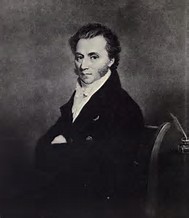
  • Thomas Attwood (pictured) studied in Vienna under Mozart and his remains are buried in St Pauls.  We heard his Rondo from a Trio fo

    Thomas Attwood

    r Piano, Violin and ‘cello

  • this was followed by a Fantasia by Steven Storace who was born in London and also studied in Vienna
  • Carl Czerny is slightly better known and was a pupil of Beethoven.  The master’s influence could clearly be heard in his Theme and Variations for Horn and Piano
  • another pupil of Beethoven was Ferdinand Reis, a native of Bonn (a clue) and his Rondo from a Piano Concerto in C# minor showed a lot of talent
  • Franz Liszt needs no introduction and was a pupil of Czerny in Vienna.  We heard his Hungarian Rhapsody No 13
  • the immensely talented but almost unknown Carl Filtsch from Romania led Liszt to say when he heard him play, he would give up performing.  Tragically, he died in his teens but his Impromptu in Gb Major showed what a loss he was to music
  • another pupil of Czerny was Thomas Tellefsen from Norway who also studied in Paris.  Waltz in Db Major
  • Valsa Caprichosa from 3 Portuguese Scenes was composed by a pupil of Liszt, Jose Vianna da Motta who was born on the island of Sao Tome off the coast of Africa
  • Carl Reinecke has almost disappeared from view and is rarely heard today.  His Finale from Wind Octet in Bb Major was a delight
  • Gabriel Fauré needs no introduction who was a pupil of  Charles-Camille Saint-Saëns.  We heard the famous Paradisum from the Requiem
  • Someone less famous, or even unheard of, is Eugene Gigout also from France who studied in Paris under Saint-Saëns.  His Toccata in B Minor is exciting and worth listening to.  He was a famous organist in his day (born 1844)
  • Josef Suk was part of a large musical family and studied under Antonín Dvořák famous for his Symphony from the New World.  Suk does sometimes make it onto present day concerts and last night we heard the Andante from the Serenade for Strings Opus 6, a fine piece
  • Glazunov was a pupil of  Rimsky-Korsakov and studied in St Petersburg.  A prolific composer and we heard the preamble from Scenes de Ballet
  • another pupil of Rimsky-Korsakov was Igor Stravinsky one of the composers who had an enormous influence over the course of 20th century musical history and famous for his ballets.  His Piano Sonata No 2 was special and well worth a listen if you can
  • the Australian Percy Grainger had several teachers and studied in Berlin and elsewhere.  We heard the extraordinary Zanzibar Boat Song – six hands on one piano
  • Busoni was the teacher of Frederick Loewe famous for his musicals with Alan Lerner and it was The Rain In Spain from My Fair Lady we heard to illustrate his talent
  • Lennox Berkeley was a pupil of the enigmatic Maurice Ravel who’s influence could just be heard in Polka Opus 5a

    Vaughan Williams
  • Finally, another pupil of Ravel was Vaughan Williams (and we will be hearing more of him later in the season with a talk from the Vaughan Williams Society coming).  We heard part of March ‘Seventeen Come Sunday from the Folk Song suite (1924)

Alan had put in a lot of work to track down some of the more obscure pieces especially in the first half which made it an interesting and worthwhile evening.

Peter Curbishley


Next meeting on 30 October

New season starts

The new season got off to a good start with a presentation entitled The Power of Mysticism in Music by Ian Lace.  Ian was one of the founder members of the Society (not called that then) so we were pleased to welcome him back.  He chose pieces where a sense of something beyond the composer was present in the music.   It was interesting that most of the pieces – with one exception in fact – were English composers.  Whether this means composers from these shores are more susceptible to these influences is probably unlikely although it was noticeable that several had experience either the first or second world wars.

The pieces played were:

  • Adagio from Elgar’s Symphony No 1
  • Bax, Symphony No 3
  • Finzi Intimations of Mortality
  • Bach: Chaconne
  • The Romanza from Vaughan William’s Symphony No 5
  • Elgar again the time the Kingdom Pentecost and finishing with
  • Delius Songs of Farewell

Well not quite finishing there because he finished with Louis Armstrong singing What a Wonderful World.

An excellent evening and an all too rare opportunity to hear the music of Bax.


The next meeting is on 3 October and is on early stereo recordings.  It will be preceded by a brief agm.

In Flanders’ Fields

A century ago, the First World War was in full swing.  The battle for Ypres was taking place in April 1916 and it was the first time phosgene gas was used.  It is difficult to believe that out of this carnage and bloodletting, some lovely music, poetry and art was created.

At the last meeting, Richard Seal played a selection of pieces which were composed during the time of the war or inspired by it.  Richard was much moved by visits to the war graves in Flanders including Vimy Ridge, Arras and Thiepval where he hopes to go to again.

He began with A Shropshire Lad by George Butterworth who died on the Somme in 1916 aged just 31.  This is a familiar piece and his death was a great loss to music.  This was followed by the last movement of Morning Heroes by Sir Arthur Bliss who lived until 1975 but who lost his brother in the conflict.  He returned to the battlefield in 1928 and this piece was the result of that visit.

This was followed by Three songs by Ivor Gurney.  Gurney had a troubled life and was both a poet and composer.  He was gassed while serving with the Gloucester regiment but his biggest problem was his mental health.  At the time he was thought to be the greatest of his generation but his full promise never materialised.

Britten was too young for the war but his War Requiem, which was composed for the consecration of Coventry Cathedral destroyed in WWII, was inspired by the poems of Wilfrid Owen who regrettably died a week before the Armistice.

Frederick Septimus Kelly

This was followed by an Elegy for strings and harp by Frederick Kelly who died in 1916. An Australian he also had a gold medal for rowing in the 1908 Olympics and this elegy was in memory of Rupert Brooke who also lost his life.

Some pieces by Charles Ives followed including In Flanders’ Fields composed in 1917.

The evening finished with the last movement of the Pastoral Symphony by Vaughan Williams.  The First World War, in which he served in the army in the medical corps, had a lasting emotional effect.

It was a fascinating evening and the presenter’s erudition about this moving period of our history shone through.


The next meeting is on April 18th

peter curbishley

Next meeting

The next meeting of Salisbury Recorded Music Society, will be tonight Monday 4th April 2016 at 7.30pm, in our usual venue.  Richard Seal will be presenting In Flanders Fields – music inspired by World War I including works by Vaughan Williams, Britten and George Butterworth.  A great deal of attention is paid to the poets who were affected by the war, rather less attention is paid to the composers who were also strongly influenced by the carnage.