
Presentation about this American composer
October 2026
Rhythm – memories – unusual sound – experimental – original – repetitive – strangely moving – different – modern – odd combinations – slow build up of harmonies – tedious – chords – exploratory – exciting – polyrhythmic. I suppose one could say all these things about Reich and we spent the evening exploring his music guided by Alan Doel (pictured).
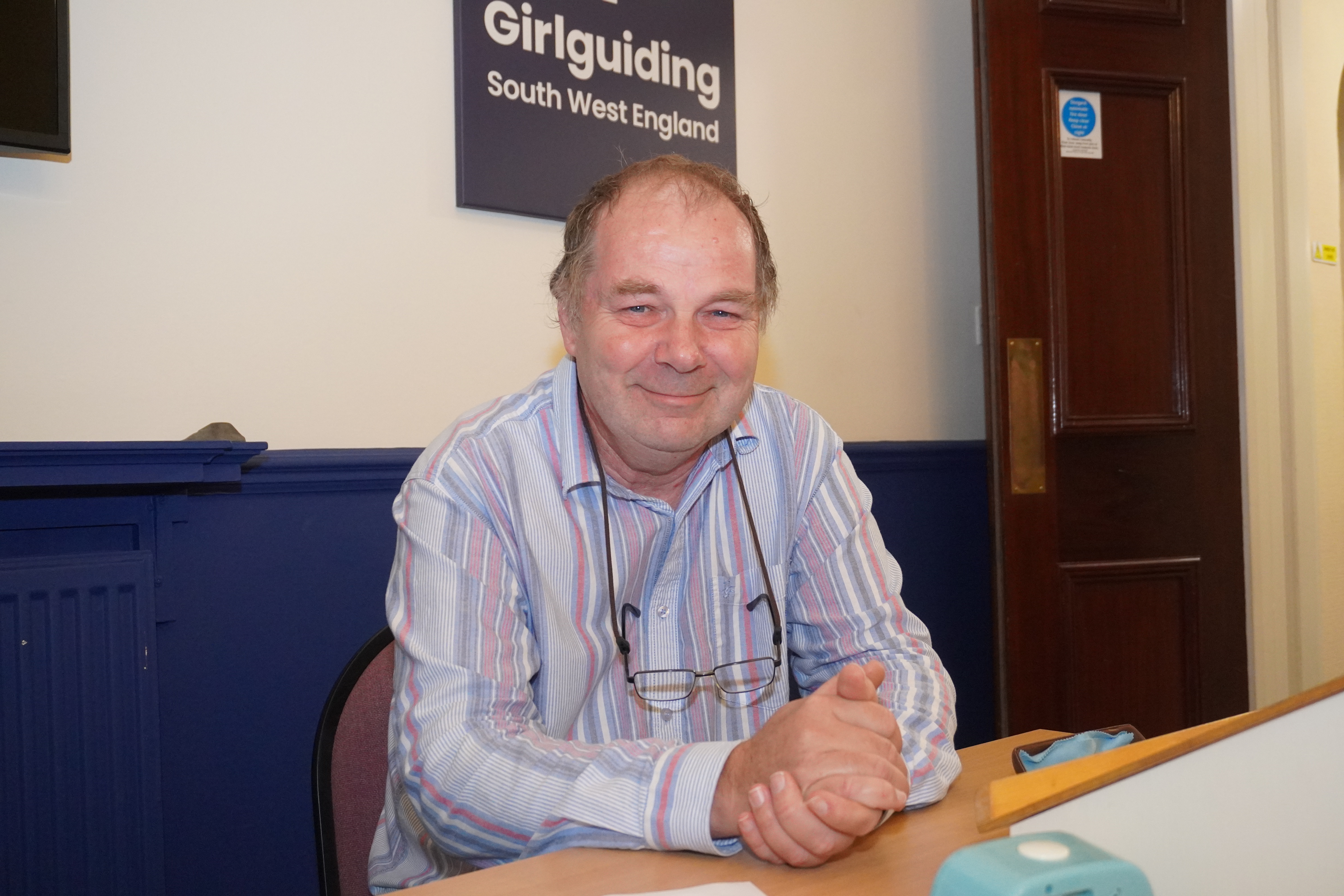
Alan played some interviews of Reich where he explained some of the reasoning behind his compositions, how he takes a chord and varies its combinations in repeated elements. His start in San Francisco was working with various tape machines to create a mix of sound. One of his early influences was Stravinsky’s Right of Spring but also JS Bach – something of a contrast.
A remarkable piece the composer performed with Wolfram Winkel involved rhythmic clapping with everchanging phrases. The strange thing I found is that I was aware of when it was going to end – hard to explain but there you are.
Music for 18 Musicians was played the musicians included wind, strings, xylophone and singers. Typical of his work it was a simple set of themes endlessly repeated with variations. Other works included ‘It’s Gonna Rain‘ and ‘Runners‘.
Another piece featured was music for 4 Organs and maracas which was first performed in Carnegie hall to a less than ecstatic reception. It takes a single 7 note chord and combines them and recombines then to a climax. The use of maracas reminds one of Philip Glass.
There was a moving film of a piece called Different Trains where he contrasts his own train journeys in America in contrast to the terrible train journeys endured by Jews in Germany and how his own life might have turned out differently (he is Jewish).
An accessible piece some of us thought was Music for Eight Pieces of Wood the wood being claves that is, hollowed out tubes each of a different pitch. There was a strong primitive feel to the composition and reflects Reich’s desire to do as much as he can with minimal resources.
Reich claims he is influenced by a French composer from the 12th Century called Pérotin about whom little is known (even his name) who left behind a small body of work the simplicity of which one can see might be appealing to him.
What to make of him as a composer? He is regarded as influential both in the classical world but also in jazz and popular music. Some say he is accessible arising from the lack of complexity in his work. He scorns a base line he says because it tends to dominate the form of a composition. It is argued that the idea of repeated rhythm somehow captures the modern world.
Wittgenstein is sometimes quoted who said ‘how small a thought it takes to fill a whole life’ which seems to sum him up well.
Alan was thanked for the work in putting this presentation together and giving us an insight into an important minimalist composer.
Next meeting on 26 November focuses on the Goldberg Variations by JS Bach.
Peter Curbishley
Picture: Salisbury Recorded Music Society

