
Insightful presentation on this wonderful JS Bach composition
October 2026
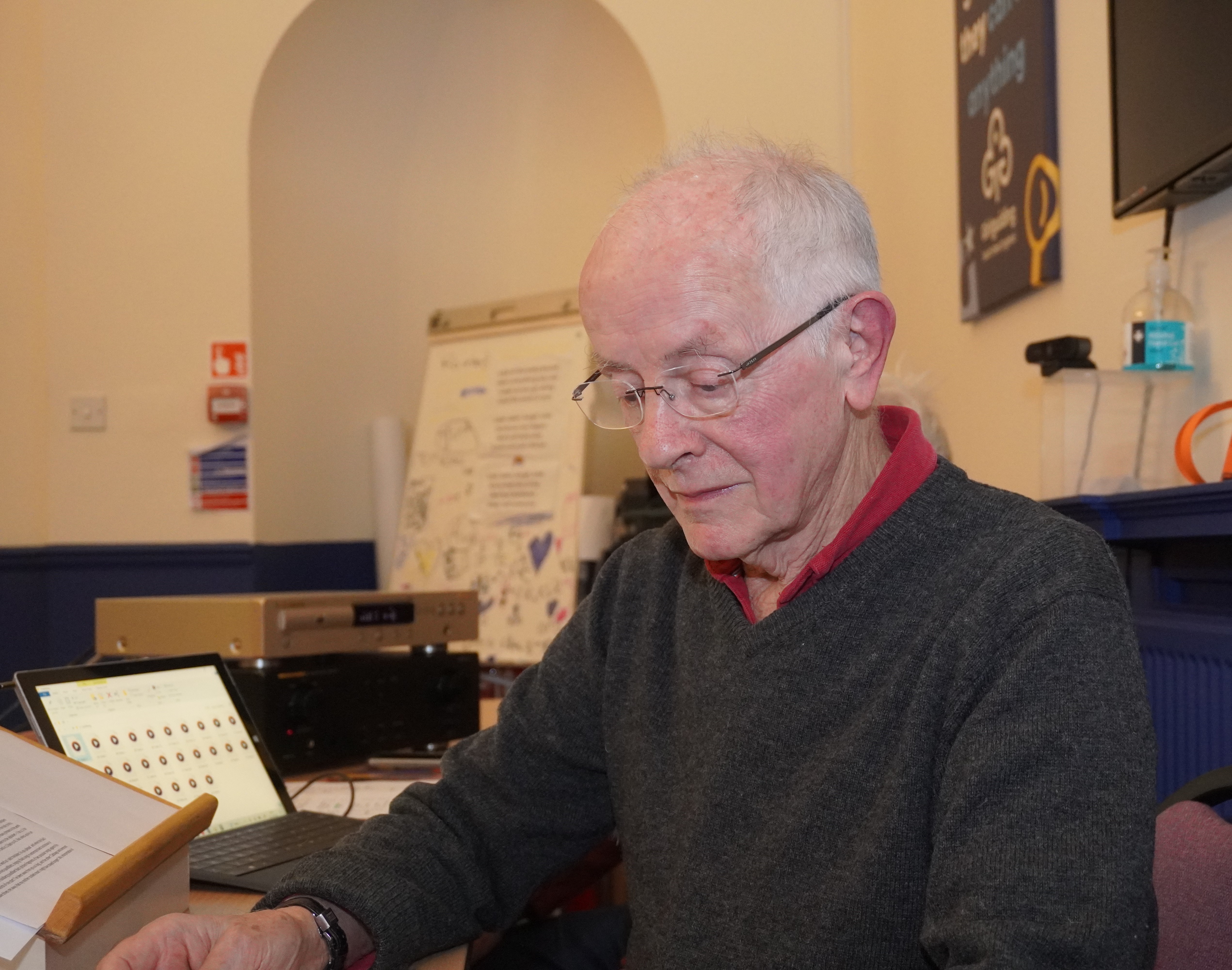
Last evening’s presentation by Jeremy Barlow (pictured) was entitled ‘From Gould to Gold‘ and focused on the many interpretations of the Goldberg Variations by JS Bach, BWV 988. The ‘Gould’ in the title refers of course to the great Canadian pianist Glen Gould who has provided a range of brilliant performances of Bach’s music. As someone in the audience pointed out, he was a bit of a problem for recording engineers because of his habit of singing along to pieces and noisy foot tapping.
There are many myths about the piece, the most famous being it was written for the Russian Ambassador to enable him to sleep. Few believe this today as there is no dedication to the Ambassador and the generous gift of a golden goblet full of gold coins was not found in Bach’s effects when he died.
‘Goldberg’ refers to the harpsichordist said to have played them at the time but there is doubt even about this since he was only 14, although he was a prodigy.
The purpose of Jeremy’s presentation was to explore the many different interpretations of the piece both on a harpsichord (for which it was composed) and on the piano. The two instruments are different in structure he explained: a harpsichord requires the strings to be plucked and a piano by contrast the strings are hit by a hammer. A seemingly small distinction but it means there is no means to vary volume on a harpsichord which requires a different compositional technique to achieve this.
We heard no less than a dozen versions and what was remarkable was the extent of the differences. The metronome had not been invented in Bach’s day so we have no means of knowing the tempi of the composition. The early Gould recording for example was a lot faster than the later ones. This might partly be due to the amount of space on discs after the war, later LPs overcame this.
One performance was by Wanda Landowska from before the war providing a rather delicate version. Jeremy liked Wilhelm Kemp’s treatment which displayed a clear and distinct presentation. One recording was by the Icelandic pianist Vikingur Ólafsson which adopted an almost demonic pace.
The presentation was remarkable, not just the erudition that Jeremy provided, but showing how just one piece can sound so different and invoke different emotions in the listener. This was especially so in the Aria with the slower paced interpretations hitting the mark. We certainly will listen to Bach (and perhaps other composers from that era) rather differently in future. We tend I suppose to hear a piece thinking that’s ‘it’ in terms of authenticity and interpretation, whereas Jeremy’s talk demonstrated that there are many different approaches to the same piece each with its own cluster of feelings.
The next meeting is on 9 November and is a Members’ evening so please send in your piece to Robin Lim robert.lim@virginmedia.com please. The meeting will be preceded by a short agm.
Peter Curbishley
Picture: Salisbury RMS

