
The next meeting of the Society will take place on Monday 3rd October at 7:30 as usual. It will be preceded by a short agm and then there will be a presentation by Robin Lim on the subject of early stereo recordings. Older readers may recall the days when stereo started to make its appearance in the home. There used to be salesmen who would come to your home and install a gramophone to demonstrate this wonderful sound experience. One recording designed to show off the effect was of a steam train rushing past – first in one speaker and then in the other. Robin probably won’t be playing us that but it should be interesting to hear the early recordings using what was then, new technology.
Tag: Salisbury
New season starts
The new season got off to a good start with a presentation entitled The Power of Mysticism in Music by Ian Lace. Ian was one of the founder members of the Society (not called that then) so we were pleased to welcome him back. He chose pieces where a sense of something beyond the composer was present in the music. It was interesting that most of the pieces – with one exception in fact – were English composers. Whether this means composers from these shores are more susceptible to these influences is probably unlikely although it was noticeable that several had experience either the first or second world wars.
The pieces played were:
- Adagio from Elgar’s Symphony No 1
- Bax, Symphony No 3
- Finzi Intimations of Mortality
- Bach: Chaconne
- The Romanza from Vaughan William’s Symphony No 5
- Elgar again the time the Kingdom Pentecost and finishing with
- Delius Songs of Farewell
Well not quite finishing there because he finished with Louis Armstrong singing What a Wonderful World.
An excellent evening and an all too rare opportunity to hear the music of Bax.
The next meeting is on 3 October and is on early stereo recordings. It will be preceded by a brief agm.
New season
By now, existing members will have received their invitation letter and programme for the 2016/17 season. We are pleased with what we have in the programme which includes a ‘live’ event and outside speakers on Bruckner and Delius. We have stayed away from Bruckner because his symphonies are on a massive scale but we are delighted that Terry Barfoot has risen to the challenge to give us a presentation on this important composer. Proms listeners will have had a treat this year with several of his works being performed.
If you are new to this site we hope you will give us a try and if you just want to come along to an evening – because you have a particular interest in a composer for example – then it is only £3 to help cover costs.
One of our guiding principles is to widen knowledge of the musical world and speakers will often try to introduce unfamiliar pieces, either by composers who are almost forgotten or less well known pieces by major composers.
Parking is easy with plenty of space and we are within walking distance of the town centre.
New season’s programme
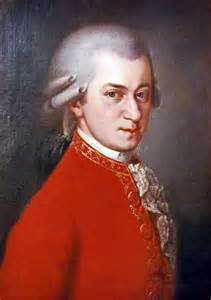
The new season’s programme has now been finalised and will soon be printed for distribution. You can see a copy of the brochure here ahead of publication. The committee has put together an excellent programme with two outside speakers and one, for the first time, from the Delius Society. We have one ‘live’ music evening as well as presentations on a wide range of topics from Society members themselves.
Meeting arrangements are as before and parking is easy. New members are always welcome – we’ve had several this year – and if you want to come along to an evening without commitment, there is a small fee of £3 to help with our expenses.
Existing members: if you can do anything to help promote events that would be appreciated.
The first evening will be on Monday 19 September.
End of season
With last night’s meeting, the current season of the Society came to an end and will resume in September. Next year’s programme is well underway and has a lively combination of home grown and invited speakers as well as a ‘live’ performance. The committee met before the meeting and one item was a review of the year and all agreed that it had been an excellent one. With two live performances as well as the usual fare of CDs, the programme was diverse and interesting. The Society exists to enable people to broaden their knowledge and enjoyment of classical music in a non challenging way.
We had presentations which focused on the Great War, two on famous conductors – Mackerras and Bernstein – and we welcomed Lord Aberdare of the Berlioz Society for a memorable presentation. The role of lesser known composers especially from these shores and from the Baltic countries was also notable. Altogether a successful year.
Meetings take place in Salisbury every other Monday evening during the season which starts again on 19 September. Directions can be found on the ‘Find us’ tab. Parking is easy. New members are always welcome and feel free to come along to a meeting. Full details of the new programme will be published here once it is finalised and a leaflet will be available in the Collector’s Room in Endless Street; Oxfam’s music room and in the Tourism Office in Butcher Row.
We look forward to seeing you.
Last meeting
The last meeting of Salisbury Recorded Music Society took place last night Monday 23rd May 2016 at 7.30pm, in our usual venue. Jon Hampton presented ‘The art of the arranger’ including works by Boccherini arranged by Berio, Bach by Elgar, and Schubert by Britten. An excellent and interesting evening and there will be a full report soon.
There was a selection of records (as in vinyl) which have been kindly donated to the Society and these are available with members asked to make a small contribution as they see fit. They are listed below:
| Composer | Piece | Orchestra |
| Schubert/ Beethoven | Symphony #8 and #5 | Berlin PO, Maazel |
| Orff | Carmina Burana | Andre Previn, LSO |
| Tchaikovsky | Romeo & Juliet | J Pritchard, LPO |
| Festival of Carols | Bath Abbey | |
| Festival of Lessons and carols | Kings College | |
| Mendelsaohn | Scottish & Italian Sym | Solti, LSO |
| Mozart | Piano Concertos #20 #23 | Brendel, Academy St M in the Fields |
| Bath Abbey organ | Various | |
| Handel | Water Music | Boyd Neel and Orchestra |
| Mozart | Symphonies #29 #39 | Colin Davies, S of London |
| Beethoven | Sonatas, Moonlight, Pathetique, #17 | Albert Ferber |
| Mozart | Symphonies # 39 #40 | Böhm, Vienna PO |
| Bruch & Beethoven | Violin Conc #1; Romances for V and orchestra | Oistrach, RPO |
| Various, Smyth, MacCunn | Music of the four countries | Gibson, Scottish Nat Orch |
| Messager | The two pigeons | Jacquillat, Orchestra de Paris |
| Boyce, W | The 8 symphonies | Faerber, Württbergberg Ch O |
| Bach | Brandenburg #4 #5 #6 | Davison, Virtuoso of England |
| Brandenburg #1 #2 #3 | do – | |
| Holst | The Planets | Sargent, BBCSO |
| Chopin | Piano Concerto # 1 | Pressler, Vienna State Opera |
| Vivaldi | 4 seasons etc | Various |
| Tchaikovsky | Piano Conc #1 | Makaloff, Hague PH Orch |
| Handel | Messiah | Sargent, RPO |
| Box sets | Gateway to the Classics and Opera | |
| G & S | Overtures, Mikado, Gondoliers etc | Godfrey, New SO of London |
| G & S | Best of … | Walker, RPO |
Most look to be in good condition and the discs I’ve looked at seem clean and unscratched. If you are interested in any of these please ring 01722 782382 and we can try and arrange delivery.
Next meeting
 The next meeting of the Society – the penultimate – is on May 9th and is a members’ evening. This is where individual members can suggest pieces which can be played with or without an introduction by them as they wish. It is usually and enjoyable evening, eclectic of course and everyone’s choice is different. Usual place, usual time.
New members are welcome and the entry is a modest £2 to help us defray costs.
We look forward to seeing you.
Follow us on Twitter
Next meeting
The next meeting of Salisbury Recorded Music Society, will be tonight Monday 4th April 2016 at 7.30pm, in our usual venue. Richard Seal will be presenting In Flanders Fields – music inspired by World War I including works by Vaughan Williams, Britten and George Butterworth. A great deal of attention is paid to the poets who were affected by the war, rather less attention is paid to the composers who were also strongly influenced by the carnage.
Live evening
David Davies and friends performed live for the Society on Monday and their programme was as follows:
Ciaccona from Sonata da Camera Op 2 No 12
Arcangelo Corelli (1653 – 1713)
Allegro moderamente from Sonata Accademiche Op 2 No 9
Francesco Maria Veracini (1690 – 1768)
Sonata Op 5 No 4 Gottfried Finger (1660 – 1730)
Adagio – Allegro – Adagio – Allegro
Contrapuntus 9 from Art of Fugue Johann Sebastian Bach (1685 – 1750)
Sonata Prima Johann Philipp Krieger (1649 – 1725)
Grave – Poco Presto – Adagio – Presto – Affetuoso – Presto
Andante from Sonata 1 Op 2 Georg Frideric Handel (1685 – 1759)
Duetto for violin and viola Christian Cannabich (1731 – 98)
Two Passepieds from Premiere Recreation de Musique Op 6
Jean-Marie Leclair L’Aine (1697 – 1764)
Sonata 2 William Boyce (1710 – 79)
Andante vivace – Adagio – Allegro – Allegro ma non troppo
For your diary: Salisbury Baroque, with vocal soloists, will be giving a concert in
Wilton Parish Church on Sunday 6 March at 6pm. This will include Bach – Cantata
102, Dall’Abaco – Concerto for 2 flutes and Telemann – Die Tageszeiten. Full details
There is an emailing list for information about early music in the area. If you would like to join it, please email davidracheld@gmail.com
Live performance!
Next meeting is a live performance
Yes, we are the ‘recorded’ music society but this is an exception. Members will recall a 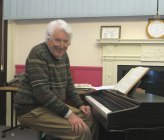 previous evening at which David Davies performed on the keyboard. Now we are delighted to see him return for an evening of baroque music played by David and some friends. These include David Morgan and Sue Wyatt (violins), Sally Reid (‘cello) and David himself who will be on the harpsichord. It will be more than just the music as there will be some explanation about the music and the instruments.
The programme includes works by familiar composers including Boyce, Bach, Handel and Corelli as well as some less well know composers such as Veracini, Krieger, Leclair and Finger.
For non-members, tickets on the door will be a modest £2 for the evening.
7.30 on Monday 29th February at the rear of the Guide’s Centre. Details of how to find us is on the ‘Find us’ tab. Parking is easy and free. We look forward to seeing you. Space is limited so please arrive in good time.
 Salisbury Recorded Music Society