The solo violin in classical music
This was a presentation by Salisbury violinist Frida Backman on music for the solo violin.

Perhaps the first thing to say is that there isn’t that much for the solo instrument. Beyond Bach one might be stumped to think of many solo works and although Kodály was mentioned and later his fellow Hungarian Bartók, apart from a few virtuoso performers, there are not many works of note. There is of course a huge repertoire of accompanied violin music and concertos.
The instrument was developed into what we see today in the sixteenth century in Cremona, Italy and one of the first masters was Amati. The instrument consists of no less than 70 parts.
Frida started with some early works by Nicola Matteis who was a violinist in the early eighteenth century and who composed pieces more advanced than his contemporaries. We then heard a piece by Tartini also of this era, and who was influential in teaching the instrument and wrote a treatise which may have influenced Mozart’s father.
The composer of a large amount of solo work was JS Bach and we heard several pieces by him including an arrangement by Fritz Kreisler in a 1904 recording of a partita with a piano accompaniment. We also heard pieces by Biber, Prokofiev, Ysaÿe, and Ravel’s Tzigane composed in the early ’20s.
A brilliant virtuoso of the early nineteenth century was Paganini who’s phenomenal abilities were said to derive from the devil. He was hugely successful and owned no less than 11 Stradivari violins. Two of his caprices were played, numbers 23 and 24.
Frida explained that development of the bow was crucial to the instrument’s success. As music moved out of the salon into the concert hall, more power and volume was needed and the modern bow enabled that to be achieved. However, many players still use a baroque style bow to achieve greater authenticity and Frida played two CDs of the same piece to illustrate the difference in tone.
Frida ended her presentation with a live rendition of a piece by a modern composer Zura Dzagnidze called Intruder composed in 2005. This she played against a backing track with herself.
A most interesting evening exploring the history of this most versatile of instruments.
Peter Curbishley
Picture: Frida Backman

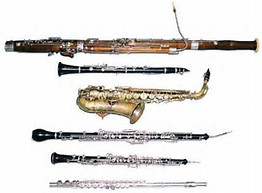 by Ed Tinline on the development of woodwind. He will be playing a selection of pieces including wind soloists and also ensemble playing.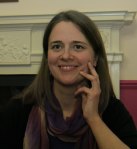

 Salisbury Recorded Music Society