Next meeting

The next meeting of the Society – the penultimate – is on May 9th and is a members’ evening.  This is where individual members can suggest pieces which can be played with or without an introduction by them as they wish.  It is usually and enjoyable evening, eclectic of course and everyone’s choice is different.  Usual place, usual time.
New members are welcome and the entry is a modest £2 to help us defray costs.

We look forward to seeing you.


Follow us on Twitter

In Flanders’ Fields

A century ago, the First World War was in full swing.  The battle for Ypres was taking place in April 1916 and it was the first time phosgene gas was used.  It is difficult to believe that out of this carnage and bloodletting, some lovely music, poetry and art was created.

At the last meeting, Richard Seal played a selection of pieces which were composed during the time of the war or inspired by it.  Richard was much moved by visits to the war graves in Flanders including Vimy Ridge, Arras and Thiepval where he hopes to go to again.

He began with A Shropshire Lad by George Butterworth who died on the Somme in 1916 aged just 31.  This is a familiar piece and his death was a great loss to music.  This was followed by the last movement of Morning Heroes by Sir Arthur Bliss who lived until 1975 but who lost his brother in the conflict.  He returned to the battlefield in 1928 and this piece was the result of that visit.

This was followed by Three songs by Ivor Gurney.  Gurney had a troubled life and was both a poet and composer.  He was gassed while serving with the Gloucester regiment but his biggest problem was his mental health.  At the time he was thought to be the greatest of his generation but his full promise never materialised.

Britten was too young for the war but his War Requiem, which was composed for the consecration of Coventry Cathedral destroyed in WWII, was inspired by the poems of Wilfrid Owen who regrettably died a week before the Armistice.

Frederick Septimus Kelly

This was followed by an Elegy for strings and harp by Frederick Kelly who died in 1916. An Australian he also had a gold medal for rowing in the 1908 Olympics and this elegy was in memory of Rupert Brooke who also lost his life.

Some pieces by Charles Ives followed including In Flanders’ Fields composed in 1917.

The evening finished with the last movement of the Pastoral Symphony by Vaughan Williams.  The First World War, in which he served in the army in the medical corps, had a lasting emotional effect.

It was a fascinating evening and the presenter’s erudition about this moving period of our history shone through.


The next meeting is on April 18th

peter curbishley

Bernstein: musical polymath

bernstein
Leonard Bernstein

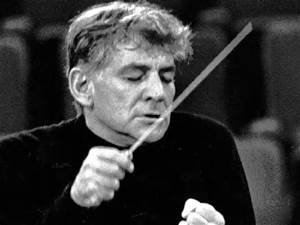
Leonard Bernstein had many talents and at the last meeting of the Society three of them were on vivid display in a presentation by Alan Forshaw.  First was his ability as a pianist was shown in a recording, made in 1946, of Ravel’s Concerto for Piano and Orchestra from which we heard the first movement.  It is no surprise Bernstein liked this piece with its strong jazz influences and powerful rhythms.  We also heard him play one of his own compositions, Seven Anniversaries recorded in 1947.

His second great skill was as a conductor for which he was in great demand.  He was the principal conductor for the New York Philharmonic Orchestra for many years.  Examples we heard included the second movement from Shostakovich’s Piano Concerto No. 2 with the NYPO with Bernstein conducting from the keyboard and also the Adagietto from Mahler’s 5th Symphony.

He was an accomplished composer in a wide range of genres.  Few may of heard of his Clarinet Sonata for example, his first composition.  More familiar perhaps is his Symphony No. 1 from which we heard the second movement with its strong rhythms and echoes of Stravinsky.  We also heard part of his Symphony No. 2 for Piano and Orchestra both recordings with the NYPO.

He was a composer of operas and first was Trouble in Tahiti – an opera in seven scenes – from which we heard scene 2.  Candide did not achieve critical acclaim unfortunately and had to wait two decades before it found a place in the repertoire again.  West Side Story is undoubtedly his most successful work, loved the world over and was made into a film.  Two extracts were played: Tonight performed by Jose Carreras and Kiri Te Kanawa, and Somewhere, in a performance conducted by Bernstein himself.

Alan explained that Bernstein was the son of a Ukrainian immigrant and it is perhaps worth reflecting on the enormous contribution east European and Russian immigrants made to the life of the United States.  Not just musicians, but scientists, writers, mathematicians and in many other areas of cultural life.  As the UK is struggling with the ‘threat’ of immigrants fleeing Syria and other war torn areas, it is worth remembering on the benefits that they can bring, as Bernstein did to the USA and musical life generally.

This was an accomplished presentation which gave an insight into the range of talents Bernstein had and the musical legacy he has left behind. A musical polymath indeed.


First meeting in 2016

Second half of the season gets underway
Philip glass
Philip Glass

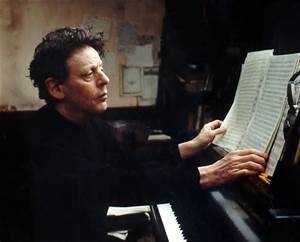
The Society will meet again for the first time in 2016 tonight Monday February 1st at 7.30 pm in the usual place.  The presentation will be by Peter Horwood and the title is Bright, Shiny and New.  This will be a selection of 21st Century composers who are approachable and stimulating.  It will include pieces by Philip Glass (pictured); Valentine Silvestrov; Peteris Vasks; Oliver Davis; Kenneth Fuchs; James Macmillan and Einojuhani Rautavaara.

If you want to know where we meet, details are in the ‘Find us’ tab on the Home page.  There is easy parking.  New members very welcome.

Berlioz Miscellany

Evening of the music by Berlioz

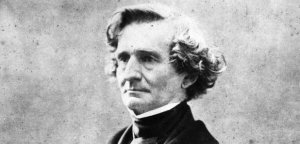
Last night the Society was pleased to welcome Alastair Aberdare, Chair of the hector-berlioz-Berlioz Society who presented what he calls a Berlioz Miscellany.  This was an illustrated presentation with portraits and photographs of the composer and scenes from his operas.

Most of the music played was by British conductors for example, Sir Roger Norrington; the late Sir Colin Davies and John Eliot Gardiner.  It these conductors, along with others in the past such as Sir Thomas Beecham, who have done much to popularise this composer and expand the repertoire of recorded compositions.  It is also noteworthy that the finest biography is by the Society’s president, David Cairns.

Alastair said there were two key facts about Berlioz: one is the creation of mood by using different orchestrations and the second is that he is always ‘telling a story’.  In addition to being a fine composer, Berlioz wrote several books including Evenings in the Orchestra and a treatise on orchestration.  He was also a journalist and some of his pieces are being made available on the Berlioz website

The first piece was the youthful overture Les Francs-Juges which older readers will recall was used in the BBC programme Face to Face.  The second piece was a wistful melody le Jeune Pâtre Breton.  For some who still see this composer as someone writing for big forces, the delicacy of his songs can be a surprise.

Next was the Marche funèbre pour la dernièr scène d’Hamlet.  Berlioz was captivated by Shakespeare and wrote several pieces based on his works most famously, Romeo and Juliet.  This was followed by La Course l’abîme from La Damnation de Faust a work which failed to appeal when it was first introduced and the negative reaction greatly disappointed the composer.

This was followed by the Pantomime scene from his great work Les Troyens which Berlioz never heard in its complete form and was pronounced unperformable for many years.  The Duo Nocturne from Beatrice and Bénédict followed which was based on another of Shakespeare’s plays Much Ado About Nothing.  Back to the songs with a performance by Dame Janet Baker of Spectre de la Rose from the charming song cycle Les nuits d’été and there was just time to hear a movement from Te Deum.

An excellent evening.


In two weeks it’s the members’ evening starting at 7.30 as normal on 30 November.


Next meeting: Berlioz

The next meeting of the Society is on Monday 16 November and please note theHector Berlioz earlier start time of 7pmIt will be a presentation by Alastair Aberdare entitled A Berlioz Miscellany.  Alastair is a member of the Berlioz Society and is a frequent contributor to the Berlioz Society Bulletin.  We are delighted to welcome him to Salisbury.  Berlioz was a fascinating composer who’s works were profoundly original and are frequently played today.  In addition to his musical work he was an accomplished journalist and author. 

For further details of the composer, his works, photographs, performances and much else go to a website dedicated to him.  This site is packed with information and is well worth a look.

Remember: 7 o’clock start!

New site

This is the site for the Salisbury Recorded Music Society. Welcome. You’ll find more about us in the ‘About’ tab at the top of the site. To see where we meet, look in the ‘Find us’ tab. We’ll be publishing more material here as time goes on but we have just held our last meeting of the season so it will be quiet for a while.

We are affiliated to the Federation of Music Societies.