
The next meeting will be on Monday 9 April starting at 7:30 pm as usual. It will be presented by Ed Tinline and in entitled With few strings attached – music for wind ensemble. Details of how to find us are on the tab marked ‘Find Us’. Parking is easy and free. Accessible for mobility impaired. £3 at the door for non-members.
Tag: recorded music society
Shostakovich
Shostakovich: his life and music
It was strange standing here in Salisbury giving a talk on Shostakovich – a man who was persecuted by the then Soviet regime – when a few hundred yards away from where the talk was given the terrible events took place allegedly perpetrated by the modern Russian state.
It is difficult to understand this man without the context of the times he lived through. His life parallels the recent history of Russia. He was born in 1906 a year after the failed 1905 revolution into a period of considerable unrest. Prior to the final revolution there were several unsuccessful ones. Much of his life was lived in constant fear.
Most people are aware of the symphony he wrote and the subtitle ‘a Soviet artist’s reply to just criticism’ which was actually written by a journalist and was never accepted by Shostakovich himself. It seems also to imply that there was a single event and once he had written this subsequent symphony, everything was subsequently normal. Nothing could be further from the truth. He was a constant thorn in the side of the party apparatchiks. He was too famous to liquidate as there would be an international outcry. Nevertheless, the party could make life extremely difficult for him and made it difficult also for people to be friends with him. Few composers have been so central to the history of his time. He experienced war, revolution, anti-Semitism, dictatorship and terror.
His family came from Siberia and Poland. His father worked in Weights and Measures and there is a link to Mendeleyev the discoverer of the periodic table. He started learning the piano in 1915 and entered the St Petersburg Conservatoire in 1919. Teaching at the Conservatoire was unimaginative and there were no compositional classes. Glazunov was a key supporter at this time. Life was a constant struggle and they were frequently in debt. His father died when he was young.
He lived through the Revolution which started in St Petersburg which subsequently became Leningrad. Central to the story is the status of Leningrad which became the second city after Moscow and a window on the west. This was both a problem and an opportunity for artists. Leningrad was looked upon as ‘elitist’.
His First Symphony a graduate piece which showed considerable flair and promise. Strongly influenced by the work of Hindemith and was a kind of anti-symphony. The symphony was dedicated to a friend Misha Kvardri. Two years later, he was arrested and shot. This is a reminder of the terrible times Shostakovich lived in: friends, acquaintances, supporters, even family members, disappear in the night and ended up in the gulag or are executed. This got worse after the rise of Stalin in 1924 when anti-bourgeois policies, class warfare and actions against the kulaks were launched with terrible consequences for millions of Russians.
To make money he played in cinemas which he did from 1923 until 1926. He also composed for the cinema. Extracts from films and the following extracts were played:
• Five film extracts. – The Counterplan
o Alone
o Sofia Perofskaya
o Hamlet
Altogether wrote for 15 films. He wrote music in the jazz idiom although the idiom was hard to see except for the use of the saxophone.
• Extract from Jazz Suite #2 composed in 1936
He started playing the piano in performance in 1923.
In 1925 the Russian Association of Proletarian Musicians RAPM founded in Moscow. The central message was that ‘music should have a social message and be accessible to the wider masses.’ They harassed intellectuals and wreaked havoc in higher institutions. Shostakovich was sacked from a college post. Many intellectuals and teachers were deprived of their livelihoods and denounced.
He composed the opera Lady Macbeth of Mtsensk District (shortened in the west to Lady Macbeth of Mtsensk) from a libretto by Nikolai Leskov. It was performed in January 1936 and the audience included Stalin, Molotov and Mikoyan. They leave after 2nd act and this heralds a dramatic reversal of his fortunes. The opera is a success around the world however. An article in the next day’s Pravda called it ‘muddle instead of music’. His composition ‘insulted the audience with noise, cacophony, hammering, and screaming.’
Shostakovich said the article ‘changed my entire existence for ever. It was unsigned and so represented the opinion of the party – or actually Stalin’s opinion and that was considerably more serious.’
Friends and colleagues distance themselves from him. The Leningrad Composers Union voted in favour of the Pravda article. At the meeting where this is decided only one person spoke in favour of Shostakovich. He was subsequently persecuted, his music was no longer performed and he was deprived of his livelihood.
In 1936 he composes his 4th Symphony which was withdrawn at the last minute. He receives a visit from Otto Klemperer and Shostakovich plays the symphony to him on the piano and Klemperer was very impressed. He suggests reducing the number of flutes but Shostakovich refuses. ‘What is written by the pen cannot be scratched out with an axe’ he said. That might sound better in the original Russian. Shostakovich almost never agrees to alter a score nor corrections nor alterations in the harmony or in the orchestration. But his metronome markings are often completely wrong. After one conductor said the speeds marked for a piece were impossible to play and Shostakovich agrees to change them and explains that he has an ‘old and unreliable metronome but he just did not want to throw it out.’
1936 sees the start of the great purges, millions disappear or are shot. Shostakovich was advised by Tukhachevsky to ‘admit his errors’. He is himself shot a year later. Shostakovich’s position becomes very precarious and many friends, colleagues and relatives disappear.
Meeting the NKVD
On a Saturday in 1937 summoned to meet the NKVD. After general conversation, and questions about his social life, he was asked about plot to assassinate Stalin. Shostakovich said there were no discussions about assassinating comrade Stalin. He was pressed on this and each time he denied that any such conversations took place. He was asked to return on the following Monday by which time he was to have remembered discussion about the plot. After a difficult weekend, Shostakovich returns to the NKVD headquarters and gives his name to the guards on the door. They refuse him entry saying they have no record of his name on their list. After some discussion and finding out who his interrogator was, it turns out that the interrogator himself has been arrested and Shostakovich was free to go.
He composes 5th Symphony which a journalist describes as ‘a Soviet artists reply to just criticism.’ WWII and Leningrad surrounded by the Nazis. It is the start of terrible privations.
His poor eyesight means he cannot serve in the armed forces but acts as a fire warden. Shostakovich was flown out of the city in October.
He writes Symphony #8 but this is not well received because it is not ‘optimistic’ enough. By the time it was ready for performance, the tide of war against Germany had changed and the official reception was ‘icy’.
In general, the communist party had two main problems with him. Firstly his courage which made him difficult to control and secondly, his unpredictability. This was set against his international prestige which made him useful to the regime. Shostakovich felt constantly under threat and always travelled with toothbrush and toothpaste in the expectation of arrest.
Post-war and the nature of the purges changed. Intelligentsia was targeted and there were attacks on what was termed ‘formalism’. Both Shostakovich and Prokofiev suffered during this period and he was forced to write music for propaganda films.
The Zhdanov Decree, Zhdanovschina (sometimes called ‘Zhdanov’s purge’) started in 1948-9. Many suffered and lost their livelihoods. Public humiliations of artists was frequent. All composers were summonsed to a conference where he encouraged mediocrities to turn against the more successful composers such as Shostakovich, Shebalin and Khachaturian. They had to sit and listen to slanders against them. The only people who wanted to listen to his music were ‘foreign bandits and imperialists’ it was claimed.
The audience heard the famous story in Gulag Archipelago by Solzhenitsyn about clapping and no one able to stop clapping after a Stalin speech. Also told was the phone call Shostakovich receives from Stalin as told by Julian Barnes. Composes 1st Violin Concerto possibly in 1951. Not performed until 1955. Criticised by the party for its ‘gloomy, introverted psychological outlook.’
• Extract from Violin Concerto
The evening ended with the second movement of the tenth Symphony.
Peter Curbishley
Next meeting – March
Next meeting
The next meeting of Salisbury Recorded Music Society will be held tonight, Monday 5th March 2018 at 7.30pm in the usual venue when Jon Hampton will present: “Earth, Air, Fire and Water – An exploration of how the elements have inspired composers from Haydn to Mahler and beyond.”
Hope to see you there. Free parking and £3 to non-members
Bach and the Leipzig cantatas
This was the title of a presentation by Tim Rowe at the Society’s last meeting where he played a selection of the cantatas composed by JS Bach during his time in Leipzig. He was Kantor at the Thomas church.
Born in Eisenach in 1685, Bach had a difficult childhood being orphaned by the age of 10 and spent his early years living with one of his brothers.
Tim explained that despite his enormous output and his amazing genius, very little in fact is known about him as a person. Almost no letters survive and there is no contemporary biography. There is even some doubt about what he looked like.
Focusing on the Leipzig years, upon being appointed, Bach set about composing music for the full Lutheran liturgical year. This was an enormous task. Tim provided a circular calendar explaining the timetable for the various cantatas. They were produced in an almost production line process, starting on a Monday, finished by Thursday, copied on Friday, rehearsed on Saturday and then performed on Sunday.
The performances were quite unlike the concert halls of today. There was considerable noise and confusion as people and animals came and went. Churches would employ a whipper to keep control of the dogs. Services lasted hours. People were segregated according to class. It’s a wonder in all the confusion that he music was heard at all.
We use the word ‘cantata’ to describe these works yet it is not the word used by Bach himself. Often pieces had ordinary generic words to describe them such as ‘church music’ or ‘church piece.’ 216 of his compositions survive from this period as regrettably, many manuscripts were lost, indeed, it has been estimated that 40% are missing. Part of the problem might have been paper since this was a valuable commodity at the time, still being produced by hand.
Bach’s modern reputation – his ‘unfathomable genius’ as Tim put it – owes a lot to Felix Mendelssohn who worked hard to revive him. Had it not been for Mendelssohn, his music may have continued to languish in obscurity. Mendelssohn was distantly linked to the Bach family through his maternal grandmother who was taught harpsichord by one of Bach’s sons and who collected his manuscripts.
Tim played a range of the cantatas all performed by the English Baroque Soloists and the Monteverdi choir under the baton of John Eliot Gardiner. These were recorded in the year 2000, the 250th anniversary of Bach’s death.
This was a splendid evening listening to some wonderful works by this great composer.
Peter Curbishley
The next meeting is on 5 March
Second half of the season kicks off soon
The second half of the season starts tonight, Monday 5 February and we are delighted to welcome Simon Coombs from the Vaughan Williams Society who is going to discuss and play music by this great English composer. Starts at 7:30 as usual and is only £3 to non-members. Parking is easy and free and details of how to find us are on the ‘Find us’ tab at the top of the site.
We look forward to welcoming existing members back also any new visitors.
New Year
Happy New Year to our supporters and members. The second half of the programme kicks off in a month on 5 February and we hope to see you then.
The Case for the Unfinished
The Case for the Unfinished was the title of last nights presentation from Tony Powell. One might be forgiven for thinking this was about Schubert’s unfinished symphony but in fact it was about other composer’s unfinished works of which of course there are plenty. Attempts to add another movement to Schubert’s work have not been successful and indeed it is possible that what is left is indeed finished.
Tony instead started with a Night on a Bare Mountain by Mussorgsky. The final movement was changed by Rimsky Korsakov and this was played first. Then we heard the original version which was entirely different and a complete contrast. The point here was that finishing another composer’s work may be acceptable if it is in the spirit of the original.

Another famous unfinished work is the Requiem by Mozart and this was being feverishly composed as he was dying. It was famously finished by his pupil and sometime collaborator Süssmayr. There are many arguments about who wrote what bit of the work but nevertheless, there is sufficient of Mozart in the piece to make it a great work of art. The difference here is that the work was intended to be finished and Mozart was dictating ideas until his actual death. With Schubert on the other hand, we do not know of his intentions.
Bruckner’s ninth is usually played in its incomplete form but again, a lot of material was left – indeed a substantial number of sketches and completed elements – to enable an attempt to be made to create a final movement. We heard Sir Simon Rattle conducting a performance and he was quoted as saying that there was ‘more Bruckner in the final movement than there was of Mozart in the Requiem.’ It certainly sounded authentic although there were references to the 5th now and again.
It was a surprise to some present that Puccini did not finish Turandot but the opera was left 15 minutes or so short at his death. It was finished by Franco Alfano yet it is recognisably in the master’s hand.
After a long fallow period following the Great War, Elgar started work on his 3rd Symphony which he did not finish by the time of his death in 1934. From the surviving material the BBC asked Anthony Payne to finish it and he worked on the project for many years. The first performance was in 1998 conducted by Andrew Davies. The usual attribution is to both Elgar and Payne. We heard part of the 1st movement and most of the 2nd.
Finally, Mahler and the unfinished 10th. Mahler left a lot of notes and a ‘short score’ that is, not a fully orchestrated version. Mahler had discovered that his wife had been unfaithful and this added to the turmoil in his life. Initially his widow resisted attempts to finish and fully orchestrate the score but later relented. There were several attempts and many statements by musicians saying it shouldn’t be done. Deryck Cooke worked on the score and this was first performed in 1964. Alma Mahler had changed her mind once she had seen the finished work and heard a performance. We listened to one movement which was extremely ‘Mahler like’ in its sound and development.
This was a most interesting evening and shed light on the difficulties and problems of trying to finish another composer’s work. Composition is a highly individual activity and however many notes and sketches are left, what would have ultimately been produced can never be recreated. But if the attempts are honest to the original composer’s style and intentions, a worthwhile result can be achieved.
The group next meets on 5 February 2018.
Members’ evening
UPDATE: 23 November
If you have arrived here having read the report in the Salisbury Journal, welcome. Our next meeting – the last this year – is on Monday 27th and you would be very welcome to come. £3 for non-members.
The last meeting was a members’ evening where each will present and play a piece which they particularly like and want to share with others. A wide variety of pieces were performed:
- it was probably the first time in some years we had heard Wolf-Ferrari and in this case it was the last 2 movements from the Jewels of Madonna
- Mozart followed with a rare outing of Varrei Spiegarvi o Dio, an aria interopolated into another, now lost opera.
- we do not often hear the bassoon as a solo instrument but a piece by Weber – andante and Hungarian rondo showed the instrument off well. It can sound strained in the higher registers but the soloist managed to avoid this
- back to Mozart and a movement from a quintet K593 he composed around a year before he died
- Alec Roth has almost certainly never been played before and is a composer with a slight Salisbury connection. We heard an excerpt from string quintet #2
- this was followed by some Schubert songs – always a favourite
- Bach and two cantatas from his time in Leipzig – BWV 8 and 95
- there was then a mystery piece and this defeated the audience. It was part of Symphony #4 by the Polish composer Schmidt-Kowalski and several were impressed by this extract.
- the penultimate piece was a Chopin ballade and to finish
- .. Mendelssohn’s Scherzo from the Midsummer Nights Dream, but played on two pianos
A very diverse programme with no clear theme except that they were pieces loved by the members.
The ‘Scottish Orpheus’
The music of James Oswald, described as the ‘Scottish Orpheus’
James Oswald was born in the little town of Crail, Fife and started life as a dancing master in Dunfermline. He spent time in Edinburgh and
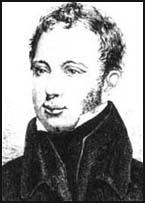
then went to London and started to compose music based on Scottish tunes then the rage in the 1740’s. He set up shop near St Martin’s Churchyard and this became a meeting place for expatriate Scots. He developed his links with the English aristocracy and was appointed Chamber Composer by George III.
We were delighted to welcome Jeremy Barlow to the meeting, an authority on this period of music. Jeremy is one of the most versatile musicians on the British early music scene, with a career encompassing writing, lecturing, and performing. After studying at Trinity College Cambridge and the Royal Academy of Music, London, his first job was as flutist with the Iceland Symphony Orchestra.
But what characterises Scottish music and makes it so recognisable? The basic reason is that it is based on the pentatonic scale not the normal 7 note scale we are used to. It also has a base accompaniment which is a chord which only changes one note at a time as the melody progresses. The third feature is something called the ‘Scotch Snap’, a short accented note before a longer note. These combine to give Scottish music its particular sound.
As an introduction, Jeremy played the Birthday Ode for Queen Mary composed in 1692 by Henry Purcell. This uses a Scottish tune in the base line. We also heard contemporary examples by William McGibbon; Francesco Geminiani and Alexander Erskine, Earl of Kelly. The main part of the evening was music by Oswald which included Airs for the Seasons, the curiously named Dust Cart Cantata and the Divertimento No. 8 for English guitar. Jeremy Barlow directed the Broadside Band in Airs for all the Seasons, Oswald’s finest work.
Oswald became particularly friendly with John Robinson-Lytton the owner of Knebworth House in Hertfordshire. After Robinson-Lytton died he married his widow and moved into Knebworth, he had surely come a long way.
An interesting evening concerning the work of a composer few would be familiar with.
I am indebted to the notes provided by Jeremy in writing this piece
Peter Curbishley
Next meeting 13 November which is a members’ evening so please let Tony Powell know what your choice is.
Pupils of famous composers
Who was this composer’s teacher?
Many composers taught pupils in a kind of apprenticeship scheme. Composers often needed the money and no doubt the son or daughter of a wealthy family brought in a useful income. Some pupils went on to have promising careers – others did not have sufficient talent to succeed.
In last night’s meeting Alan Forshaw played pieces by a variety of composers and asked us to guess who had been their teacher. A combination of style, dates and where they lived or studied gave us a clue in some cases, especially the earlier ones, but it became steadily more difficult as we approached modern times. Once again in a Society evening, we heard examples of music by long forgotten composers who’s music is worthy of a hearing. Many were prolific in their day turning out operas, symphonies and concertos by the dozen. The pieces we heard were:
- a piano sonata in C by Johann Muthel a pupil of JS Bach
- the Adagio from the Symphonie Concertante in A by Ignaz Pleyel, who’s name survives on pianos and music scores. He wrote 41 symphonies. He was taught by Haydn and his influence was audible
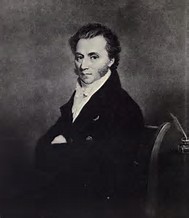
- Thomas Attwood (pictured) studied in Vienna under Mozart and his remains are buried in St Pauls. We heard his Rondo from a Trio fo

Thomas Attwood r Piano, Violin and ‘cello
- this was followed by a Fantasia by Steven Storace who was born in London and also studied in Vienna
- Carl Czerny is slightly better known and was a pupil of Beethoven. The master’s influence could clearly be heard in his Theme and Variations for Horn and Piano
- another pupil of Beethoven was Ferdinand Reis, a native of Bonn (a clue) and his Rondo from a Piano Concerto in C# minor showed a lot of talent
- Franz Liszt needs no introduction and was a pupil of Czerny in Vienna. We heard his Hungarian Rhapsody No 13
- the immensely talented but almost unknown Carl Filtsch from Romania led Liszt to say when he heard him play, he would give up performing. Tragically, he died in his teens but his Impromptu in Gb Major showed what a loss he was to music
- another pupil of Czerny was Thomas Tellefsen from Norway who also studied in Paris. Waltz in Db Major
- Valsa Caprichosa from 3 Portuguese Scenes was composed by a pupil of Liszt, Jose Vianna da Motta who was born on the island of Sao Tome off the coast of Africa
- Carl Reinecke has almost disappeared from view and is rarely heard today. His Finale from Wind Octet in Bb Major was a delight
- Gabriel Fauré needs no introduction who was a pupil of Charles-Camille Saint-Saëns. We heard the famous Paradisum from the Requiem
- Someone less famous, or even unheard of, is Eugene Gigout also from France who studied in Paris under Saint-Saëns. His Toccata in B Minor is exciting and worth listening to. He was a famous organist in his day (born 1844)
- Josef Suk was part of a large musical family and studied under Antonín Dvořák famous for his Symphony from the New World. Suk does sometimes make it onto present day concerts and last night we heard the Andante from the Serenade for Strings Opus 6, a fine piece
- Glazunov was a pupil of Rimsky-Korsakov and studied in St Petersburg. A prolific composer and we heard the preamble from Scenes de Ballet
- another pupil of Rimsky-Korsakov was Igor Stravinsky one of the composers who had an enormous influence over the course of 20th century musical history and famous for his ballets. His Piano Sonata No 2 was special and well worth a listen if you can
- the Australian Percy Grainger had several teachers and studied in Berlin and elsewhere. We heard the extraordinary Zanzibar Boat Song – six hands on one piano
- Busoni was the teacher of Frederick Loewe famous for his musicals with Alan Lerner and it was The Rain In Spain from My Fair Lady we heard to illustrate his talent
- Lennox Berkeley was a pupil of the enigmatic Maurice Ravel who’s influence could just be heard in Polka Opus 5a
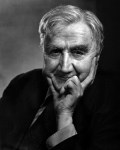
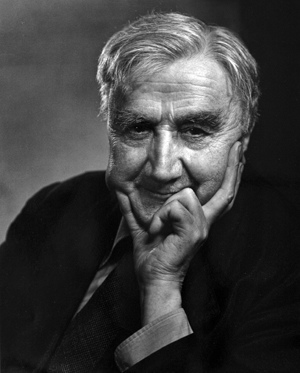
Vaughan Williams - Finally, another pupil of Ravel was Vaughan Williams (and we will be hearing more of him later in the season with a talk from the Vaughan Williams Society coming). We heard part of March ‘Seventeen Come Sunday from the Folk Song suite (1924)
Alan had put in a lot of work to track down some of the more obscure pieces especially in the first half which made it an interesting and worthwhile evening.
Peter Curbishley
Next meeting on 30 October
 Salisbury Recorded Music Society