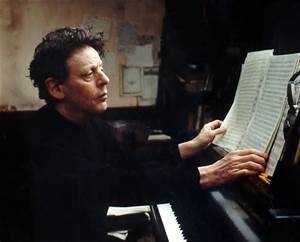
The next meeting is tonight, 2 November, and will concentrate on the music of Ronald Stevenson. A prolific composer of around 500 works, he was born in Blackburn in 1928 and died in Scotland in 2015. He was a pianist/composer in the manner of Liszt and Busoni. Christopher Guild will be presenting and he will play works transcribed by Stevenson composed by Percy Grainger, Busoni and the Scottish composer Ronald Centre. 7.30 as usual.
We are saddened to report the death of Vic Riches who died following a heart attack. Vic was a stalwart of the Society and was one of the founder members in 2002. He moved to Chichester about two years ago but last returned to present an evening in 2014. He will be sadly missed.
The next meeting of the Society is on Monday 5 October – usual time, usual place. It is entitled 1911 – New music of a sunset year and will be given by Barry Conaway. It will include music by Mahler, Delius, Sibelius, Elgar and Nielsen. We look forward to seeing you there.
The new season kicks off at the end of this month with Ed Tinline playing music by
Sibelius
Sibelius. This is on 21st September at the usual time of 7.30. Ed is currently researching his presentation and where else but Finland itself at the 150th anniversary festival?
Copies of the programme are to be found in the Collector’s Room in Endless St; Oxfam upstairs; the Tourism Information Centre and the Library. You can also download it here:
Don’t forget you can see us on Twitter now and you can find us at @salisburyai.
On a sad note, members will be sorry to hear of the death of David Phillips who passed away on 25th of August after a short illness. David was a loyal member for many years although he wasn’t able to attend recently. Our thoughts are with his family.
Members and supporters might like early sight of the new provisonal programme for 2015/16. We have continued the recent innovation of having a live performance even though we are called the ‘recorded’ music society. We have some speakers who are familiar as well as some new faces so there should be plenty to interest music lovers. You will find the pdf version clearer for technical reasons.
Ed Tinline. Music from Sibelius 150th Anniversary Festival, Lahti, Finland
October 5
Barry Conaway. ‘1911 – new music of a sunset year’ including Delius, Elgar, Mahler and Sibelius
October 19
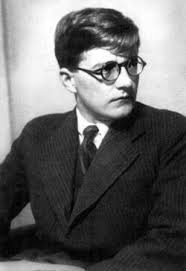
Peter Curbishley ‘… but I don’t like modern music’. Music by Schoenberg, Shostakovich and other ‘moderns’
November 2
Christopher Guild. ‘The music of Roland Center (1913 – 1973) and the influence of Britten, Shostakovich, Ravel and Vaughan Williams on his work’ (provisional title)
November 16
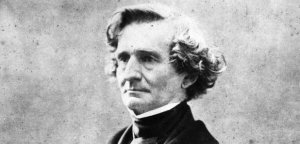
Alastair Aberdare. ‘A Berlioz Miscellany’. Lord Aberdare is a member of the Berlioz Society
November 30
Members’ Evening
2016
February 1
TBA
February 29
A Baroque Evening. David Morgan, Sue Wyatt, Sally Reid and David Davies will bring their baroque instruments to give a live performance, including music by Corelli, Gottfried Finger and Handel
March 14
Anthony Powell. ‘A personal musical journey – 60 years of discovery, including works by Beethoven, Mahler, Vaughan Williams, Britten and Butterworth
April 4
Robin Lim. Title to be confirmed
April 18
TBA
May 9
Members’ evening
May 23
Jon Hampton. ‘The art of the arranger’. To include works by Boccherini, arranged by Berio, Bach by Elgar and Schubert by Britten
Please note that some elements may change so it is always worth coming to this site to get the up to date position. We are always looking for new presenters and if you would like to volunteer that would be appreciated. If you are nervous about being on your feet then someone else can do the presentation for you if you prefer. We look forward to seeing you in the autumn.
The final meeting of the season takes place on 1 June at the usual place and usual time. It is a change to the programme and will be a presentation by Ian Lance entitled ‘A critic’s choice, 2014’.
This has been an interesting year and members have heard a range of unusual pieces, some by rarely heard composers and some lesser played works by famous composers. The new programme is in preparation and will be available later in the summer. If you have any ideas for inclusion in the programme, or you know of someone who could present something, we would be delighted to hear from you.
The last meeting of the Society took place on Monday 20 April. It focused on the Italian composer Pietro Mascagni. He was the son of a baker in Lavorno and studied at the Milan Academy. He lived from 1863 to 1945 and in the 1930s and during World War II worked reluctantly, and with difficulty, under Mussolini’s fascist regime. He wrote 15 operas and one operetta.
In England we tend to remember him only for his one-act opera Cavalleria Rusticana, the piece that made him famous overnight and gave him financial security for the rest of his life. At its first performance it received no less than 60 curtain calls. In his native Italy and elsewhere in Europe his works are better remembered and the presenter Ron Seaman played us some examples. He was seen as the heir to Verdi but as time went on, it was Puccini who wore that mantle. Among the pieces played were Mein ester Walzer, my first waltz; the Apotheosis of the Stork; and the ballet music for Fiori del Brabante. We also heard extracts from Cavalleria including the final scene; Intermezzo and the Easter Hymn. We also heard extracts from his last opera Nerone.
He is a composer who made it big early in his life and yet did not quite follow it up as he matured. Listening to the range of his work it was perhaps surprising that he never composed film scores as some of his compositions, which had strong melodic lines, could have been adapted.
It was interesting to hear some works not often performed to gain a wider perspective of this composer.
The last meeting of the Society was on Monday, March 2nd. We were pleased to welcome a speaker from EM Records, based locally at Blandford Forum, which is the recording arm of the English Music Festival and fulfils the EMF’s aims of celebrating and preserving overlooked works by British composers throughout the centuries. It has a strong focus on the early twentieth century: the Golden Renaissance of English music. EM Records resolves to bring this glorious music to a world-wide audience. In keeping with the unique spirit of the Festival, each disc released by EM Records will contain at least one World Première recording.
As well as learning some of what is involved in preparing, recording and producing CDs of the highest quality, we also gained an insight into the issues raised when unearthing and interpreting previously unpublished manuscripts. Recordings of better known English composers like Vaughan Williams, Holst and Stanford were interspersed with some lovely recordings of works by lesser known lights such as David Owen Morris and Henry Walford Davies, the latter being the composer of the instantly recognisable RAF March past.
This is the second time the Society has gone behind the scenes, so to speak, and heard about the process of recording a CD.
Our view of a piece of music can sometimes be clouded by our belief of when it was composed. Somehow, we expect music in the nineteenth century to be romantic and in the twentieth, modern. So if we hear a piece that seems ‘out of its time’ we might in some way find it hard to accept. It was these reflections which led Anthony Powell last night to present a programme of music which was all composed at broadly the same time. What was striking was how different and varied the pieces were: if asked one might have thought half a century spanned their compositions when in fact it was around a decade. Truly, a dance to the music of (short) time.
Janacek
He started with the overture to Jenufa by Janacek composed in 1894. Janacek was rarely heard until well into this century but is now a regular fixture in concert halls and his operas, such as The Cunning Little Vixen are frequently heard. He followed that up by an extract of the Sinfonietta arguably the most familiar of his works.
We then heard some Elgar who’s Symphonic Study, Falstaff was written only a few years after Janacek’s yet sounded an age apart. Other pieces included the Claude Debussy’s tonal work La Mer written a year or two after Elgar yet sounding completely different.
Another contrast were two extracts from Symphoniesno 3 and 5 by Nielsen. Nielsen is being heard more and more now and his symphonic works at least get performed. Anthony contrasted this with extracts from Mahler and in particular his Symphonyno 1 written two decades earlier but sounding from an altogether different age.
A fascinating programme which illustrated well the variety of musical styles which coexisted in just over a decade.
The next meeting is based on the saxophone as an orchestral instrument and is on November 17. If you weren’t at last nights meeting then don’t forget to bring along your favourite piece (lasting less than 10 minutes) for the Members’ evening on December 1st.
Although the first two programmes this season have concentrated on more modern composers, Peter Curbishley took us back at the Society’s meeting on 20 October, to the 18th century with an erudite presentation cryptically named ‘Mozart and his Paper.’ It was based largely on the work of the late Alan Tyson. Although Mozart’s music is so well known there are still mysteries concerning his compositions that need to be explored.
We learned that at the time Mozart was composing, paper was so expensive that musicians were often unable to acquire more than limited supplies. It was still a craft based industry unchanged for 600 years. Samples varied widely and it is from the watermark of the paper that we know where an individual piece was written. This often provided insights into Mozart’s compositional process and showed that some compositions took time, often several years, before reaching fruition. The Hunt Quartet for example may have taken four years.
Other mysteries were then exposed. The Horn Concerto in D presents an enigma: did Mozart write the rondo or not? Although the greater part of the manuscript was found in Krakow, the rondo turned up later in St Petersburg, but in a different handwriting.
We heard an excerpt from the Paris Symphony and although this is the only Mozart symphony which survives from this time, there is a letter written to his father that mentions a second symphony, although there is no trace of it. There are two versions of the slow movement however and paper studies have revealed which was the final version.
The Piano Concerti provide further surprises he said. On examination of the manuscripts it appears that the first movement is often in a different handwriting from subsequent movements and on different paper. It now seems possible that Mozart would, from time to time, write a first movement and then await an opportunity – a commission perhaps – to write the remaining movements.
A popular and celebrated great composer, yes, but one who is full of surprises.
The first evening of the new programme started on Monday with Michael Salmon asking ‘is this another English
Vaughan Williams
renaissance?’ After the deaths of Elgar, Vaughan-Williams, Delius and Britten, new British music has often appeared to lack direction and to a certain extent quality. However, since 1950, there has been a significant change and Michael will be looking at a group of modern British composers whose music, although always intensely lyrical, appears, in many cases to follow the 19th century French School with its harmony, impressionism and minimalism.
Note this was a change to the published programme.