The next meeting of Salisbury Recorded Music Society will be held tonight, Monday 6 March 2017 at 7.30 in our usual venue, when Frida Backman will be presenting The solo violin in classical music. Please feel free to bring a guest or friend.

Last night’s presentation by Angus Menzies was of music composed for several of the emperors of the Habsburg court from the middle of 16th to the middle of the 17th centuries. This was pre-Haydn and Mozart of course and most of the music played was by composers who, for the most part have been forgotten – undeservedly so.
Each would have his own favourites of course but those who stood out were Antonio Bertali; Johann Schmelzer; Heinrich Biber and Johann Fux. We also heard a piece composed by Leopold I entitled Il lutto dell universe which was ‘not without talent’ as one might say. The pieces played were mostly composed for weddings and coronations and hence had a magisterial quality. Others were from operas. Schmelzer’s Die Fechstchule was played alongside mass horse displays as monarchs from that era often used equestrian events to impress and show off their country. Indeed, portraits from that era often feature monarchs astride a horse as a symbol of power. Little is known of him but he was a favourite of Leopold I and became a Kapellmeister in Vienna.
Another composer to impress was Jan Zelenka and we heard Melodrama de Sancto Wenceslao and also Johann Reutter whose aria Venga l’eta was played from La Magnamitada Alessandro. Zelenka was ranked along side Telemann and Handel in his day but is now mostly forgotten.
A worthwhile evening with many surprises and providing a window into the music of this era in history.
The second half of the season kicks off tonight at 7:30 as usual. Angus Menzies will be talking about music fit for an emperor.
The second half of the season kicks off on Monday 6 February. Further details soon.
Peter played extracts from most of the works he wrote in the final months of his life. This included of course the Requiem, but also from the operas The Magic Flute and La clemenza di Tito. The Magic Flute was a huge success and is the fourth most performed opera ever written. La Clemenza di Tito by contrast was a failure and languished unperformed until the 1950s. This was in part due to a part written for a castrato, a practice which, mercifully, died out soon after the opera was written.
At Salisbury Recorded Music Society we are now into our Christmas and New Year break, and will start again in February 2017 with what promise to be really excellent presentations by several very good friends of the society:
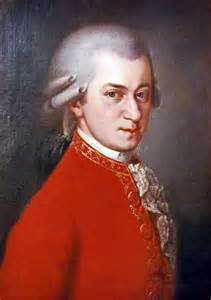
The next meeting takes place tonight, 28 November when Peter Curbishley will be presenting ‘Mozart’s last year’. Mozart died in December 1791 and the last year of his life was full of incident and great music. Some masterpieces including the Requiem and the Magic Flute were composed as well as La clemenza da Tito.
Many people have been influenced by the Peter Shaffer play, Amadeus which, although entertaining, was full of nonsense. The presentation will try and give some of the facts surrounding his last year and of course, play some of the music …

By now, existing members will have received their invitation letter and programme for the 2016/17 season. We are pleased with what we have in the programme which includes a ‘live’ event and outside speakers on Bruckner and Delius. We have stayed away from Bruckner because his symphonies are on a massive scale but we are delighted that Terry Barfoot has risen to the challenge to give us a presentation on this important composer. Proms listeners will have had a treat this year with several of his works being performed.
If you are new to this site we hope you will give us a try and if you just want to come along to an evening – because you have a particular interest in a composer for example – then it is only £3 to help cover costs.
One of our guiding principles is to widen knowledge of the musical world and speakers will often try to introduce unfamiliar pieces, either by composers who are almost forgotten or less well known pieces by major composers.
Parking is easy with plenty of space and we are within walking distance of the town centre.
The new season’s programme has now been finalised and will soon be printed for distribution. You can see a copy of the brochure here ahead of publication. The committee has put together an excellent programme with two outside speakers and one, for the first time, from the Delius Society. We have one ‘live’ music evening as well as presentations on a wide range of topics from Society members themselves.
Meeting arrangements are as before and parking is easy. New members are always welcome – we’ve had several this year – and if you want to come along to an evening without commitment, there is a small fee of £3 to help with our expenses.
Existing members: if you can do anything to help promote events that would be appreciated.
The first evening will be on Monday 19 September.
 Salisbury Recorded Music Society