Bernstein: musical polymath

bernstein
Leonard Bernstein

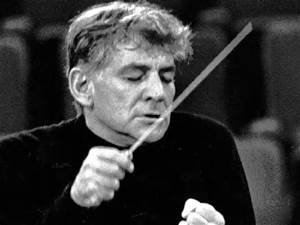
Leonard Bernstein had many talents and at the last meeting of the Society three of them were on vivid display in a presentation by Alan Forshaw.  First was his ability as a pianist was shown in a recording, made in 1946, of Ravel’s Concerto for Piano and Orchestra from which we heard the first movement.  It is no surprise Bernstein liked this piece with its strong jazz influences and powerful rhythms.  We also heard him play one of his own compositions, Seven Anniversaries recorded in 1947.

His second great skill was as a conductor for which he was in great demand.  He was the principal conductor for the New York Philharmonic Orchestra for many years.  Examples we heard included the second movement from Shostakovich’s Piano Concerto No. 2 with the NYPO with Bernstein conducting from the keyboard and also the Adagietto from Mahler’s 5th Symphony.

He was an accomplished composer in a wide range of genres.  Few may of heard of his Clarinet Sonata for example, his first composition.  More familiar perhaps is his Symphony No. 1 from which we heard the second movement with its strong rhythms and echoes of Stravinsky.  We also heard part of his Symphony No. 2 for Piano and Orchestra both recordings with the NYPO.

He was a composer of operas and first was Trouble in Tahiti – an opera in seven scenes – from which we heard scene 2.  Candide did not achieve critical acclaim unfortunately and had to wait two decades before it found a place in the repertoire again.  West Side Story is undoubtedly his most successful work, loved the world over and was made into a film.  Two extracts were played: Tonight performed by Jose Carreras and Kiri Te Kanawa, and Somewhere, in a performance conducted by Bernstein himself.

Alan explained that Bernstein was the son of a Ukrainian immigrant and it is perhaps worth reflecting on the enormous contribution east European and Russian immigrants made to the life of the United States.  Not just musicians, but scientists, writers, mathematicians and in many other areas of cultural life.  As the UK is struggling with the ‘threat’ of immigrants fleeing Syria and other war torn areas, it is worth remembering on the benefits that they can bring, as Bernstein did to the USA and musical life generally.

This was an accomplished presentation which gave an insight into the range of talents Bernstein had and the musical legacy he has left behind. A musical polymath indeed.


Bright, shiny and new

Wine merchants often say that particular wines needed ‘careful selection’ especially after a poor harvest and these words came to mind after last night’s presentation of new music by Peter Horwood.  Some modern music is difficult to take to especially if melody, harmony and structure have all been abandoned in the name of some kind of ‘ism.  Under the title of Bright, shiny and new, Peter had selected works composed this century and what a fine selection it was.  With perhaps a few notable exceptions, many of the composers were unfamiliar and their pieces for the most part unheard.

He focused on works which were approachable starting with extracts from Flight by Oliver Davis, a violin concerto composed in 2012.  Davis only graduated in 1994 yet has many pieces to his name.  This is definitely a composer to look out for and the concerto was melodic and definitely ‘approachable’.

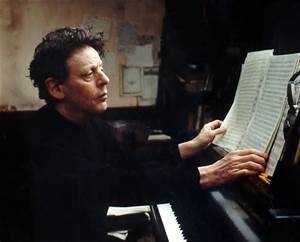
Philip glassThis was followed by three pieces by Philip Glass: first piano etude No. 17 which was more lyrical than we have come to expect from this composer; the third movement of his Symphony No. 10 which had rhythmic brass and a march like theme and thirdly, the second movement of Symphony No. 10 which had a magical feel to it.  It is easy to be put off by some of Glass’s music but this selection was certainly a ‘way in’ to this composer.

We moved on to Kenneth Fuch’s string quartet No. 5 called the American.  This was followed by James MacMillan’s Tu es Petrus  (no, not the wine!) from his percussion concerto with plainchant (sounds odd described thus but it does work) premiered in 2010 which has been performed in Westminster Cathedral.  We also heard his more modest O Radiant Dawn from his Strathclyde motet.

On to the Baltic next and a piece by he Finnish composer Rautavaala, born in 1928, called Incantations – a percussion concerto – and the extract we heard had a xylophone accompanied by a string ensemble.  He has written eight symphonies and is described as a ‘neo-romantic’.

Valentyn Sylvestrov
Valentyn Sylvestrov

The Ukrainian composer Valentyn Sylvestrov contributed some pieces next, first Bagatelles Nos. 1 -3 and then, Waltz of the Hours.  Sylvestrov was one of those who struggled under the yolk of ‘Soviet Realism’ but has lived to tell the tale.  Parts of his work were reminiscent of Mahler.

Finally, two pieces by Pêteris Vasks: the first movement from his Cello Concerto No. 2 composed in 2015 and started with a long solo section followed by the orchestra and this was followed by Viatore – a tribute to the Finnish composer Avo Pärt. Vasts had to leave Latvia during the Soviet era as he was a Baptist and had to finish his training in Lithuania.

… well not quite final because we had a brief extract from the music to Pirates of the Caribbean composed by Hans Zimmer. 

This was a particularly enjoyable evening and one of discoveries.  That the speaker was able to come up with nearly two hours of approachable music composed in this century was an achievement.


Next meeting on 15th and is of Bernstein


Berlioz Miscellany

Evening of the music by Berlioz

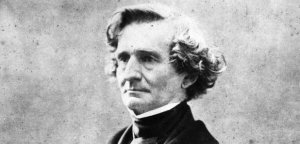
Last night the Society was pleased to welcome Alastair Aberdare, Chair of the hector-berlioz-Berlioz Society who presented what he calls a Berlioz Miscellany.  This was an illustrated presentation with portraits and photographs of the composer and scenes from his operas.

Most of the music played was by British conductors for example, Sir Roger Norrington; the late Sir Colin Davies and John Eliot Gardiner.  It these conductors, along with others in the past such as Sir Thomas Beecham, who have done much to popularise this composer and expand the repertoire of recorded compositions.  It is also noteworthy that the finest biography is by the Society’s president, David Cairns.

Alastair said there were two key facts about Berlioz: one is the creation of mood by using different orchestrations and the second is that he is always ‘telling a story’.  In addition to being a fine composer, Berlioz wrote several books including Evenings in the Orchestra and a treatise on orchestration.  He was also a journalist and some of his pieces are being made available on the Berlioz website

The first piece was the youthful overture Les Francs-Juges which older readers will recall was used in the BBC programme Face to Face.  The second piece was a wistful melody le Jeune Pâtre Breton.  For some who still see this composer as someone writing for big forces, the delicacy of his songs can be a surprise.

Next was the Marche funèbre pour la dernièr scène d’Hamlet.  Berlioz was captivated by Shakespeare and wrote several pieces based on his works most famously, Romeo and Juliet.  This was followed by La Course l’abîme from La Damnation de Faust a work which failed to appeal when it was first introduced and the negative reaction greatly disappointed the composer.

This was followed by the Pantomime scene from his great work Les Troyens which Berlioz never heard in its complete form and was pronounced unperformable for many years.  The Duo Nocturne from Beatrice and Bénédict followed which was based on another of Shakespeare’s plays Much Ado About Nothing.  Back to the songs with a performance by Dame Janet Baker of Spectre de la Rose from the charming song cycle Les nuits d’été and there was just time to hear a movement from Te Deum.

An excellent evening.


In two weeks it’s the members’ evening starting at 7.30 as normal on 30 November.


New season kicks off at the end of the month

The new season kicks off at the end of this month with Ed Tinline playing music by

Sibelius
Sibelius

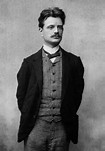
Sibelius.  This is on 21st  September at the usual time of 7.30.  Ed is currently researching his presentation and where else but Finland itself at the 150th anniversary festival?

Copies of the programme are to be found in the Collector’s Room in Endless St; Oxfam upstairs; the Tourism Information Centre and the Library.  You can also download it here:

2015 16 programme

Don’t forget you can see us on Twitter now and you can find us at @salisburyai.

On a sad note, members will be sorry to hear of the death of David Phillips who passed away on 25th of August after a short illness.  David was a loyal member for many years although he wasn’t able to attend recently.  Our thoughts are with his family.

Hope to see you on 21st.

Final meeting of the season takes place on 1 June

The final meeting of the season takes place on 1 June at the usual place and usual time.  It is a change to the programme and will be a presentation by Ian Lance entitled ‘A critic’s choice, 2014’.

This has been an interesting year and members have heard a range of unusual pieces, some by rarely heard composers and some lesser played works by famous composers.  The new programme is in preparation and will be available later in the summer.  If you have any ideas for inclusion in the programme, or you know of someone who could present something, we would be delighted to hear from you.

New Season gets underway

Frida cropped
Frida Backman

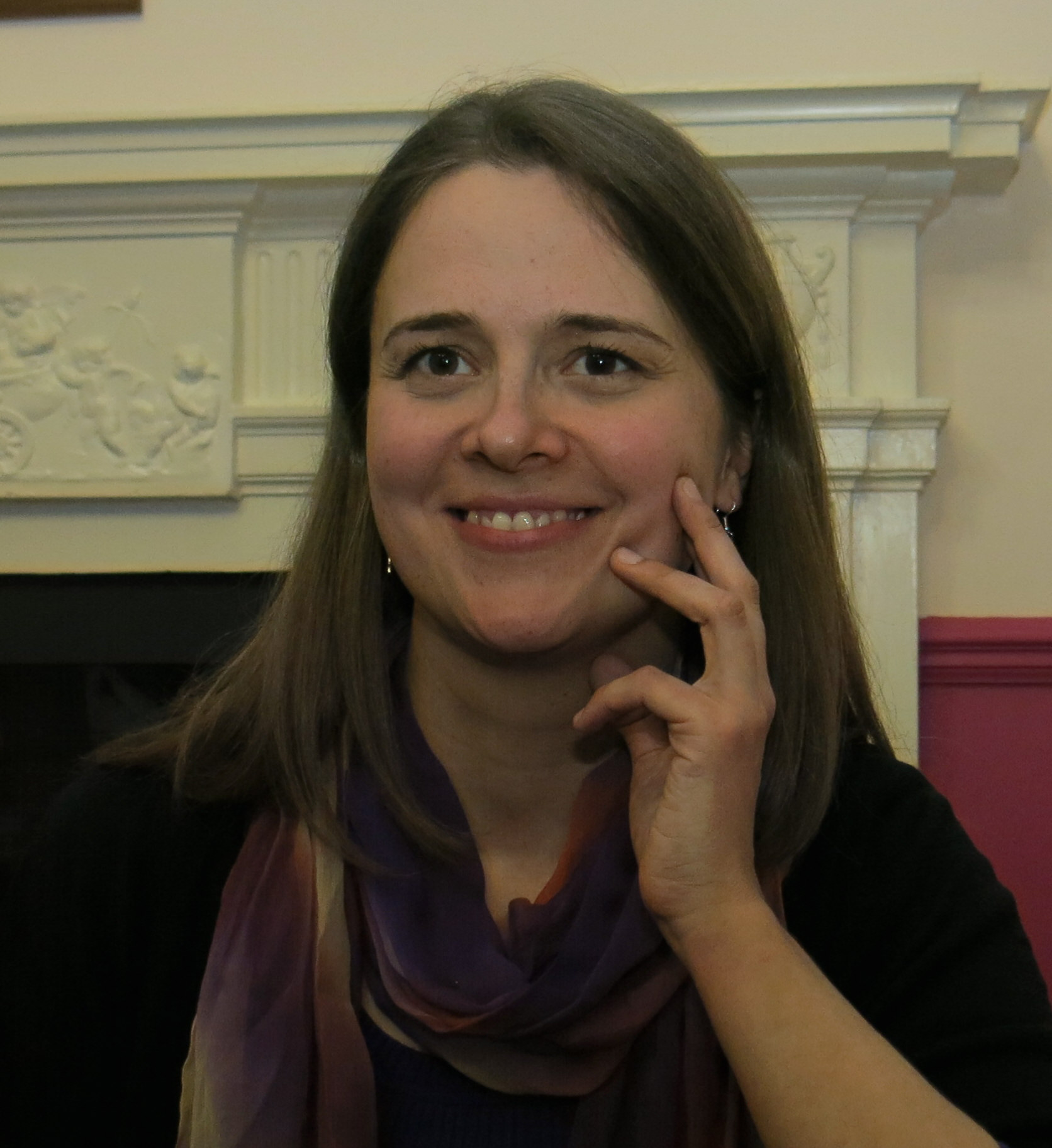
The Society’s new season got off to a flying start on Monday night with a presentation by Frida Backman of the Backman Trio.  The substance of her talk was the making of a music CD which rather underplays what might have been a rather workmanlike presentation.  However, it was much more than that.  Frida had uncovered a previously unpublished work by Sibelius no less, which they had managed to piece together and perform as part of their first CD.

Frida won’t be unknown to local music lovers and only last Friday, she performed with Salisbury based pianist Lynda Smith in Sarum College as part of their lunch time series of concerts.  The Trio was founded in 2009 in London by British pianist Marcus Andrews, Finnish violinist Freda Backman and British cellist, Ruth Beedham.  In 2014 they returned to Finland and performed at the Aino Atke festival in Helsinki as part of the CD launch.  With financial support from the Swedish Cultural Foundation in Finland, the group was able to resurrect the composer Eric Bergman’s piano Trio No 2 of which we heard an extract.  Bergman (1911 – 2006) is another of those composers of whom little is heard today but he has a large repertoire of work.

Backman Trio
Backman Trio

Frida went through the lengthy process of making a CD and included a discussion of the differences between a live and studio performance. With the former of course, there is only one chance and the tension is high to get it right.  A studio performance on the other hand involves many hours of takes and retakes and keeping the performance fresh can be difficult to achieve.  Unless one is lucky to have a recording contract, there are the costs to consider and then how to launch and promote the finished thing.

The evening ended with a performance of a previously unknown work by Sibelius – Fantasia, performed by the group.  It was remarkably accessible and the recording was – in the opinion of the writer – clear, well balanced and bright.  It is available from the Collectors Room in Salisbury UK.

A most enjoyable and informative evening.