NB the programme says 4 October which is incorrect – it is tonight 2nd.
The title of the next meeting is Music from the Schubert Centenary International Composers’ contest of 1928. It will be presented by Robin Lim and starts at 7:30 in the usual place on Monday 2 October. Visitors are welcome and there is a modest fee of £3 to cover our expenses. The evening will start with a brief agm.
[If you saw the piece in last week’s Salisbury Journal, that referred to the previous meeting on Busoni but the item was held over]
The next meeting takes place on Monday 8th of May and will be a member’s evening. If you have a particular piece you like or want to hear played then liaise with Anthony Powell. Usual place usual time.
Our next meeting on Monday 24th April celebrates the music of the English composer Frederick Delius. We are pleased to welcome Martin Lee-Browne to the Society who is from the Delius Society and will be coming down from the Midlands to speak to us and play some of his works.
Normal start at 7.30 and details of where we are can be found at the top of the page. It is £3 for non-members. Parking is easy and the room is accessible for people with disabilities. We look forward to seeing you.
The next meeting of the Society will be on Monday 20 March starting at 7:30 as usual and will a presentation by Ed Tinline on the development of woodwind. He will be playing a selection of pieces including wind soloists and also ensemble playing.
The committee will be meeting immediately prior to the main session. If members reading this have any points they would like the committee to consider, or you might be interested in presenting or co-presenting a session, please let one of the members know.
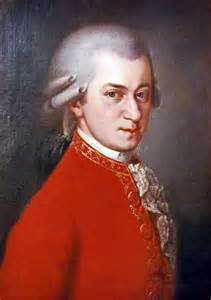
The next meeting takes place tonight, 28 November when Peter Curbishley will be presenting ‘Mozart’s last year’. Mozart died in December 1791 and the last year of his life was full of incident and great music. Some masterpieces including the Requiem and the Magic Flute were composed as well as La clemenza da Tito.
Many people have been influenced by the Peter Shaffer play, Amadeus which, although entertaining, was full of nonsense. The presentation will try and give some of the facts surrounding his last year and of course, play some of the music …
One might be forgiven for thinking that the only composer of note to emerge from the city state of Venice was Vivaldi. His Four Seasons is relentlessly played in shops and on Classic FM along with Eine Klein Nachtmusik by Mozart. Last night, Peter Horwood showed that in fact the Venice school produced a huge range of composers and that the city was a pathbreaker in several musical forms.
He went right back to the fourteenth century with some Gregorian chants and pieces of choral music by Marchettus de Padua, Ave corpus sanctum; Francesco Landini, motet principium nobilissime; and Johannes Ciconia, motet: Venecie Mundi Splendor. Some of this music was composed for ceremonial purposes, some for religious.
Monteverdi picture: Wikipedia
As the evening went on, it was interesting to see the development of style and the addition of orchestral instruments to the choral works. The first operas were written here and indeed some composers seem to have composed prodigious numbers of them. Monteverdi featured and included an extract from one of his operas La Favola d’rfeo and the ritornello, Dal mio Permesso amoto.
One of the composers who impressed the audience was Tamaso Albinoni and his Concerto No 2 for oboe and strings in D minor from which we heard the enchanting Adagio. The three movement concerto form which we know so well today was first developed in Venice.
The historical context was also interesting with the observation that as Venice’s economic fortunes declined by contrast, the artistic life flourished. One wondered if there could be a similar thing going on today …
Venice eventually got conquered by the invasion by Napoleon but even so, musical life went on and the evening finished with a composition by Malipiero (1882 – 1973) Gabrieliana – Allegro vivace. In modern times, composers have visited the City and composed works there. These include Wagner, Stravinsky, and Britten.
A superb presentation by Peter and fascinating to see and hear the development of style and composition over seven hundred years.
The next meeting of the Society will take place on Monday 3rd October at 7:30 as usual. It will be preceded by a short agm and then there will be a presentation by Robin Lim on the subject of early stereo recordings. Older readers may recall the days when stereo started to make its appearance in the home. There used to be salesmen who would come to your home and install a gramophone to demonstrate this wonderful sound experience. One recording designed to show off the effect was of a steam train rushing past – first in one speaker and then in the other. Robin probably won’t be playing us that but it should be interesting to hear the early recordings using what was then, new technology.
The new season’s programme has now been finalised and will soon be printed for distribution. You can see a copy of the brochure here ahead of publication. The committee has put together an excellent programme with two outside speakers and one, for the first time, from the Delius Society. We have one ‘live’ music evening as well as presentations on a wide range of topics from Society members themselves.
Meeting arrangements are as before and parking is easy. New members are always welcome – we’ve had several this year – and if you want to come along to an evening without commitment, there is a small fee of £3 to help with our expenses.
Existing members: if you can do anything to help promote events that would be appreciated.
A century ago, the First World War was in full swing. The battle for Ypres was taking place in April 1916 and it was the first time phosgene gas was used. It is difficult to believe that out of this carnage and bloodletting, some lovely music, poetry and art was created.
At the last meeting, Richard Seal played a selection of pieces which were composed during the time of the war or inspired by it. Richard was much moved by visits to the war graves in Flanders including Vimy Ridge, Arras and Thiepval where he hopes to go to again.
He began with A Shropshire Lad by George Butterworth who died on the Somme in 1916 aged just 31. This is a familiar piece and his death was a great loss to music. This was followed by the last movement of Morning Heroes by Sir Arthur Bliss who lived until 1975 but who lost his brother in the conflict. He returned to the battlefield in 1928 and this piece was the result of that visit.
This was followed by Three songs by Ivor Gurney. Gurney had a troubled life and was both a poet and composer. He was gassed while serving with the Gloucester regiment but his biggest problem was his mental health. At the time he was thought to be the greatest of his generation but his full promise never materialised.
Britten was too young for the war but his War Requiem, which was composed for the consecration of Coventry Cathedral destroyed in WWII, was inspired by the poems of Wilfrid Owen who regrettably died a week before the Armistice.
This was followed by an Elegy for strings and harp by Frederick Kelly who died in 1916. An Australian he also had a gold medal for rowing in the 1908 Olympics and this elegy was in memory of Rupert Brooke who also lost his life.
Some pieces by Charles Ives followed including In Flanders’ Fields composed in 1917.
The evening finished with the last movement of the Pastoral Symphony by Vaughan Williams. The First World War, in which he served in the army in the medical corps, had a lasting emotional effect.
It was a fascinating evening and the presenter’s erudition about this moving period of our history shone through.


 Salisbury Recorded Music Society