
Music of Salzburg

You might think that an evening of music with a title such as this would be … well, Mozart, Mozart and more Mozart. Anyone who has been to the city will know that he is well remembered there and there are plentiful shops selling Mozart chocolate, Mozart china and I have forgotten what else. Today, we tend to see Vienna as the historic and cultural centre of that part of the world, but it was for a long time Salzburg – once its own kingdom apart from Austria – which was the cultural centre of that part of the world. It was here, that the first opera was performed north of the Alps.

In fact it was an evening with no Mozart at all because, as the speaker explained, the City was something of a centre of music before the famous composer’s time and attracted talented musicians from Italy, Germany and elsewhere. Angus Menzies took us through a number of pieces, some by quite well known composers, and others less well known. 
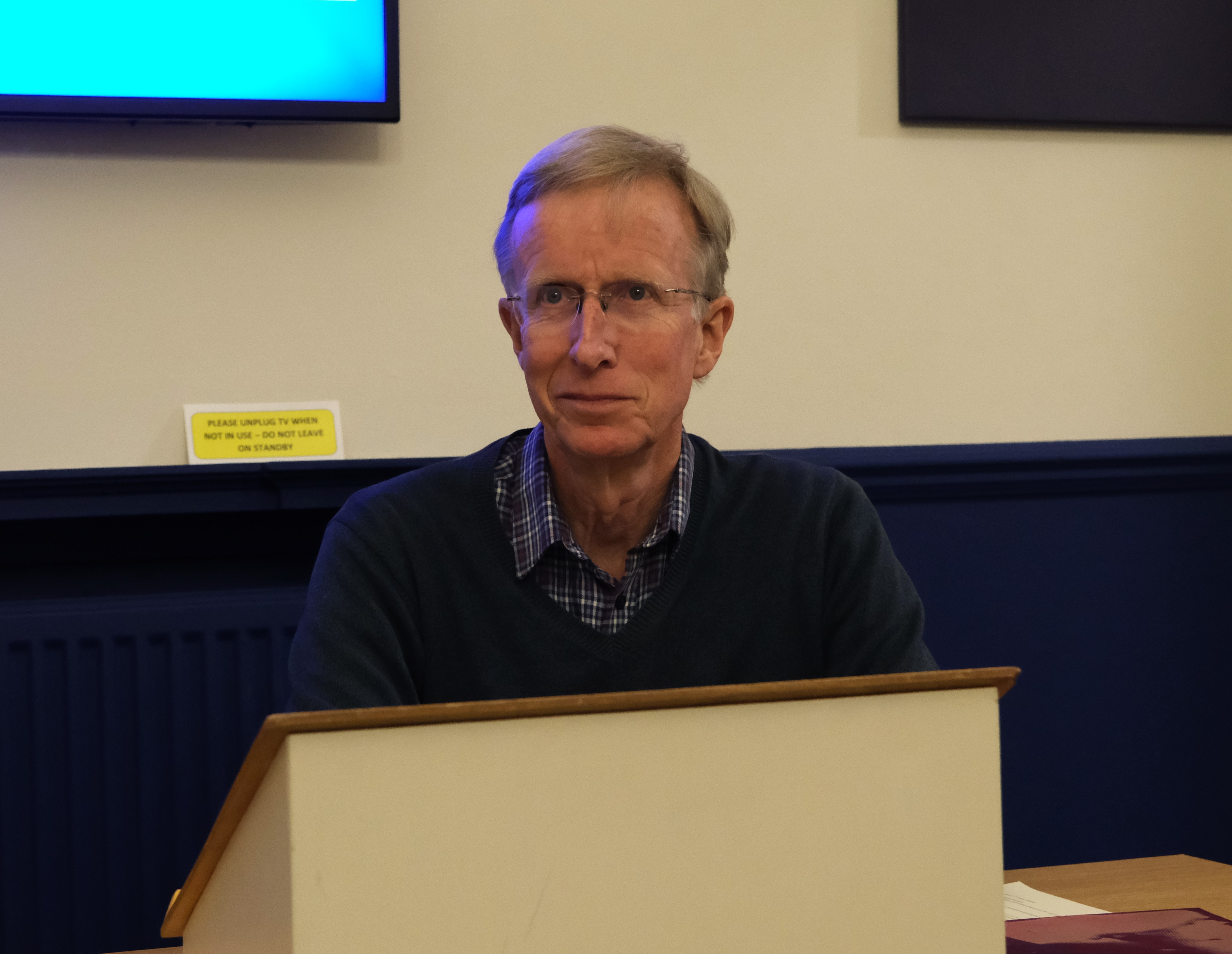
These included pieces by Biber for example who was thought to be the finest violinist in Europe in his day, Bernardi, the Salzburg Requiem, some Monteverdi, and works by Muffat, Sonata No 5.

The speaker was praised for his breadth of choice and how music at the time linked to social history. It is one of the features of the Society that, in addition to the music, we get to hear something of its place in history, how it came to be written and something about the composer. We also get to hear from composers who are either forgotten or unfairly neglected. One of the problems today is that unless a composers name begins with B, M or S, it is unlikely to be played in a concert setting!

The next meeting is on 26 February at 7:30 as usual and is music from the Southern hemisphere.

Peter Curbishley
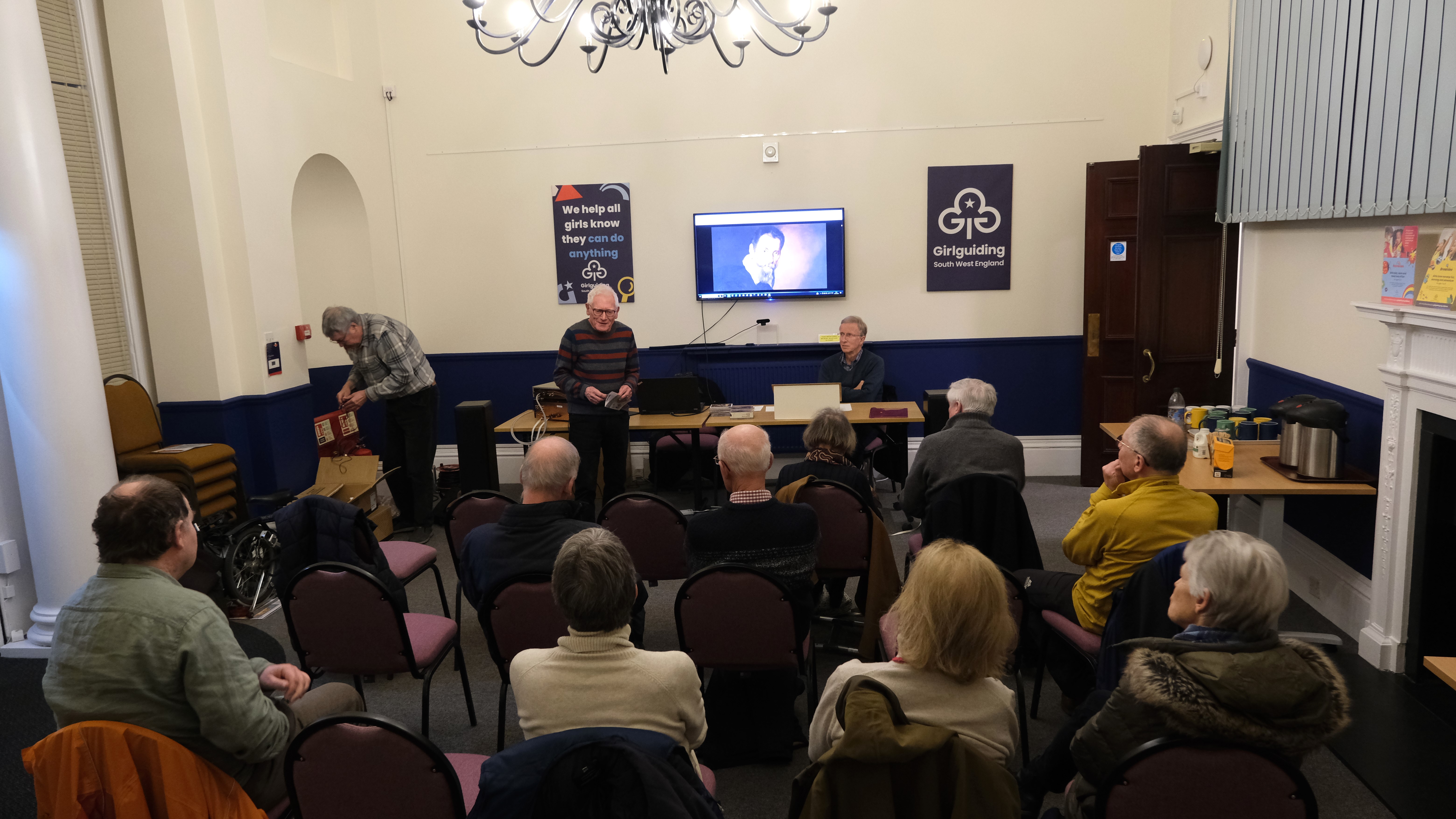
View of the music room (pictures: Salisbury RMS)

Anton Bruckner

Picture: Wikipedia

For some, Anton Bruckner (pictured) was one of the great symphonists to come out of the nineteenth century.  Nowadays, his works are performed around the world and are a regular feature of the repertoire.  There are many recordings of the nine numbered symphonies.  But for a long time, his reputation languished and there was a major effort to recognise his genius in the 1960’s.

At the last meeting of the Society, Terry Barfoot gave an illustrated history of the composer and played four movements from 4 different symphonies to illustrate his work.  Bruckner was born in Ansfelden in Austria in 1824, the son of a school teacher.  He himself became a school teacher.  He was an organist of prodigious ability and toured Europe mostly playing improvisations.  Little of this survives.  He was the first to play the organ at the Royal Albert Hall in London.

View of the organ, RFH. Picture: Peter Curbishley

One can hear the influence of the organ in his music.  As Terry put it:

[…] the sound-world of the organ in the resonant acoustic of a great cathedral is relevant in his symphonies, as of course it is in his religious works.  From Wagner he derived his long time-spans, his weighty brass writing and expressive string textures, while another recurring was Beethoven’s Ninth Symphony, and especially its opening […]

He was clearly a late developer as a composer and Terry made the point that had he died at the same age as Schubert (31) he would today be completely unknown.

He was deeply religious and trained as a musician at the monastery church at Sankt Florian a place he was to return to throughout his life especially when he was depressed.  He was also organist in Linz.

Like so many composers – indeed artists generally – he was not appreciated fully in his lifetime.  The famous critic Eduard Hanslick gave him a hard time and his time with the Vienna Philharmonic was not a success.

Terry put together a programme to illustrate his range and development as a composer.  Bruckner is something of a challenge in the context of a Society evening as the expansiveness of his music does not lend itself to short extracts!  He played the following:

  • Motet: Locus Iste
  • Symphony No. 8 first movement
  • Symphony No. 6 second movement
  • Symphony No. 4 third movement
  • Symphony No. 7 fourth movement

Together with photographs of locations around Austria where Bruckner lived or worked this was an interesting and illuminating evening.  We were grateful to Terry Barfoot for putting it together.

Peter Curbishley


Terry runs Arts in Residence

Note: the next meeting is not for 3 weeks because of Easter