The March meeting of the Society will take place tonight, Monday 11th March at 7:30 and features the English composer Rutland Boughton. He was extremely popular in his day and was a prolific composer with symphonies and operas to his credit. His star has waned and he is now seldom performed. So it is with great pleasure that we will be welcoming Ian Boughton to play a selection of his works and widen our knowledge of this composer. The title of the presentation is Rutland Boughton: beyond the Immortal Hour, one of his best known operas from a play with the same title.
The Society prides itself on widening the knowledge of its members and this is another example of that, to go along with the presentation on Holst in January.
We look forward to seeing you and it is £3 for non-members at the door. Free parking at the rear.
The February meeting of the Society was an exploration of the music south of the equator presented by Ed Tinline of this parish. With the odd exception, it would be fair to say that much of the music from this part of our world is largely unknown. The dominance of the European canon makes pieces from faraway places like Australia or New Zealand something of a rarity despite people claiming we live in small world nowadays.
Perhaps an exception is Percy Grainger who is well known although it has to be said he lived much of his life in America and from time to time in Europe. We heard the Colonial Song of 1911 which originally was poorly received. It was meant as an evocation of the Australian landscape. Grainger held some extreme racist views and was a supporter of Nordic culture.
John Antill was an Australian composer best known for his work Corroboree of which we heard three extracts: the Welcome Ceremony, Dance to the Evening Sun and A Rain Dance. The first was strongly influenced by Aboriginal rhythms.
The Australian composer Peter Sculthorpe focused much of his compositional energy on incorporating themes from Aboriginal culture and sounds of the Outback. Ed selected one his better known works Kakado which I noted as a ‘sombre piece buy richly textured’. We also heard part of Earth Cry which may be the only orchestral composition to incorporate the didgeridoo.
The first half ended with a composition by another Australian Ross Edwards, another composer with a strong interest in Australian culture. We heard two movements from Full Moon Dances – Concerto for alto saxophone and orchestra. Edwards was something of a recluse although his work has found its way into concert programmes around the world.
The last Australian composer to be featured was Alfred Hill and his Symphony No 5 in A minor – the Carnival. This had a strong European feel, in contrast to his fellow compatriots and there were odd traces of Tchaikovsky and maybe others.
The last item was by Douglas Lilburn, the only New Zealander to feature, with his Aotearoa (Land of the Long White Cloud), and the Festival Overture. Lilburn was taught composition by Ralph Vaughan Williams.
Well it wasn’t quite the last as we ended with the Traditional Maori song Pokarehare sung by Dame Kiri Te Kanawa.
As ever, it was an evening of mostly discoveries with the odd familiar piece and reflected the range and depth of music in this part of the world. We only heard a small sample of course and was summed up in the vote of thanks that the music had an ‘intangible flavour of its own’.
The Society meets tonight, Monday 26th February, for an evening of music from the southern hemisphere. Starts at 7:30 as usual and only £3 at the door if you are not a member. Free parking just outside the door.
You might think that an evening of music with a title such as this would be … well, Mozart, Mozart and more Mozart. Anyone who has been to the city will know that he is well remembered there and there are plentiful shops selling Mozart chocolate, Mozart china and I have forgotten what else. Today, we tend to see Vienna as the historic and cultural centre of that part of the world, but it was for a long time Salzburg – once its own kingdom apart from Austria – which was the cultural centre of that part of the world. It was here, that the first opera was performed north of the Alps.
In fact it was an evening with no Mozart at all because, as the speaker explained, the City was something of a centre of music before the famous composer’s time and attracted talented musicians from Italy, Germany and elsewhere. Angus Menzies took us through a number of pieces, some by quite well known composers, and others less well known.
These included pieces by Biber for example who was thought to be the finest violinist in Europe in his day, Bernardi, the Salzburg Requiem, some Monteverdi, and works by Muffat, Sonata No 5.
The speaker was praised for his breadth of choice and how music at the time linked to social history. It is one of the features of the Society that, in addition to the music, we get to hear something of its place in history, how it came to be written and something about the composer. We also get to hear from composers who are either forgotten or unfairly neglected. One of the problems today is that unless a composers name begins with B, M or S, it is unlikely to be played in a concert setting!
The next meeting is on 26 February at 7:30 as usual and is music from the Southern hemisphere.
The Society meets tonight (12th) to hear Angus Menzies’ presentation The Sound of Music in 17th Century Salzburg. Starts at 7:30, £3 at the door for non-members and there is free parking right outside.
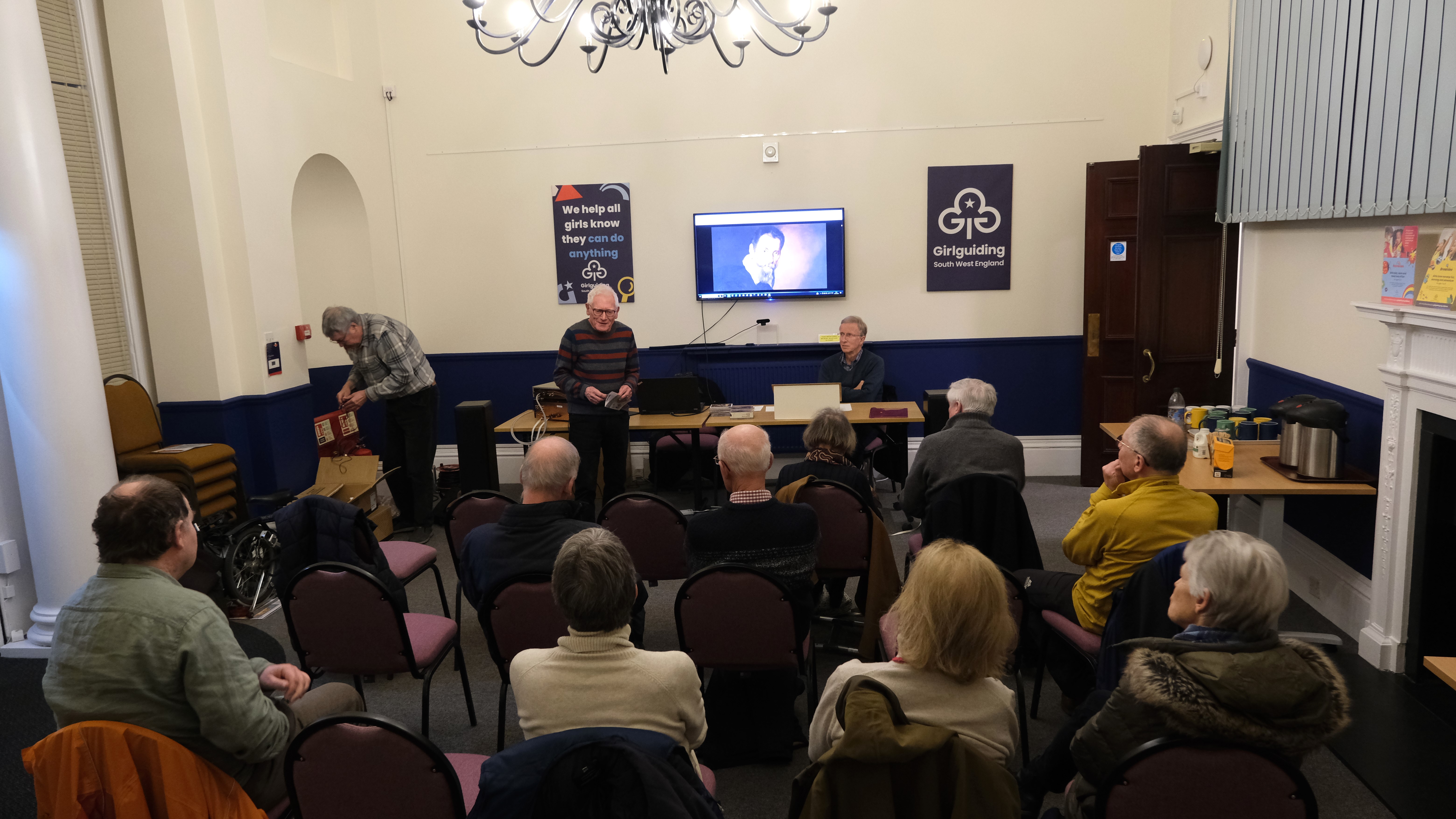
This was the title of a presentation to the Society about this English composer
January 2024
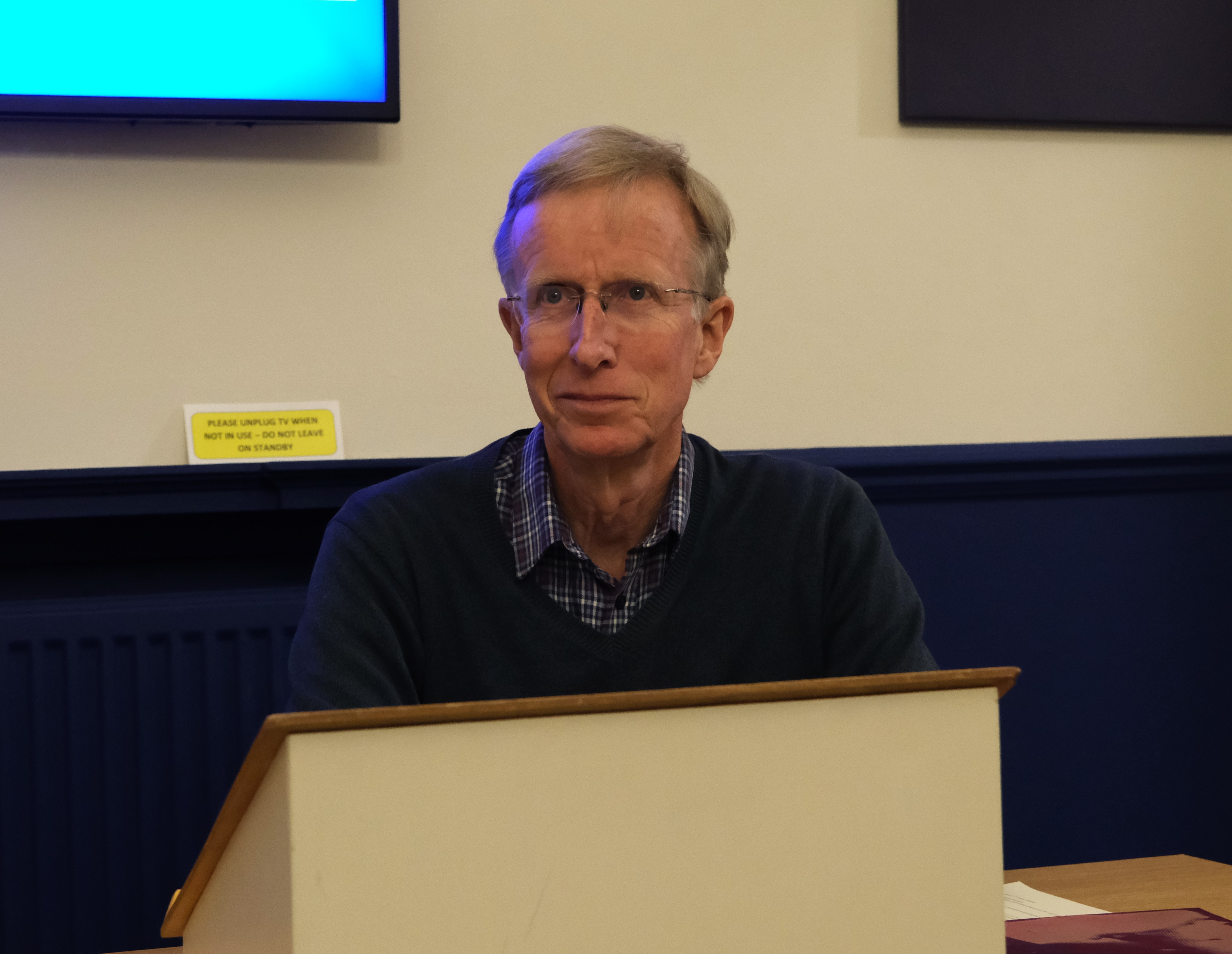
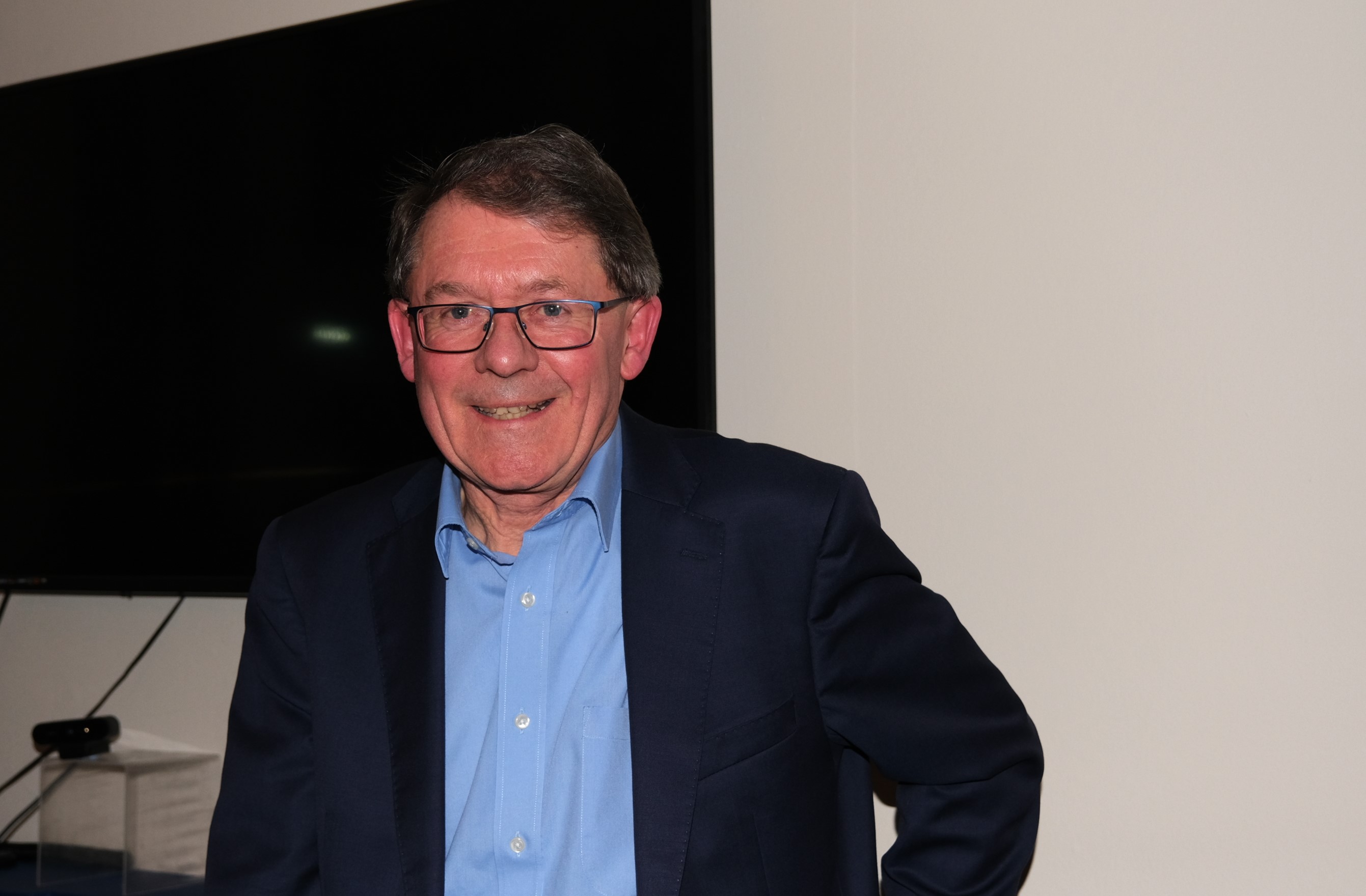
The Society was delighted to kick off the second half of its season with a presentation from the Chairman of the Holst Society, Christopher Cope (pictured). Holst is one of those composers who is almost exclusively known for one work, The Planets. He joins a number of others who are ‘one piece composers’ such as Dukas, Widor and Litolff who almost suffer from the fate of a single piece which crowds out their other works. It has sometimes come as a surprise at Society meetings when other parts of composer’s works are played and we say ‘why haven’t we heard this before?’
This was the theme of Christopher’s presentation who gave a history of this important English composer. Yes, English, for despite his name and the ‘von’, he was born in Cheltenham in 1874. The ‘von’ was added by his grandfather Chris said for added kudos. His early work was strongly influenced by Wagner and he was keen later on to distance himself from him.
He was friendly with Ralph Vaughan Williams who was much influenced by his work. VW gave him a sum of money to enable him to go travelling and he went to Algeria going round on a bicycle noting down musical themes and ideas as he went. A result of this was Beni Mora (AnOriental Suite (a little out place) from which we heard an excerpt.
He took time off to learn Sanskrit at one point in his life and translated some works by writers of that language and set some of them to music.
So why is he not better known and why only The Planets? Chris noted that it was the 150th year of his birth so there will be interest in his music but it is likely only to be this one piece which is played. One reason might be that he spent a lot of time teaching and conducting leaving little time for composition. The great majority of his oeuvre are short pieces: songs and church music with a strong influence of English folk songs. The lack of a corpus of symphonies and concerti may mean promoters do not want to feature his work.
The Planets certainly brought him fame and recognition but it seems he found this to be profoundly unwelcome and turned down honours and eschewed what we would today call the ‘celebrity circuit’.
He was clearly an original and Chris said he was influential with both Vaughan Williams and Ben Britten (and no doubt others as well). He died relatively young at 59 and clearly he still had much to give. He joins a long list of composers who died in their prime.
Chris played a range of pieces including an Invocation for ‘cello, and an excerpt from West Country Tunes, Swansea Town.
It is a pity that he has become this one-horse composer: the pieces we heard were diverse and original. One question might be whether there was a recognisable ‘voice’ which led you to know it was Holst even though you had not heard a particular piece before.
The Chair thanked Chris for his informed, not to say erudite presentation which has opened our eyes to this important but somewhat overlooked English composer.
Peter Curbishley
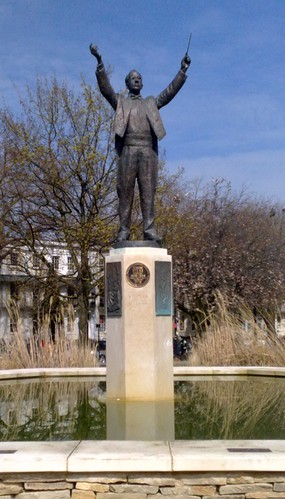
Statue of Holst in Cheltenham
Pictures: Salisbury Recorded Music Society
UPDATE: Readers in the Salisbury area might like to know there is a performance of some of Holst’s choral music on Sunday 18 February at 2pm. They will be performed (with other works) by the Larkhill Choral Society at the Bustard Inn on the edge of the Plain. 2 February
Second half of the programme starts on Monday 29th January
January 2024
Last night: review shortly.
The second half of the Society’s season starts on Monday 29th at 7:30 as usual with a presentation by Chris Cope posing the question ‘is there more to Gustav Holst than the Planets?’ Holst was a reticent man and the fame which followed the success of the Planets was not altogether welcome. Much of his music was unknown but there has been something of a revival since the ’80s and hopefully we will hear more during Chris’s presentation.
[This event may appear in the Salisbury Journal’s What’s On page and even though it was posted with the correct date, the confirmation was returned with Friday shown and I have been unable to change it. To confirm: the meeting is on Monday 29th].
Successful evening despite change to the programme
Due to unforeseen circumstances the last evening of the year was a success with four of the committee members stepping up with their selections of music with a Christmas theme. Not surprisingly, Bach featured in two of the presentations: first with the Christmas Oratorio BWV 248 intended for performance during the Christmas period.
Second, we had the rather unusual Mrs Kennedy’s adaptation of ‘A Christmas Carol‘ with the voice of Bernard Miles among others. This is available on YouTube .
Thirdly, were two extracts from L’Enfance du Christ by Berlioz. This piece grew slowly following a tune which popped into his head at a card game. This became the well known Le Choeur des Bergers. He added further pieces bit by bit eventually shaping into the final work which was a huge success.
Grieg is one of those composers who is well known for a small handful of their output – in his case the piano concerto comes to mind – the rest of their oeuvre can often remain unperformed appearing fleetingly on Radio 3. We heard his Sonata for violin and piano Opus 45. This is the last of his sonatas for violin and was composed in 1887 a little before he began to enjoy some fame.
Finally, more Bach with some selections from the Christmas Cantatas including BWV 63; 91; 40 and 110. This is part of the major effort by the conductor, John Eliot Gardiner, to record all the extant Bach cantatas, many of which, regrettably have been lost.
Coincidentally, both Bach selections and the Berlioz were by Eliot Gardiner who has stepped back from conducting following an unfortunate incident surrounding the performance of les Troyens at the Proms. We must hope he returns to the music scene soon.
Merry Christmas to our readers and we restart on 29 January 2024 when we welcome a speaker from the Holst Society who, like Greig, is largely know for one piece is in his case the Planets Suite. The title appropriately is ‘Is there more to Holst than solely the Planets?’
The next meeting of the Society is tomorrow, Monday 20 November starting at 7:30 as usual. It will be a change to the published programme due to unforeseen circumstances and will be on the subject of modern music. It is the last presentation on this subject by Peter Horwood who has found some gems from the world of recent compositions.
Only £3 on the door and there is ample parking outside.

 Salisbury Recorded Music Society