If youhave arrived here having read the report in the Salisbury Journal, welcome. Our next meeting – the last this year – is on Monday 27th and you would be very welcome to come. £3 for non-members.
The last meeting was a members’ evening where each will present and play a piece which they particularly like and want to share with others. A wide variety of pieces were performed:
it was probably the first time in some years we had heard Wolf-Ferrari and in this case it was the last 2 movements from the Jewels of Madonna
Mozart followed with a rare outing of Varrei Spiegarvi o Dio, an aria interopolated into another, now lost opera.
we do not often hear the bassoon as a solo instrument but a piece by Weber – andante and Hungarian rondo showed the instrument off well. It can sound strained in the higher registers but the soloist managed to avoid this
back to Mozart and a movement from a quintet K593 he composed around a year before he died
Alec Roth has almost certainly never been played before and is a composer with a slight Salisbury connection. We heard an excerpt from string quintet #2
this was followed by some Schubert songs – always a favourite
Bach and two cantatas from his time in Leipzig – BWV 8 and 95
there was then a mystery piece and this defeated the audience. It was part of Symphony #4 by the Polish composer Schmidt-Kowalski and several were impressed by this extract.
the penultimate piece was a Chopin ballade and to finish
.. Mendelssohn’s Scherzo from the Midsummer Nights Dream, but played on two pianos
A very diverse programme with no clear theme except that they were pieces loved by the members.
The music of James Oswald, described as the ‘Scottish Orpheus’
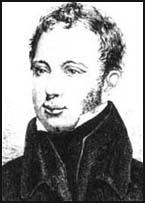
James Oswald was born in the little town of Crail, Fife and started life as a dancing master in Dunfermline. He spent time in Edinburgh and
James Oswald. Pic: Spartacus-educational
then went to London and started to compose music based on Scottish tunes then the rage in the 1740’s. He set up shop near St Martin’s Churchyard and this became a meeting place for expatriate Scots. He developed his links with the English aristocracy and was appointed Chamber Composer by George III.
We were delighted to welcome Jeremy Barlow to the meeting, an authority on this period of music. Jeremy is one of the most versatile musicians on the British early music scene, with a career encompassing writing, lecturing, and performing. After studying at Trinity College Cambridge and the Royal Academy of Music, London, his first job was as flutist with the Iceland Symphony Orchestra.
But what characterises Scottish music and makes it so recognisable? The basic reason is that it is based on the pentatonic scale not the normal 7 note scale we are used to. It also has a base accompaniment which is a chord which only changes one note at a time as the melody progresses. The third feature is something called the ‘Scotch Snap’, a short accented note before a longer note. These combine to give Scottish music its particular sound.
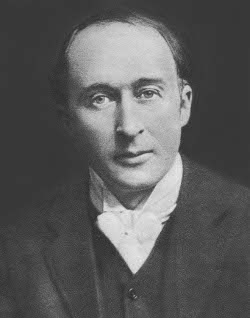
Jeremy Barlow
As an introduction, Jeremy played the Birthday Ode for Queen Mary composed in 1692 by Henry Purcell. This uses a Scottish tune in the base line. We also heard contemporary examples by William McGibbon; Francesco Geminiani and Alexander Erskine, Earl of Kelly. The main part of the evening was music by Oswald which included Airs for the Seasons, the curiously named Dust Cart Cantata and the Divertimento No. 8 for English guitar. Jeremy Barlow directed the Broadside Band in Airs for all the Seasons, Oswald’s finest work.
Oswald became particularly friendly with John Robinson-Lytton the owner of Knebworth House in Hertfordshire. After Robinson-Lytton died he married his widow and moved into Knebworth, he had surely come a long way.
An interesting evening concerning the work of a composer few would be familiar with.
I am indebted to the notes provided by Jeremy in writing this piece
Peter Curbishley
Next meeting 13 November which is a members’ evening so please let Tony Powell know what your choice is.
Many composers taught pupils in a kind of apprenticeship scheme. Composers often needed the money and no doubt the son or daughter of a wealthy family brought in a useful income. Some pupils went on to have promising careers – others did not have sufficient talent to succeed.
In last night’s meeting Alan Forshaw played pieces by a variety of composers and asked us to guess who had been their teacher. A combination of style, dates and where they lived or studied gave us a clue in some cases, especially the earlier ones, but it became steadily more difficult as we approached modern times. Once again in a Society evening, we heard examples of music by long forgotten composers who’s music is worthy of a hearing. Many were prolific in their day turning out operas, symphonies and concertos by the dozen. The pieces we heard were:
a piano sonata in C by Johann Muthel a pupil of JS Bach
the Adagio from the Symphonie Concertante in A by Ignaz Pleyel, who’s name survives on pianos and music scores. He wrote 41 symphonies. He was taught by Haydn and his influence was audible
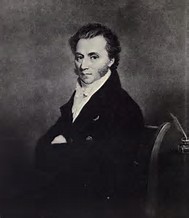
Thomas Attwood (pictured) studied in Vienna under Mozart and his remains are buried in St Pauls. We heard his Rondo from a Trio fo
Thomas Attwood
r Piano, Violin and ‘cello
this was followed by a Fantasia by Steven Storace who was born in London and also studied in Vienna
Carl Czerny is slightly better known and was a pupil of Beethoven. The master’s influence could clearly be heard in his Theme and Variations for Horn and Piano
another pupil of Beethoven was Ferdinand Reis, a native of Bonn (a clue) and his Rondo from a Piano Concerto in C# minor showed a lot of talent
Franz Liszt needs no introduction and was a pupil of Czerny in Vienna. We heard his Hungarian Rhapsody No 13
the immensely talented but almost unknown Carl Filtsch from Romania led Liszt to say when he heard him play, he would give up performing. Tragically, he died in his teens but his Impromptu in Gb Major showed what a loss he was to music
another pupil of Czerny was Thomas Tellefsen from Norway who also studied in Paris. Waltz in Db Major
Valsa Caprichosa from 3 Portuguese Scenes was composed by a pupil of Liszt, Jose Vianna da Motta who was born on the island of Sao Tome off the coast of Africa
Carl Reinecke has almost disappeared from view and is rarely heard today. His Finale from Wind Octet in Bb Major was a delight
Gabriel Fauré needs no introduction who was a pupil of Charles-Camille Saint-Saëns. We heard the famous Paradisum from the Requiem
Someone less famous, or even unheard of, is Eugene Gigout also from France who studied in Paris under Saint-Saëns. His Toccata in B Minor is exciting and worth listening to. He was a famous organist in his day (born 1844)
Josef Suk was part of a large musical family and studied under Antonín Dvořák famous for his Symphony from the New World. Suk does sometimes make it onto present day concerts and last night we heard the Andante from the Serenade for Strings Opus 6, a fine piece
Glazunov was a pupil of Rimsky-Korsakov and studied in St Petersburg. A prolific composer and we heard the preamble from Scenes de Ballet
another pupil of Rimsky-Korsakov was Igor Stravinsky one of the composers who had an enormous influence over the course of 20th century musical history and famous for his ballets. His Piano Sonata No 2 was special and well worth a listen if you can
the Australian Percy Grainger had several teachers and studied in Berlin and elsewhere. We heard the extraordinary Zanzibar Boat Song – six hands on one piano
Busoni was the teacher of Frederick Loewe famous for his musicals with Alan Lerner and it was The Rain In Spain from My Fair Lady we heard to illustrate his talent
Lennox Berkeley was a pupil of the enigmatic Maurice Ravel who’s influence could just be heard in Polka Opus 5a
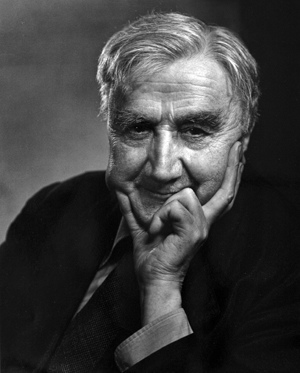
Vaughan Williams
Finally, another pupil of Ravel was Vaughan Williams (and we will be hearing more of him later in the season with a talk from the Vaughan Williams Society coming). We heard part of March ‘Seventeen Come Sunday from the Folk Song suite (1924)
Alan had put in a lot of work to track down some of the more obscure pieces especially in the first half which made it an interesting and worthwhile evening.
It is well-known that Franz Schubert did not finish his eighth symphony, Number 8 in D Minor. What is less well-known that there was a competition launched in 1928 inviting composers to compose the final movements from the surviving notes. The competition was proposed by the British arm of the Columbia Phonograph company after the bankruptcy of the American parent. 1927 was the centenary of Beethoven’s death and the company released electrical copies of all nine symphonies which were a commercial success. What to do next? Well 1928 was the centenary of Schubert’s death and so a competition to complete the Unfinished was proposed. A prize of over £100,000 in today’s money was to be awarded.
Cue outrage from the musical world and cries of ‘sacrilege’. The original theme of the competition was dropped and in its place a competition for new works where composers were required to:
[provide] compositions, apart from faultless formal structure, must be marked by the predominance of a vigorous melodic content, and the number of instruments employed must not substantially exceed the measure established by the classical orchestras of time.
Last night’s presentation about this subject was by Robin Lim who had clearly done a deal of research to unearth the background and to find some of the music composed for this competition.
The first piece was by Felix Weingartner and was his Symphony No 6 from which we heard the allegro. This incorporated some of the known fragments but could not be considered for the competition as he was invited to sit on the judging panel.
Next we heard two movements in symphonic form by Frank Merrick from Bristol, best known in his day as a pianist.
After that was a piece called Pax Vobiscum by john St Anthony Johnson born circa 1874 and about whom little is known.
Finally before the break we heard the 3rd movement from Hans Gal’s Symphony No 1. Gal lived in Edinburgh and was interned as an enemy alien during WWII.
The evening ended by listening to some of the prize winners. The judging panel was extraordinary and included Ravel, Respighi, de Falla, Szymanowski and Thomas Beecham. Third prize went to a piece by Czeslaw Marek (who’s music we have heard in an earlier evening of the Society). We heard an extract from his symphonia. This is a composer who we should hear more of as he only rarely appears on concert programmes.
Second prize went to Franz Schmidt and we heard the scherzo from his 3rd Symphony. This composer does still sometimes still feature in concert programmes – indeed he was performed in the 2015 Proms – but is not well known.
The winner? This was by the composer Kurt Atterberg and we heard the finale to his 6th Symphony.
The story did not end there though. Ernest Newman writing in the Sunday Times that;
Atterberg may have looked down the list of judges and slyly made up his mind that he would put ins a bit of something that would appeal to each of them in turn – a bit of Scheherazade for the Russian Glazunov, a bit of Cockaigne for Mr Tovey, a bit of the New World Symphony for Mr Damrosch, and bit of Petrushka for the modernist Alfan and bit of Granados for Salazar … but I wonder if there may not be another explanation … Atterberg is not merely a composer. He is a musical critic … suppose he looked round with a cynical smile that was all the world knows all critics wear and decided to pull the world’s leg?
The story was picked up by other newspapers and stories with headlines such as “£2000 Symphony hoax” and “Joke of Swedish Composer” soon appeared. Columbia sought to recoup the prize money but it was too late — Atterberg had spent it on a new Ford car.
A fascinating insight into a period of musical history which has been all but forgotten.
Peter Curbishley
I am grateful for the notes provided by Robin Lim in writing this piece.
The works of Frederick Delius were the subject of the Society’s evening on April 24th and we were delighted to welcome Martin Lee-Browne, the ex-president of the Delius Society. This was an informed presentation – not just because Martin knew a great deal about this composer – but because of the family connections he has with him. His grandfather was a good friend to Delius and also taught Sir Thomas Beecham the famous conductor. It was Beecham who did so much to promote the composer.
Delius’s father was a wool merchant and wanted his son to go into the business which he did for about 2 years. His heart was not in it so he then persuaded his father to help set him up in the orange plantation business in Florida which he did for a couple of years. He then gave that up and moved to Danville in Virginia.
He studied music in Leipzig in 1886 but was unimpressed with the teaching there which he found old fashioned and apparently, they were not too impressed with him. He met and became friends with the Norwegian Composer Edvard Grieg and persuaded him to come to England to meet his father. Norway was a big influence on his work and the Song of the High Hills is based on his time there. Beecham described this as one of the composer’s major works.
His father was so impressed that his son knew someone as famous as Grieg that he continued funding his musical activities for another year. This he spent living in Montparnasse in Paris. He struggled to make a living there as a composer. By 1899 he had managed to get only 20 songs published.
He returned to England and self-funded a concert of his own works which had mixed success but began to get him recognised as a serious composer. Gradually his pieces entered the repertoire. Martin played several of his works – including some early compositions which one would not at first sight have realised were by him – as well as selections from his more famous and familiar works. These included Brigg Fair, the single movement Violin Concerto and Sea Drift, the latter strongly influenced by Walt Whitman.
Martin Lee-Browne. Picture: Salisbury RMS
Martin also brought along some memorabilia included a score annotated in the margin by Percy Grainger. In 1910 his health seriously declined and he was only able to compose with the aid of Eric Fenby who wrote the music to Delius’s direction. He lived for most of his life in Grez-sur-Loing in France and he is buried with his wife in Limpsfield in Surrey.
For some, Anton Bruckner (pictured) was one of the great symphonists to come out of the nineteenth century. Nowadays, his works are performed around the world and are a regular feature of the repertoire. There are many recordings of the nine numbered symphonies. But for a long time, his reputation languished and there was a major effort to recognise his genius in the 1960’s.
At the last meeting of the Society, Terry Barfoot gave an illustrated history of the composer and played four movements from 4 different symphonies to illustrate his work. Bruckner was born in Ansfelden in Austria in 1824, the son of a school teacher. He himself became a school teacher. He was an organist of prodigious ability and toured Europe mostly playing improvisations. Little of this survives. He was the first to play the organ at the Royal Albert Hall in London.
View of the organ, RFH. Picture: Peter Curbishley
One can hear the influence of the organ in his music. As Terry put it:
[…] the sound-world of the organ in the resonant acoustic of a great cathedral is relevant in his symphonies, as of course it is in his religious works. From Wagner he derived his long time-spans, his weighty brass writing and expressive string textures, while another recurring was Beethoven’s Ninth Symphony, and especially its opening […]
He was clearly a late developer as a composer and Terry made the point that had he died at the same age as Schubert (31) he would today be completely unknown.
He was deeply religious and trained as a musician at the monastery church at Sankt Florian a place he was to return to throughout his life especially when he was depressed. He was also organist in Linz.
Like so many composers – indeed artists generally – he was not appreciated fully in his lifetime. The famous critic Eduard Hanslick gave him a hard time and his time with the Vienna Philharmonic was not a success.
Terry put together a programme to illustrate his range and development as a composer. Bruckner is something of a challenge in the context of a Society evening as the expansiveness of his music does not lend itself to short extracts! He played the following:
Motet: Locus Iste
Symphony No. 8 first movement
Symphony No. 6 second movement
Symphony No. 4 third movement
Symphony No. 7 fourth movement
Together with photographs of locations around Austria where Bruckner lived or worked this was an interesting and illuminating evening. We were grateful to Terry Barfoot for putting it together.
This was a presentation by Salisbury violinist Frida Backman on music for the solo violin.
Perhaps the first thing to say is that there isn’t that much for the solo instrument. Beyond Bach one might be stumped to think of many solo works and although Kodály was mentioned and later his fellow Hungarian Bartók, apart from a few virtuoso performers, there are not many works of note. There is of course a huge repertoire of accompanied violin music and concertos.
The instrument was developed into what we see today in the sixteenth century in Cremona, Italy and one of the first masters was Amati. The instrument consists of no less than 70 parts.
Frida started with some early works by Nicola Matteis who was a violinist in the early eighteenth century and who composed pieces more advanced than his contemporaries. We then heard a piece by Tartini also of this era, and who was influential in teaching the instrument and wrote a treatise which may have influenced Mozart’s father.
The composer of a large amount of solo work was JS Bach and we heard several pieces by him including an arrangement by Fritz Kreisler in a 1904 recording of a partita with a piano accompaniment. We also heard pieces by Biber, Prokofiev, Ysaÿe, and Ravel’s Tzigane composed in the early ’20s.
A brilliant virtuoso of the early nineteenth century was Paganini who’s phenomenal abilities were said to derive from the devil. He was hugely successful and owned no less than 11 Stradivari violins. Two of his caprices were played, numbers 23 and 24.
Frida explained that development of the bow was crucial to the instrument’s success. As music moved out of the salon into the concert hall, more power and volume was needed and the modern bow enabled that to be achieved. However, many players still use a baroque style bow to achieve greater authenticity and Frida played two CDs of the same piece to illustrate the difference in tone.
Frida ended her presentation with a live rendition of a piece by a modern composer Zura Dzagnidze called Intruder composed in 2005. This she played against a backing track with herself.
A most interesting evening exploring the history of this most versatile of instruments.
Superb and surprising selection of music from the Hapsburg empire
Last night’s presentation by Angus Menzies was of music composed for several of the emperors of the Habsburg court from the middle of 16th to the middle of the 17th centuries. This was pre-Haydn and Mozart of course and most of the music played was by composers who, for the most part have been forgotten – undeservedly so.
Johann Fux. Picture: Wikipedia
Each would have his own favourites of course but those who stood out were Antonio Bertali; Johann Schmelzer; Heinrich Biber and Johann Fux. We also heard a piece composed by Leopold I entitled Il lutto dell universe which was ‘not without talent’ as one might say. The pieces played were mostly composed for weddings and coronations and hence had a magisterial quality. Others were from operas. Schmelzer’s Die Fechstchule was played alongside mass horse displays as monarchs from that era often used equestrian events to impress and show off their country. Indeed, portraits from that era often feature monarchs astride a horse as a symbol of power. Little is known of him but he was a favourite of Leopold I and became a Kapellmeister in Vienna.
Another composer to impress was Jan Zelenka and we heard Melodrama de Sancto Wenceslao and also Johann Reutter whose aria Venga l’eta was played from La Magnamitada Alessandro. Zelenka was ranked along side Telemann and Handel in his day but is now mostly forgotten.
A worthwhile evening with many surprises and providing a window into the music of this era in history.
Mozart’s last year was the title of a presentation to the Society by group member Peter Curbishley. There probably isn’t another composer about whom there are so many myths particularly surrounding his death in December 1791, almost exactly 225 years ago. The film Amadeus by Peter Shaffer did not help. Although entertaining, it gave credence to wild rumours about poisoning which are now known to be untrue.
Pic: Anthem Arts
Peter played extracts from most of the works he wrote in the final months of his life. This included of course the Requiem, but also from the operas The Magic Flute and La clemenza di Tito. The Magic Flute was a huge success and is the fourth most performed opera ever written. La Clemenza di Tito by contrast was a failure and languished unperformed until the 1950s. This was in part due to a part written for a castrato, a practice which, mercifully, died out soon after the opera was written.
Members also heard extracts from the Clarinet Concerto written two months before his death, a string quintet and the last Horn Concerto. Despite the huge body of brilliant music Mozart had composed before he died, he was Peter explained, only just beginning. Part of the last piano concerto, finished in the early part of that year. Had he lived into the nineteenth century who knows what he might have produced. His death – from a streptococcal throat infection not poison – was a tragic loss to the world of music.
This was the last meeting of the first part of the programme and the next meeting is in February. Seasons greetings to all our readers.
The last presentation was by Robin Lim on the subject of early stereo recordings. We are so used to stereo sound now – either through loud speakers or headphones – that we forget that there was a time when sound was in mono only. We also think that it is a fairly modern invention: modern in the sense of 60’s when stereo records appeared. It was an example of technology being ahead of its market in that, although the recordings existed, few people could afford the means to play them.
In fact Robin revealed, stereo existed at the end of the nineteenth century in France. This was at the Paris Electrical Exhibition in 1881. Separate telephone lines were used to convey the two tracks and a company was set up to exploit the technology which survived until after the Great War.
But it was in the ’30s that stereo started to make its mark and this was linked to parallel developments in being able to store sound for playing later. An example from this era was Leopold Stokowski playing an excerpt of Die Walkerie by Wagner from 1932. The recording was surprisingly good but with a degree of background noise. Nevertheless, the vigour of the recording and the balance between the two speakers was excellent.
An Englishman, Anthony Blumlein, perfected the single track system and with developments in America, the modern stereo record was born. From 1934, a recording of Sir Thomas Beecham playing part of Mozart’s Jupiter symphony and the quality of the recording was outstanding. Some modern filtering had probably been applied by even so, it was eminently listenable to. Sir Thomas once said ‘The English do not like music but they absolutely love the noise it makes!’
Film music on the other hand was developing rapidly and soon had 8 tracks on which to record. We heard Stokowski again with the Russian dance from the film Fantasia which was made before the war.
During the war, the Allies listened to German radio and were surprised to hear recorded
music of high quality being transmitted. When the war ended there was a rush to find out how the Germans had done it and they had indeed made great technical advances. Unfortunately, a lot of the recordings were in the Russian sector and most disappeared after the war. One at least survived and this was Gieseking playing Beethoven’s the Emperor concerto with the Berlin Radio Orchestra, and the sound and playing was simply outstanding. Indeed, one had to remind oneself that this was a recording from the war and not a modern cd.
Robin also touched on ‘accidental stereo’. This is where in the early days two recordings were made as a kind of insurance in case one of the machines failed. Modern technology has enabled these two be blended together to give a stereophonic effect. Apparently discs were sent to Elgar after the recording was done and he kept them and they have survived. This has enabled the two recordings to be blended and as an example, we heard an extract from the ‘cello concerto. We also heard Elgar conducting a version of ‘Oh God our help in ages past’. This was made in February 1928. The sound was authentic but the stereo was not so evident. Even so, a remarkable achievement.
It was a fascinating evening, in which Robin married the development of a technology with the sound it produced.
Before the meeting we had a brief agm. All the officers were reelected en bloc. The Society made a small surplus in the year. The chair thanked all those who opened up, did the refreshments, prepared the programme and also the members who continue to support us. Over 2,000 people have visited this Web site. New members are always welcome. Copies of the programme are in the Oxfam music room, the Tourism Information Centre in Salt Lane and the Collector’s Room in Endless Street.