Are You Sitting Comfortably?

Classical themes to TV and radio programmes

December 2025

You cannot say we do not ring the changes with our presentations: the final meeting of the autumn season was no exception.  Called ‘Are you sitting comfortably?’ David Davies played a range of theme tunes to favourite TV and radio programmes.

Most were familiar although trying to match the music to the programme was not always easy especially those which are no longer broadcast.  Fauré for example provided the music to ‘Listen with Mother’ (and the title for the presentation) and the programme lasted from 1950 to 1982.

William Walton provided the theme for Cat & Dog and another English composer, Elgar’s Chanson de Matin for Norman and Henry Bones which ran for around 20 years on Children’s Hour and starred Charles Hawtry.

Bach was featured on another popular radio classic ‘Animal, Vegetable or Mineral’ on the radio. Surprisingly, it didn’t run for that long, only 7 years, but one of its starts was Mortimer Wheeler who did a lot to bring archaeology into the limelight.

Many may remember ‘Top of the Form’ which ran for many years. Initially, only between boys’ schools but girls came later. Sign of the times eh. Several themes were used including one by Debussy.

An extremely memorable theme, played on trumpets, is that for the Open University which introduced many lectures in the early years. Few might know it was composed by Leonard Salzedo who despite his name is another English composer albeit of Spanish descent. For those of us who were OU students at that time, it is an extremely evocative and a reminder of watching a lecture on physics say at 1 o’clock in the morning. A reminder.

Other extremely popular and familiar themes include those for the Eurovision Song Contest – in the news recently concerning Israel’s entry into the contest. Few will be able to name the composer who is in fact Charpentier and it is an extract from one of his settings of Te Deum.

Mozart provided the theme for the Horse of the Year Show another long-running favourite starting in 1949 no less. Talking of sport, ‘Nessum Dorma’ was much in evidence in the 1990 World Cup of course.

Most programmes seem to use existing music but from time to time new works are commissioned. An example is the music for Pride and Prejudice.  Howard Goodall was mentioned who has a long range of credit to his name including ‘Mr Bean’ and ‘Not the Nine O’clock News’. 

It is noteworthy that many themes were composed by established classical composers and it is difficult to think of much popular music used in this way.  Sopranos is an exception as are some of the themes to Scandi Noir series like ‘The Bridge’.

It is almost certainly true to say that many people’s first experience of classical music is through theme tunes. Producers have gone to some trouble to select something that matches the drama and which is memorable to the viewers. Unfortunately, if you want to know who the composer was, the credits often will not mention the actual composer but whoever it was who arranged it or added incidental music. The music for ‘Tom and Jerry’ cat and mouse capers for example were heavily influenced by Bartok and Schoenberg but their names never appeared on the credits, rather Scott Bradley.

An entertaining evening and the last of the first half of our programme.  We resume on 26 January 2026.

Peter Curbishley

Delius

October 2025

Frederick Delius is well known English composer born of German parents in Yorkshire. He showed early promise and clearly had an eventful life. He was not actually christened Frederick but Fritz. He father was a successful wool merchant but Delius resisted going into that line of business and opted to manage an orange grove in Florida as you do.

He returned some years later and spent much of his early life in Paris. He received a formal musical training in Leipzig. His talent was spotted by Greig.

The presentation was by Alan Doel, a member of our Society, who gave us a lot of background to his life and compositions. Delius was key in the revival of English music and listening to an evening of his compositions, there was a powerful sense of the languid landscape that seemed to emerge, a kind of tonal colouring. This was particularly true of the first, and one of his best known pieces, On Hearing the First Cuckoo in Spring. Another piece which captured that quality was In a Summer Garden.

He was somewhat overlooked as a composer until he was taken up by Sir Thomas Beecham who premiered some of his works. It’s interesting to note that his early success was in Germany. His time in America and the influence of negro music showed through with compositions like Appalachia of which we heard the final part. Another piece with American associations was the Florida Suite.

It was an interesting evening and we learnt a lot more about this English composer who’s works do not appear that regularly in concert programmes. Other works included Sea Drift, the Cello Concerto and an extract from the opera Irmelin first performed in Germany. The audience expressed its appreciation for the work Alan had put into preparing the presentation.

Alan set us some homework which was to listen to The Song of the High Hills conducted by Sir Mark Elder.


The next meeting on 3 November will be preceded by a brief AGM followed by a members’ evening. If you have a piece, lasting less than 10 minutes ideally, which means something to you or you would like others to hear, please let Robin Lim know robert.lim@virginmedia.com.

Peter Curbishley

An exploration of the world of Alan Hovhaness

October 2025

This week’s meeting of the Society was an exploration of the work of

Hovhaness a composer probably unknown to many. The presenter was Peter Horwood who had done a lot of research to illuminate his works and music. Peter kindly gave us his notes and these are presented below.

Hovhaness was an extremely prolific composer and addition to symphonies composed 10 operas, 3 oratorios, a great mass of orchestral, chamber, vocal and instrumental pieces – 434 opus numbers plus a considerable number of unnumbered compositions. There is well over 500 known pieces. A man of considerable energy he was also married 6 times! The first extract was:

Symphony 22 Op 236 ‘City of Light’ 1st movement excerpt     

That excerpt from Symphony 22, ‘City of Light’ demonstrates some key features of Hovhaness’s mature style – a luminous (maybe even numinous (spiritual) tone/quality, long breathed melodies, block chords, modal harmony, and exotic sounds (bells, percussion effects in clusters etc).

Written in 1971, this symphony is one of no less than 67!

Certainly, the music appeared to flow unceasingly from him. Inevitably with such a large output there are variations in quality, but the best, as I hope you will hear is fully worthy of our attention and appreciation.   

John Cage, a friend and longtime advocate of the composer said his music was like ‘inward singing’, ‘his melodies are often long and arching, clear and consonant, generally modal and run the gamut from western diatonicism to rhythmically complex Indian Ragas – with many cultural variations woven in. Echoes of Renaissance choral polyphony and Baroque instrumental part writing course through much of his music.’

This alchemy/mix of Western and Eastern, Ancient and modern, produces a very individual and recognisable voice. Sometimes one particular influence may take precedent, let’s hear a couple of examples, firstly two bagatelles for string quartet:

Bagatelles for string quartet Op 30 1, 2

Now lets hear a short piano piece called

Piano piece mystic flute –

This piece was a favourite of the composer Rachmaninov who used it as an encore when he was on tour.

I think you will agree that there is a distinct middle or far eastern sound to these pieces.

Born in 1911 in Massachusetts to a Scottish mother and Armenian father the composer showed amazingly precocious talent, from the age of 4!

As a boy, he acquired a love of mountains through long walks and apparent metaphysical experiences in the hills of New England. Such landscapes were the frequent subjects of his paintings and drawings. Mountains always remained important to him, determining the locales in which he chose to live, such as Lucerne in Switzerland and Seattle on the Pacific Coast, and would prove to be a lifelong inspiration

Hovhaness explained ‘Mountains are symbols of man’s attempt to know God. They are symbolic meeting places between the mundane and spiritual worlds.’

This not an unusual conception. Mountains have figured prominently in many spiritual and religious situations.

Studied piano and then composition at The New England Conservatory, with amongst others Frederick Converse, a noted but relatively conservative composer.

In the 1930’s gained a basic living through teaching and performing. He also composed prolifically throughout this decade. In 1935, prompted by his great love of the music of Sibelius, Hovhaness and his then-pregnant first wife (artist Martha Mott) visited Finland to meet Sibelius. A friendship was struck up, and the Finnish master later became godfather to their child, a daughter, who in homage was named Jean Christina.

Surviving examples of work from this stime include the Mystic Flute piece just heard and this following piece, Song of The Sea:

Song of the Sea – part 1

This is relatively conventional, but Hovhaness was due to radically change his style.  He was strongly affected by meeting Uday Shankar (Ravi’s brother) and North Indian musician Vishnu Shirali when they performed in Boston in 1936, a time when Indian music was scarcely known in the West.

In 1942, Hovhaness won a scholarship at Tanglewood to study in Bohuslav Martinu’s Master Class. This period turned sour when he also came into contact with Bernstein, Copland and their impressionable circle in the composition class. Already something of an outcast amongst this clique (not being Jewish, homosexual, or Paris-trained), he left this situation immediately

At this artistic crisis point, Hovhaness found strength from friendships with two Boston artists, Hyman Bloom (who later on became rather famous) and Hermon di Giovanno. In 1943 di Giovanno, a Greek painter and mystic, supposedly guided Hovhaness into the ancient worlds of Greece, Egypt, Armenia and India. Hovhaness described di Giovanno as the “spiritual teacher who opened the gate to the spiritual dimension”. He was a pivotal influence in that he encouraged Hovhaness to seek out his paternal Armenian heritage and be true to himself in his pursuits.

In addition, during 1940’s Hovhaness sustained his living by being appointed organist at St James’s Armenian Church in Waterstone, Massachusetts.

This 1940’s were looked upon as his ‘Armenian period’ where he found authenticity and spiritual inspiration and Hovhaness destroyed most of his earlier music in order to make a ‘fresh start’.

 This change of direction is exemplified in the 1944 concerto for piano and strings, Lousadzak (means ‘Coming of Light’) where the soloist’s part is an exquisitely filigreed giant melody, monophonic throughout, which imitates Armenian and Turkish stringed instruments. In this seminal work Hovhaness introduced his aleatory technique, initially called ‘spirit murmur’. Here, performers individually repeats a designated melodic phrase over and over without synchronicity to the rest of that section’s players. The invention of this so-called ad libitum technique has mistakenly been attributed to Polish composer Witold Lutoslawski, because some 17 years later he first employed it in his 1961 orchestral work Jeux Venitiens.

This piece was premiered at the composers memorable New York debut and marked a step change in his standing.

Piano concerto ‘Lousadzak’ (1944) excerpt

Composer and newspaper critic Lou Harrison recalled it thus:

“’I remember the premiere of that work in Town Hall, and the enormous excitement that Alan’s sudden appearance in New York produced. The intermission that followed [Lousadzak] was the closest I’ve ever been to one of those renowned artistic riots. In the lobby, the Chromaticists and the Americanists were carrying on at high decibels. What had touched it off of course, was that here came a man from Boston whose obviously beautiful and fine music had nothing to do with either camp, and was in fact its own very wonderful thing to begin with. My guest John Cage and I were very excited, and I dashed off to the lamented Herald Tribune and wrote a rave review while John went back to the Green Room to meet Alan”.

Lou Harrison had moved to New York to be employed as music critic and his association with John Cage, Virgil Thomson and now Alan Hovhaness, formed a lifelong connection and mutual support. 

At first sight what seems an unlikely combination of individuals to befriend each other made sense in that there was a mutual attraction to seek alternative musical formats and cultures, rather than follow western ‘conventional modernism’.  

Composer writer and teacher Lou Harrison was a cultural polymath, who worked across a number of areas, not just music. His own music combines serial and aleatory procedures, used quarter tones, emulates ancient polyphony and gamelan rhythms, – using extraordinary devices for producing unusual sounds. As well as a leading reviewer and writer he had an intense interest in eastern music, especially Balinese gamelan music. This is reflected in this next piece:   

LOU HARRISON – Concerto in Slendro

Slendro refers to an Indonesian five tone mode with no semitones.

During the 1950’s and 60’s Hovhaness was awarded a series of Rockefeller and Fullbright scholarships to travel and study Indian, Korean and Japanese music. The composer wrote and conducted pieces in these countries and undertook study in Korean Ah-ak (ancient court music), Japanese Bunraku and Gagaku (traditional ceremonial music) and also music applied to Noh theatre)    

This period of study and related composition is known as his oriental period.

 Hovhaness composed for a wide range of instrumental and vocal forces so let’s now hear an example of a cantata, written in 1968 for soloists, choir and orchestra. We will hear the introductory section –   (lyrics)

Lady of Light – cantata – Op 227 – ‘Great is the Power of Love’

Hovhaness, along with his chosen colleagues, was always looking to expand his compositional tonal palette, or means of expression. It is difficult in any epoch to accredit change or innovation to any specific person or events; things happen through the chemistry of interaction and creative association. This next piano piece uses innovative performance techniques, realised at the time that John Cage was working in a similar vein.  

Pastorale No. 1 for piano

In 1966/67, Hovhaness had been Composer in Residence with the Seattle Symphony. In the early 1970s Hovhaness moved permanently to Seattle, Washington. His recent links with the Seattle Symphony Orchestra had unwittingly brought about a love affair with the landscape: “I like the mountains very much. I don’t have to go to Switzerland, I expect to stay here.”

Also, in the early 1970s, the music itself was in demand for live performance. The 1975 Hovhaness royalty statement from publisher C.F. Peters Corp. was 17 pages long. Nearly all of his 240 compositions had sold that year, from 1 copy of the Accordion Concerto to 5,620 copies of the 4-page choral piece From the Ends of the Earth. Let’s now hear that piece:

From the end of the Earth – choral

We have previously mentioned the composers use of ‘long breathed’ or giant melodies.  Commissioned in 1967 by the Detroit Symphony Orchestra the tone poem Fra Angelico portrays the work of the Italian artist who painted in an Eastern spirit, of celestial musicians descending heaven to earth, accompanied by celestial trumpets.  

Fra Angelico – excerpt

John Cage was born in Los Angeles in 1912. From an early age he showed and particular interest in dance and percussive music, as well as developing techniques to alter the tone and character of instruments ‘prepared piano’.     From the 1940’s lived in New York where he pursued his interests in composition and music by chance –originating the first ‘musical happening’, random performance by throwing coin etc and developing aleatory techniques. Also, like Hovhaness he had an intense interest in Eastern philosophy and Buddhism. He met Lou Harrison when he was organising concert events in the San Francisco Bay area. Having much in common in their search for new sounds and unusual musical formats, especially for potential percussion instruments they spent much time rummaging the junk yards and import stores for brake drums, dustbin lids, flower pots etc! 

This is a piece that they jointly composed for percussion quartet, each writing two parts.

LOU HARRISON/JOHN CAGE – Double music

Hovhaness, from his youthful enthusiasm of studying Bach, probably more fugues than any other western 20th century composer. We will hear and example of a double fugue taken from perhaps his most famous work, Symphony no.2, ‘Mysterious Mountain’ , played here by one of Hovhaness’s fervent advocates, Fritz Reiner conducting the Chicago Symphony Orchestra in 1958. 

Symphony 2 ‘Mysterious Mountain’ 2nd movement – double fugue

From the 1970s (and thereafter) the composer retreated from overtly oriental/Eastern sounding devices. If anything, Hovhaness veered towards a more Western neo-romantic approach, but still within the realms of rhapsodic melody and mystical expression. Noteworthy is the expansion of harmony from purely modal (as in the 1960s) to fully chromatic, including whole-tone and diminished chords

We will conclude this presentation with two works that represent the mature or final style statements of the respective composers.

We have noted that John Cage was a close friend and lifelong advocate of Alan Hovhaness. From their initial meeting each composer took a number of creative routes before finally establishing a mature style.  We will hear a work from John Cage that is part of his ‘number’ works completed in the last two years of his life. These works have been described as ‘products of a profound and brilliantly imaginative musical mind.’  42 was composed in 1990 for a High School choir in Oregon (the text is built on letters of that state) in the style of a harmony textbook, one can visualise the whole notes on four staves.  

JOHN CAGE – 42    Choral

In May 1981, Henry Hinrichsen, president of C.F. Peters, approached Hovhaness with a one-off commission for a symphony on the theme of Mount St. Helens, the famous volcano that had erupted in 1980. Both the Seattle Symphony and the San Jose Symphony wanted to give the work’s premiere, which was eventually decided by the composer on the flip of a coin.

Between 1980 and 1989 Hovhaness penned some 80 works, including almost 20 symphonies. 1986 alone witnessed the creation of six symphonies.

Symphony is somewhat misleading term as these are not classically structured,  goal orientated works, as a lot of contemporary symphonies, but rather a series of movements, almost baroque in nature, that together express a collective feeling or impression.

We will hear the finale that describes a volcanic eruption and concludes with a song of awe to creation.

Symphony No. 50 ‘Mount St Helens’ op 360  –  Finale

Copyright©Peter Horwood 2025


I hope you will agree this is a serious piece of work on this composer and the Society was grateful to Peter for bringing this largely unknown composer to our attention.

PC

New season gets off to grand start

September 2025

The new season got off to a flying start with a presentation called Murder, Mishap and Misfortune by Alan Forshaw. The title might lead you to believe this was a dour evening, mawkish even – far from it, Alan selected a range of pieces and to an extent, the unfortunate or sad ways the composers died was almost incidental.

We sometimes forget in our world of inoculation (soon to be changed by Donald Trump), health services and antibiotics, that life even into the early twentieth century was, to quote the Scottish philosopher, ‘nasty, brutish and short’. People died of things we would find surprising today. Whilst studying statistics for example I came across some historical death data and a lot of people died of something called ‘the fluxions’. Who found the cure I do not know. ‘Hissing fits’ was another cause of death. I don’t think people would go into a GP’s surgery today and say ‘doctor, I think I’ve got the fluxions’.

Back to the plot and we started with a scherzo by Alkan, an eccentric French composer of mainly piano pieces. Alan presented an evening featuring this composer a while ago. A prodigy, he entered the Conservatoire at 13 and was perhaps unlucky to be around at the same time as Chopin and Liszt. Turned down by the Conservatoire to be the professor of piano, he largely retired.

Alban Berg can be a little difficult to get to grips with. He was a contemporary of Schoenberg and Webern we heard two early songs which were a delight. The rise of the Nazis made life difficult and he moved out of Vienna. Unfortunately he was stung by an insect and died of blood poisoning.

Marcus Blitzstein is not a name familiar to many and Alan played two of his pieces. American, he was gifted and played a Mozart piano concerto at the age of 7. He was gay (but did get married) and whilst in a bar in Martinique trying to solicit a sailor, he was beaten up and later died of a ruptured liver. He is best remembered for the composition The Cradle will Rock.

Ernest Chausson is well known as a composer although he only composed a modest number of works. Alan chose the Chanson Perpétuelle for soprano, piano and string quartet. He was the son of a contractor who made his fortune redeveloping Paris for Haussmann. We admire Paris for its open layout perhaps not always realising that it wasn’t town planning which inspired the changes but the need for the police and gendarmerie to get a good line of fire against the frequent riots. He died young riding the recently invented bicycle and crashed into a wall, dying instantly.

The Trumpet Voluntary is a very well known piece often played at weddings and was composed by Jeremiah Clarke. Properly titled the ‘Prince of Denmark’s March‘ we heard that and ‘Praise the Lord O Jerusalem’. He fell in love with a female student of higher rank than himself and the tension led to him taking his own life.

Enrique Grenados is well known and we heard his exciting The Fandango of the Lamp. He was delayed from leaving New York and missed the boat to Spain catching one to Britain instead. Unfortunately, the ship was torpedoed by a U-boat and sank in the English Channel. Various accounts of how he died are around but one is that he tried to rescue his wife and because he was wearing a money belt filled with gold, he was unable to swim and sank to his death.

Another victim of the Nazis was Pavel Haas, a Czech composer born in Brno of part Jewish parents. A modest output of music and being very self-critical, only 19 have opus numbers. Originally sent to Theresienstadt he was subsequently transferred to Auschwitz where he was murdered.

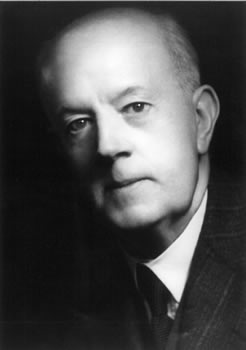
Few may have heard of Mieczyslaw Karlowicz (pictured) and the excerpt from his Violin concerto in A major was impressive. He was strongly influenced by Tchaikovsky and later Wagner. Born in what is now Belarus he studied in Warsaw and Berlin. While on a skiing trip in the Tatra Mountains, he was hit by and avalanche and died. Not a large output but his orchestrations are praised.

Karel Komzak is not a name known to many. He was born in what is now the Czech Republic and was an active band leader. We heard the Overture to Operetta Edelweiss. One of his claims to fame was that a young musician who played in one of his orchestras was a certain Antonín Dvořák of whom you may have heard.

Leaving central and eastern Europe and to France and the music of Lully who was in fact born in Florence. He was composing during the Baroque period and many of his works are played today. He was a favourite of Louis IV and composed a number of operas and other music. He stabbed his foot with a conducting staff and a toe became infected. Refusing an amputation, infection set in and he died shortly after of gangrene. Alan played part of – appropriately enough – his Te Deum.

Few will have heard of Johann Schobert born, it’s not clear when and it’s not clear where either but somewhere in Germany. He came to Paris and composed many sonatas. His significance in the history of music was a meeting with the Mozarts who came to Paris as part of their grand tour. It appears that Mozart was strongly influenced by Schobert and used themes and some of his stylistic ideas in his piano concertos from that time. Schobert picked some mushrooms and was told by two restaurateurs that they were poisonous but decided to make soup from them anyway. They killed him and his wife and a doctor friend. There’s an old joke: what did the wife of a mushroom say at his funeral? ‘Shame, he was such a fungi’. His Quartet in F minor was a lively piece.

Colourful does not quite do justice to the life of Alessandro Stradella who was born in Bologna in 1643. Educated in Rome, in his day was well known and produced a number of operas and other works. He clearly had a taste for women and indulged in a number of affairs with many who were already married. He survived one assassination but died after the second.

To more modern times and to Canada: not often we hear music from there. Claude Vivier was born in 1948 in Montreal and spent a lot of time working on ethnic musical themes and a variety of modern themes. We heard a piece for soprano composed in 1973 Jesus Ebarme Dich. He was unashamedly gay and frequented gay bars in Paris. He was eventually murdered by a man called Dolzan. Vivier was a strange man and there is speculation he suffered from Tourette’s syndrome.

Finally, back to northern Europe and the music of Webern a contemporary of Berg (above). He composed a lot of works using the 12 tone scale and it would be fair to say, it takes some while to get to understand it. He was a student of Schoenberg. His death was particularly tragic. In September 1945, he returned home during the Allied occupation of Austria, he was shot and killed by an American Army soldier following the arrest of his son-in-law for black market activities. This incident occurred when, three-quarters of an hour before a curfew was to have gone into effect, he stepped outside the house so as not to disturb his sleeping grandchildren, and in order to enjoy a cigar given him that evening by his son-in-law. The soldier responsible for his death was U. S. Army cook who was overcome by remorse and died of alcoholism in 1955.  Webern would not have understood what the American would have said to him. A kind of double tragedy.

A really fascinating evening and a chance to hear a range of music much of it not often heard.

The next meeting is on 6 October.

Peter Curbishley

The music of Edgar Bainton

Final meeting focused on this somewhat forgotten English composer

May 2025

This was the last evening of the current season and we were delighted to welcome Michael Jones who enlightened us about the life and work of this somewhat forgotten English composer. Michael is an accomplished musician in his own right with a number of recordings to his name as well as his special interest in Bainton (pictured). He is developing a website which should be completed soon.

Well, you might not recognise the name but you will recognise one of his pieces And I Saw a New Heaven which was performed at Grenfell Tower memorial and at the Hillsborough memorial. First some history. His father was a Congregational minister who later moved with his family to Coventry. His musical abilities at the piano were noticed early and he made his first public appearance as solo pianist age 9, and at 16 he won an open scholarship to the Royal College of Music to study piano with Franklin Taylor and theory with Walford Davies. In 1899 he won a Scholarship to study composition with Sir Charles Villiers Stanford, and thus became one of the rising generation of British composers destined to contribute extensively to the English Musical Renaissance.

In 1901 he was appointed piano professor to the Newcastle-upon-Tyne Conservatory of Music, and after over thirty years of service emigrated to Australia to take up the Directorship of the Sydney Conservatorium of Music. I should add at this point that the above biography was accompanied with photos, images of his original scores and programmes which amply displayed Michael’s erudition and scholarship. Many items were not the sort of thing you could turn up with a quick Google* search.

He composed pieces in most of the main genres. We heard for example, a tone poem Pompilia; part of The Blessed Damozel; a lovely song Slow, Slow Fresh Fount; and part of a ‘cello sonata.

To demonstrate his diversity we also heard extracts from his second Symphony, an early and most accomplished Fugue, a Viola Sonata and a movement from a String Quartet. Michael finished with a second extract from Prometheus.

This surely has to be a composer who deserves more attention. It is strange how some composers – and most artists I suppose – seem to drift out of fashion and then suddenly their time comes again. We shall see.

We were most grateful for Michael’s presentation delivered with a great deal of enthusiasm and as I say, erudition. His photos illustrated life at the beginning of the last Century.

This was the last evening of the current season and it has been another successful year. We have been pleased to welcome some new faces. A feature has been several evenings exploring the works of composers whose work – like that of Bainton – have been overlooked or who have gone out of fashion. We’ve had music from Scotland, Wales and England as well as Poland and France.

Peter Howard, our chair, thanked all those who have come and supported us during the year and promised next year’s programme will be just as good. We start again in September. A printed programme will be in Salisbury and Amesbury libraries in September and in the Tourism Information Office as well as here on line.

If you want to widen your interest in music keep and eye out here and on Facebook. We look forward to seeing you.

Peter Curbishley

*other search engines available

Memories of a clarinettist

March 2025

The presentation this month was from a retired clarinettist speaking about his life in various orchestras and more generally as a musician. Peter Jarvis started by discussing the instrument itself which is not a chromatic one so originally was quite limited in its repertoire. The instrument went through a major redesign in France at the beginning of the nineteenth century when the Boehm system was introduced. Boehm himself had little to do with the design however. This provided a range of keys and enabled it widen its range for playing. A personal note here and that is that I was taught the clarinet and my teacher had what he termed the ‘Simple’ system (possibly a simplified German instrument) with far fewer keys but he was nevertheless an accomplished player. There are many different types, sizes and pitches of the instrument – probably around 10 in all.

The instrument has a single reed and they all come from the town of Fréjus in the South of France. Peter grew up in Oxford and was fortunate to enjoy a rich social milieu. He met the late Colin Davis (later Sir Colin) who was himself a former clarinettist (they get everywhere) who encouraged him. Thence to the Royal Academy of Music. The first piece to be played was by Gerald Finzi, a movement from his Clarinet Concerto. This is Finzi’s most performed work.

Peter left the Academy to become the principle at Royal Saddlers Wells, a real accomplishment. He described how they toured a lot and a large amount of travelling was involved since performances were arranged up and down the country. In the orchestra pit in an opera house he said, the wind instruments are under the stage, unable to hear the singers which does make timing and coordination difficult. On tour by contrast, they were on the same level in front of the stage and actually see and hear what’s going on.

Touring posed its own problems because for some mysterious reason, the instrumentalists were the last to hear where the next performance was to be held. This often meant all the available accommodation was already taken. Desperate to find somewhere to sleep in Leeds, he asked the police for help and was taken to an address where he was provided with a bed. In the morning there was knock on the door and a young lady came in with a cup of tea. Next morning, the same thing happened with a different young lady. Could get use to this Peter thought, but then he discovered – it was a brothel.

The second piece was the final movement from Mozart’s Clarinet Quintet. What was special was that it was a recording made in the barn adjacent to Peter and his wife Jane’s house in the South West of France. The recording – despite being recorded on a cassette recorder – was of excellent quality. The composition was written for his friend the clarinettist Anton Stadler, as was Mozart’s last instrumental composition the Concerto, who were both members of the same Viennese lodge. The score was lost but was later believed to have been pawned by Stadler. It was written for another member of the clarinet family the Basset horn which is longer and slightly lower pitched. The ‘horn’ refers to the curved nature of the instrument’s mouthpiece. [I have heard the concerto played on this instrument at the Proms and it is significantly different experience].

Peter described his later career playing with the Liverpool Phil and in a variety of West End shows. He described working to produce what are called ‘library albums’ and these are where freelance musicians compose and record music for use in films, TV shows and advertisements. Further pieces were Mozart’s Wind Quintet, and Matthew Arnold’s Divertimento.

It was a truly interesting evening because although presenters can all play music from CDs, here was someone who was part of the CDs, who has actually created music and who’s life was about producing it for us to enjoy. We even had a short piece composed by him. The mixture of music and anecdote was a joy and must be fairly unique to the Society.

Peter Curbishley

Next meeting on 7 April and is on the music of Francis Poulenc

William Mathias

Excellent presentation on this largely forgotten composer

March 2025

One of the puzzles of musical life is why some composers seem to disappear from the repertoire. One thinks of Bruckner who enjoyed great popularity in his day at the end of the nineteenth century then was forgotten for many decades. He began to be appreciated again in the 60s. Bach no less suffered a long period of silence until Mendelssohn brought him out of the shadows.

Last evening we heard a range of compositions by the Welsh composer William Mathias. Unknown to several us, he composed a wide range of material including symphonies, concerti, choral and an opera. Lindsay Dannatt provided several examples from his compositions many of which were accomplished and of great interest. It is true that some have entered the repertory such as the Harp Concerto from which we heard an extract, the Piano Concerto No 3, likewise and the Organ Concerto.

Other works were extracts from Symphony No 1; the Horn Concerto and Divertimento for String Orchestra. Choral works included This World’s Joie and Songs of William Blake.

Mathias’ musical language embraced both instrumental and vocal forms with equal success, and he addressed a large and varied audience both in Britain and abroad. He was widely honoured in the academic word being awarded an Honorary DMus by Westminster Choir College, Princeton USA in 1987 and he was made CBE in the 1985 New Year’s Honours. He was honoured in Wales, his home country as well. He died in 1992 at a relatively young age.

Although some of the references to him, in Groves for example, refer to the influence of Bartok and Hindemith, he had a definite ‘voice’ and was not in any way derivative.

We were enormously grateful to Lindsay for bringing this composer to our attention and for an informed selection of his works.

Peter Curbishley

Christmas Quiz!

December 2024

The first half of the season ended in cracking style with a quiz ably put together by Ruth Barlow. Music you won’t be surprised to learn, formed the basis of the questions which taxed the team’s knowledge. We had to guess both composer and piece with some questions on what linked the different compositions. There was a round based on photos of musicians. A challenging round was guessing the end of compositions. It was very much enjoyed and were very grateful for the work and cunning that Ruth had put into compiling the questions.

It brings to an end the first half of our season which has been a great success with a varied and interesting programme. We start again in the New Year on 27 January with an interesting first session enabling us to polish up our knowledge of Polish composers.

PC

Recent meetings

November 2024

The Society’s two recent meetings on 21 October and 4 November had a range of interesting music. The first was a members’ evening where members bring along pieces which have interested them or they have discovered for themselves.

This was preceded by our agm which went smoothly enough. The Society is holding its own at present with adequate funds and a healthy programme of events. Indeed plans are afoot for the 2024/25 season with some potentially interesting ideas. The Chair of the society said in the context of reduced funding for the arts that ‘we were keeping the flame of great music alight’.

Members brought a range of pieces one of which was an extract from Gloria Coates’ Symphony number 14. Gloria was from Wisconsin but spent a great deal of time in Europe. She died last year.

Gerald Finzi is a somewhat neglected British composer and few of his works appear on the repertoire these days. One composition which gets an outing now again is his clarinet concerto the first movement of which – an allegro – was played.

The Argentinian violinist Manfredo Kraemer performed an unusual Peruvian piece on the viola di gamba.

One most surprising piece was a Beethoven string quartet played on saxophones by the Sinta quartet. This really worked and shows that compositions can work in different genre and provide fresh insights.

We ended with a performance of a movement from Bruckner’s Symphony No 8. There are many recordings of this great work but this was by von Karajan dating from 1944. Many of these recordings disappeared into the Soviet Union after the war after prolonged negotiations, many have tricked out. As ever with a von Karajan it is a remarkable rendition all the more remarkable bearing in mind the circumstances in Berlin at the time. The recording is incomplete.

4 November

Due to the speaker being unwell, this was a change to the published programme. We were fortunate that Jeremy Barlow stepped into the breach and provided a programme which was both erudite and enjoyable. Entitled Theme and Variations, he explained the importance of variations in the musical world and gave examples of different types.

The standout recording was the chaconne from the partita for violin by Bach played by Victoria Mullova. You may be familiar with this piece but as Jeremy said, the phrasing of her playing made this an outstanding performance. It is thought that it was composed following Bach’s return home to find his wife had died during his absence.

Another piece was the Adagio from Beethoven’s quartet in E minor which has six variations (I think!) some of the breaks between them difficult to spot.

Other pieces included Brahms’s variations on a theme by Paganini, a composition by William Byrd and a movement from Vaughan Williams’ 6th Symphony.

It was an extremely interesting evening and members were grateful to Jeremy for putting it together at short notice.

The next meeting is on 18 November.

Peter Curbishley

Nino Rota

April 2024

There are few who do not know the instantly recognisable theme to The Godfather, the composer of which is less well known. Nino Rota, real name Rinaldi, born in 1911, composed this and over a hundred other film scores as well as much other music during the course of a prolific career.

Last evening, Robin Lim gave an excellent presentation of this composer’s life. He was a prodigy and, aged 11, while the rest of us were reading Enid Blyton or looking at our stamp collections, he was composing an oratorio which was performed in Milan. Aged 14, following his father’s death and with the help of the Italian conductor, Arturo Toscanini, he went to the Curtis Institute in America to study composing and conducting.

Apart from The Godfather, another film score which received critical acclaim was for the Glass Mountain. The film itself was not a success but the music – of which we heard and saw an extract – was recognisable.

We heard a movement from the Clarinet Sonata composed in 1945 and also from a symphony. The sonata was very moving but the Symphony might need another hearing to appreciate it more. He composed four symphonies but they have been somewhat overshadowed by his film and operatic scores.

The overture to the opera I Cappello di Paglia di Firenze was lively and tuneful. For the film The Leopard by Visconti, he adapted the music from an unfinished symphony and we watched an excerpt featuring a waltz.

We could not of course escape hearing his famous composition but this was not the familiar version but one played on a harp.

He has sometimes been described as a musical chameleon – perhaps not always flatteringly – as his style is sometimes a little derivative of other composers.

In any event, it was a fascinating evening and we certainly learned more of this prolific composer.

And talking of unfinished symphonies. the next meeting on 29th April is ‘The curse of the ninth’ looking at those composers who never quite manage ten symphonies.

Peter Curbishley

Robin has kindly sent the full playlist:

1. Cello Concerto (1925) excerpt                                                                                          

2. Symphony No. 1 (1936 – 39) – 1st movement (Allegro con moto)                                                       

3. Clarinet Sonata (1945) – 1st movement (Allegretto scorrevole)                                         

4. “The Glass Mountain” (Henry Cass,1949) – Opera sequence                                                            

5. Sinfonia on a Love Song (1947, 1st Perf 1972) – 1st movement                                                         

6. “Obsession” (Edward Dmytryk, 1949) – Opening titles                                          

7. “The Stranger’s Hand” (Mario Soldati, 1954) – Opening titles and scene

INTERVAL

8. Overture to The Florentine Straw Hat, operetta (1st perf 1955)                                                                           

9.  “La Dolce Vita” (Federico Fellini, 1959) – Opening Titles                                                     

10. “La Dolce Vita” – Blues                                                       

11. Concerto Soiree for piano and orchestra (1958) – 1st Movement (Walzer-fantasia)                                               

12. “The Leopard” (Luchino Visconti, 1963) – Opening Titles                                                                   

13. Sinfonia on a Love Song – 3rd movement                                                    

14. “The Leopard” – Ball scene                                                                                               

15. “The Godfather” (Francis Ford Coppola, 1972)  – Love Theme – transcribed by Rota for solo harp

16. Le Moliere Imaginaire , Ballet (1976) excerpts