Are You Sitting Comfortably?

Classical themes to TV and radio programmes

December 2025

You cannot say we do not ring the changes with our presentations: the final meeting of the autumn season was no exception.  Called ‘Are you sitting comfortably?’ David Davies played a range of theme tunes to favourite TV and radio programmes.

Most were familiar although trying to match the music to the programme was not always easy especially those which are no longer broadcast.  Fauré for example provided the music to ‘Listen with Mother’ (and the title for the presentation) and the programme lasted from 1950 to 1982.

William Walton provided the theme for Cat & Dog and another English composer, Elgar’s Chanson de Matin for Norman and Henry Bones which ran for around 20 years on Children’s Hour and starred Charles Hawtry.

Bach was featured on another popular radio classic ‘Animal, Vegetable or Mineral’ on the radio. Surprisingly, it didn’t run for that long, only 7 years, but one of its starts was Mortimer Wheeler who did a lot to bring archaeology into the limelight.

Many may remember ‘Top of the Form’ which ran for many years. Initially, only between boys’ schools but girls came later. Sign of the times eh. Several themes were used including one by Debussy.

An extremely memorable theme, played on trumpets, is that for the Open University which introduced many lectures in the early years. Few might know it was composed by Leonard Salzedo who despite his name is another English composer albeit of Spanish descent. For those of us who were OU students at that time, it is an extremely evocative and a reminder of watching a lecture on physics say at 1 o’clock in the morning. A reminder.

Other extremely popular and familiar themes include those for the Eurovision Song Contest – in the news recently concerning Israel’s entry into the contest. Few will be able to name the composer who is in fact Charpentier and it is an extract from one of his settings of Te Deum.

Mozart provided the theme for the Horse of the Year Show another long-running favourite starting in 1949 no less. Talking of sport, ‘Nessum Dorma’ was much in evidence in the 1990 World Cup of course.

Most programmes seem to use existing music but from time to time new works are commissioned. An example is the music for Pride and Prejudice.  Howard Goodall was mentioned who has a long range of credit to his name including ‘Mr Bean’ and ‘Not the Nine O’clock News’. 

It is noteworthy that many themes were composed by established classical composers and it is difficult to think of much popular music used in this way.  Sopranos is an exception as are some of the themes to Scandi Noir series like ‘The Bridge’.

It is almost certainly true to say that many people’s first experience of classical music is through theme tunes. Producers have gone to some trouble to select something that matches the drama and which is memorable to the viewers. Unfortunately, if you want to know who the composer was, the credits often will not mention the actual composer but whoever it was who arranged it or added incidental music. The music for ‘Tom and Jerry’ cat and mouse capers for example were heavily influenced by Bartok and Schoenberg but their names never appeared on the credits, rather Scott Bradley.

An entertaining evening and the last of the first half of our programme.  We resume on 26 January 2026.

Peter Curbishley

Members’ evening

April 2025

Due to illness, our speaker for the evening was unavailable. Undaunted, we held a members’ evening which was – shall we say – diverse with a wide range of contributions.

First was a well-known piece by Hamish MacCunn called Land of the Mountain and the Flood. It was used as the theme music to the TV series Sutherland’s Law. It is one of those melodies which are recognisable but you can never place who might have composed it.

Next was the first movement of Pierre Rode’s Violin Concerto No 7 thought by many to be the best example of his work. Rode was one of those composers who was all the rave when he was young at the turn of the 18th Century and hugely popular. He was admired by Beethoven and Spohr. He left France, spending several years in Russia and upon his return, his star had faded. There was some suggestion that he had picked up an infection which affected his playing. Anyway he left Paris and returned to his home town of Bordeaux. Sadly, he died quite young.

Next we watched – and listened – on screen to the music of Leroy Shield. Who? I

hear you say: he was the composer of the sound track of the Laurel and Hardy movies. So you are likely to be able to call to mind the jaunty theme to their films without knowing who wrote them. He was significant because it was the time of the ‘talkies’ which were hugely disruptive for the industry. Many actors and actresses never survived once people heard their voices. Some studios struggled with the technology especially matching the sound track to the images. Hal Roach and others overcame the problems and helped the comic team to their huge success

Also another familiar piece from those times was the theme to Charlie Chaplin’s film Modern Times which he composed. Chaplin was slow to adapt to sound – his humour was essentially visual – but did so to further enhance his reputation.

Vivaldi was played and no, not the Four Seasons beloved of Classic FM, but Nisi Dominus composed at the beginning of the 18th Century and a setting of Psalm 127. It is a highly regarded piece and shows why he was much admired by JS Bach.

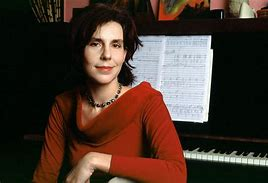
Hanna Kulenty (pictured) is Polish and it was good to feature a female composer. Born in

1961, she has an impressive range of compositions in a variety of genre to her name. Tonight we heard Music for Roy – intriguing and quite different in style to what had gone before.

Still on the subject of women, next was a performance of a movement from Shostakovich’s Cello Concerto No. 1 performed by the Argentinian cellist Sol Gabetta. We watched this on screen and her amazing talent was plain to see. She first started playing the violin at the age of 4 and switched to the larger instrument a year or two later.

Next some jazz by Steve Reich and something completely different. I Sixteenths is typical of his style and can be heard on this clip.

Anouard Brahem is not a name known to many but is a Tunisian player of the oud, a Middle Eastern instrument similar in many ways to the Lute from which the name derived. It differs in having no frets and a shorter neck than a lute. We heard Dances with Waves which started with a bass clarinet solo and then joined by a solo oud piece.

Tchaikovsky: well everyone’s heard of him. But they were unlikely to have heard this recording which was made a century ago and has now been digitised. We forget that stereo recordings were effectively unknown in the ’20s but the vigour and brightness of this exciting piece – oh, didn’t I say, it was an excerpt from his 4th Symphony.

Altogether an fascinating evening with jazz, film and TV scores, and other curiosities.

Peter Curbishley


Our next and last meeting is on Monday 12th May and is a presentation of the music of Edgar Bainton. We look forward to seeing you there. 7:30 as usual.

Nino Rota

April 2024

There are few who do not know the instantly recognisable theme to The Godfather, the composer of which is less well known. Nino Rota, real name Rinaldi, born in 1911, composed this and over a hundred other film scores as well as much other music during the course of a prolific career.

Last evening, Robin Lim gave an excellent presentation of this composer’s life. He was a prodigy and, aged 11, while the rest of us were reading Enid Blyton or looking at our stamp collections, he was composing an oratorio which was performed in Milan. Aged 14, following his father’s death and with the help of the Italian conductor, Arturo Toscanini, he went to the Curtis Institute in America to study composing and conducting.

Apart from The Godfather, another film score which received critical acclaim was for the Glass Mountain. The film itself was not a success but the music – of which we heard and saw an extract – was recognisable.

We heard a movement from the Clarinet Sonata composed in 1945 and also from a symphony. The sonata was very moving but the Symphony might need another hearing to appreciate it more. He composed four symphonies but they have been somewhat overshadowed by his film and operatic scores.

The overture to the opera I Cappello di Paglia di Firenze was lively and tuneful. For the film The Leopard by Visconti, he adapted the music from an unfinished symphony and we watched an excerpt featuring a waltz.

We could not of course escape hearing his famous composition but this was not the familiar version but one played on a harp.

He has sometimes been described as a musical chameleon – perhaps not always flatteringly – as his style is sometimes a little derivative of other composers.

In any event, it was a fascinating evening and we certainly learned more of this prolific composer.

And talking of unfinished symphonies. the next meeting on 29th April is ‘The curse of the ninth’ looking at those composers who never quite manage ten symphonies.

Peter Curbishley

Robin has kindly sent the full playlist:

1. Cello Concerto (1925) excerpt                                                                                          

2. Symphony No. 1 (1936 – 39) – 1st movement (Allegro con moto)                                                       

3. Clarinet Sonata (1945) – 1st movement (Allegretto scorrevole)                                         

4. “The Glass Mountain” (Henry Cass,1949) – Opera sequence                                                            

5. Sinfonia on a Love Song (1947, 1st Perf 1972) – 1st movement                                                         

6. “Obsession” (Edward Dmytryk, 1949) – Opening titles                                          

7. “The Stranger’s Hand” (Mario Soldati, 1954) – Opening titles and scene

INTERVAL

8. Overture to The Florentine Straw Hat, operetta (1st perf 1955)                                                                           

9.  “La Dolce Vita” (Federico Fellini, 1959) – Opening Titles                                                     

10. “La Dolce Vita” – Blues                                                       

11. Concerto Soiree for piano and orchestra (1958) – 1st Movement (Walzer-fantasia)                                               

12. “The Leopard” (Luchino Visconti, 1963) – Opening Titles                                                                   

13. Sinfonia on a Love Song – 3rd movement                                                    

14. “The Leopard” – Ball scene                                                                                               

15. “The Godfather” (Francis Ford Coppola, 1972)  – Love Theme – transcribed by Rota for solo harp

16. Le Moliere Imaginaire , Ballet (1976) excerpts         

Leopold Stokowski

Fascinating talk on this conductor

At its meeting on 27 March, Robin Lim gave a fascinating talk about this famous conductor. If you did not know anything about his life story, you would assume from his showmanship and conducting history, that he was a quintessential American. Indeed, as Robin explained, he went to some pains to conceal his age and his place of birth, at times claiming it to have been Poland or Pomerania. In fact he was born in the rather more mundane St Johns Wood in London in 1882.

For many older people in the audience and more widely, their introduction to classical music came from the 1940 Disney film Fantasia which was recently reworked and reissued. This combination of film and music was in its day, quiet a feat and getting the sound to emerge from the right (correct) part of the screen required a considerable degree of technical expertise. Stereo was in its infancy at the time and the film was the first successful attempt to bring multi-track sound to the cinema. We sometimes forget today, surrounded as we are by the wonders of technology, that it was not always thus: I can recall seeing Fantasia in Manchester as a child and being enthralled by the sound as well as the animations. Fantasia’s remixed multi track soundtrack is still extant, the original takes prior to the remixing have been lost unfortunately .

Stokowski had a colourful life which included having three wives one of whom was Gloria Vanderbilt as well as a number of affairs including one – it is alleged – with Greta Garbo.

He was keen to promote new music and one piece played was the second movement from Shostakovich’s Symphony No. 5 – a 1958 recording which sounded amazing considering its age. Shostakovich was lucky to be alive and was only able to leave Russia because his prestige in the West led Stalin to give him permission to leave.

Another interesting item was a recording of Stokowski rehearsing Tchaikovsky’s 5th Symphony. Tchaikovsky’s parent’s original name was Chaiko as they hailed from Ukraine: interesting in view of attempts to ban his music after the Russian invasion of that country. But I digress.

We heard his impressive arrangement for orchestra of the Toccata and Fugue in D minor played by the Czech Philharmonic. Indeed, all the recordings we heard demonstrated Stokowski’s ability to get the most from an orchestra, particularly the string sections, a point Robin made. On the subject of orchestras, we take for granted the current arrangement of orchestras with strings on the left cellos on the right etc. but this arrangement is down to Stokowski after much experimentation with different arrangements.

He also appeared in films including One Hundred Men and a Girl, (1937) – the mind boggles – as well as Fantasia.

Towards the end of his life, he returned to the UK and decided to live in Nether Wallop, Hampshire, buying Place Farm House in 1972. He had a fatal heart attack in 1977. Local residents recall his strange habit of taking a stroll around the village wearing a sinister full-length opera coat. Another curiosity was his habit of speaking in a curious pseudo East European accent: odd since he was born in London.

A truly interesting evening and Robin had gone to great efforts to research his subject, a point made by the chair in his vote of thanks.

Peter Curbishley

Robin provided an extract written by Michael Draper from the September 2009 issue of Wallop Parish News, reproduced with permission, and some parts of this review were taken from that.

Next meeting

Our last meeting before Christmas – tonight!

The next meeting, the last before Christmas, will be on Monday 6 December at 7.30 when Ruth Barlow will present Classical Music in Animations and invite us to join her in an end of term scamper through some cartoons with great classical music, including considering whether Fantasia was Mickey Mouse’s finest hour and listening to Tom and Jerry playing Liszt.

As before, we ask all attending to follow the Covid safety measures we have in place including signing in and sanitising procedures on arrival, well spaced seating, wearing a mask, minimising moving around and maintaining social distancing.  From recent government announcements, it would seem that provided we follow our current practice this will fit within the latest Covid guidelines, so we plan to go ahead with the meeting on Monday, but if anyone feels uncomfortable and decides not to attend we shall understand.

After Monday we have a break until 31st January 2022 when we shall be delighted to welcome John Challenger to explore the highs and lows, the delights and difficulties of commercial recording on one of the greatest cathedral organs in the country: Salisbury’s own Father Willis Organ

We hope you will be able to come and feel comfortable on Monday 6th December

Shostakovich

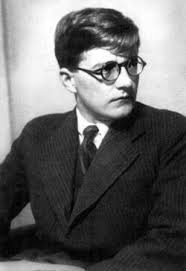
Shostakovich: his life and music

It was strange standing here in Salisbury giving a talk on Shostakovich – a man who was persecuted by the then Soviet regime – when a few hundred yards away from where the talk was given the terrible events took place allegedly perpetrated by the modern Russian state.

It is difficult to understand this man without the context of the times he lived through.  His life parallels the recent history of Russia.  He was born in 1906 a year after the failed 1905 revolution into a period of considerable unrest.  Prior to the final revolution there were several unsuccessful ones.   Much of his life was lived in constant fear.

Most people are aware of the symphony he wrote and the subtitle ‘a Soviet artist’s reply to just criticism’ which was actually written by a journalist and was never accepted by Shostakovich himself.  It seems also to imply that there was a single event and once he had written this subsequent symphony, everything was subsequently normal.  Nothing could be further from the truth.  He was a constant thorn in the side of the party apparatchiks.  He was too famous to liquidate as there would be an international outcry.  Nevertheless, the party could make life extremely difficult for him and made it difficult also for people to be friends with him.  Few composers have been so central to the history of his time.  He experienced war, revolution, anti-Semitism, dictatorship and terror.

His family came from Siberia and Poland.  His father worked in Weights and Measures and there is a link to Mendeleyev the discoverer of the periodic table.   He started learning the piano in 1915 and entered the St Petersburg Conservatoire in 1919.  Teaching at the Conservatoire was unimaginative and there were no compositional classes.  Glazunov was a key supporter at this time.  Life was a constant struggle and they were frequently in debt. His father died when he was young.

He lived through the Revolution which started in St Petersburg which subsequently became Leningrad. Central to the story is the status of Leningrad which became the second city after Moscow and a window on the west.  This was both a problem and an opportunity for artists.  Leningrad was looked upon as ‘elitist’.

His First Symphony a graduate piece which showed considerable flair and promise. Strongly influenced by the work of Hindemith and was a kind of anti-symphony.  The symphony was dedicated to a friend Misha Kvardri.  Two years later, he was arrested and shot.  This is a reminder of the terrible times Shostakovich lived in: friends, acquaintances, supporters, even family members, disappear in the night and ended up in the gulag or are executed.  This got worse after the rise of Stalin in 1924 when anti-bourgeois policies, class warfare and actions against the kulaks were launched with terrible consequences for millions of Russians.

To make money he played in cinemas which he did  from 1923 until 1926.  He also composed for the cinema. Extracts from films and the following extracts were played:
• Five film extracts. – The Counterplan
o Alone
o Sofia Perofskaya
o Hamlet

Altogether wrote for 15 films.  He wrote music in the jazz idiom although the idiom was hard to see except for the use of the saxophone.
• Extract from Jazz Suite #2 composed in 1936

He started playing the piano in performance in 1923.

In 1925 the Russian Association of Proletarian Musicians RAPM founded in Moscow.  The central message was that ‘music should have a social message and be accessible to the wider masses.’  They harassed intellectuals and wreaked havoc in higher institutions.  Shostakovich was sacked from a college post.  Many intellectuals and teachers were deprived of their livelihoods and denounced.

He composed the  opera Lady Macbeth of Mtsensk District (shortened in the west to Lady Macbeth of Mtsensk) from a libretto by Nikolai Leskov.  It was performed in January 1936 and the audience included Stalin, Molotov and Mikoyan.  They leave after 2nd act and this heralds a dramatic reversal of his fortunes. The opera is a success around the world however.   An article in the next day’s Pravda called it ‘muddle instead of music’.  His composition ‘insulted the audience with noise, cacophony, hammering, and screaming.’
Shostakovich said the article ‘changed my entire existence for ever.  It was unsigned and so represented the opinion of the party – or actually Stalin’s opinion and that was considerably more serious.’

Friends and colleagues distance themselves from him. The Leningrad Composers Union voted in favour of the Pravda article.  At the meeting where this is decided only one person spoke in favour of Shostakovich.  He was subsequently persecuted, his music was no longer performed and he was deprived of his livelihood.

In 1936 he composes his 4th Symphony which was withdrawn at the last minute.  He receives a visit from Otto Klemperer and Shostakovich plays the symphony to him on the piano and Klemperer was very impressed.  He suggests reducing the number of flutes but Shostakovich refuses. ‘What is written by the pen cannot be scratched out with an axe’ he said.  That might sound better in the original Russian.   Shostakovich almost never agrees to alter a score nor corrections nor alterations in the harmony or in the orchestration.  But his metronome markings are often completely wrong.  After one conductor said the speeds marked for a piece were impossible to play and Shostakovich agrees to change them and explains that he has an ‘old and unreliable metronome but he just did not want to throw it out.’

1936 sees the start of the great purges, millions disappear or are shot.  Shostakovich was advised by Tukhachevsky to ‘admit his errors’.  He is himself shot a year later.  Shostakovich’s position becomes very precarious and many friends, colleagues and relatives disappear.

Meeting the NKVD

On a Saturday in 1937 summoned to meet the NKVD.  After general conversation, and questions about his social life, he was asked about plot to assassinate Stalin.  Shostakovich said there were no discussions about assassinating comrade Stalin.  He was pressed on this and each time he denied that any such conversations took place.  He was asked to return on the following Monday by which time he was to have remembered discussion about the plot.  After a difficult weekend,  Shostakovich returns to the NKVD headquarters and gives his name to the guards on the door.  They refuse him entry saying they have no record of his name on their list.  After some discussion and finding out who his interrogator was, it turns out that the interrogator himself has been arrested and Shostakovich was free to go.

He composes 5th Symphony which a journalist describes as ‘a Soviet artists reply to just criticism.’  WWII and Leningrad surrounded by the Nazis.  It is the start of terrible privations.

His poor eyesight means he cannot serve in the armed forces but acts as a fire warden. Shostakovich was flown out of the city in October.

He writes Symphony #8 but this is not well received because it is not ‘optimistic’ enough. By the time it was ready for performance, the tide of war against Germany had changed and the official reception was ‘icy’.

In general, the communist party had two main problems with him.  Firstly his courage which made him difficult to control and secondly, his unpredictability. This was set against his international prestige which made him useful to the regime.  Shostakovich felt constantly under threat and always travelled with toothbrush and toothpaste in the expectation of arrest.

Post-war and the nature of the purges changed.  Intelligentsia was targeted and there were attacks on what was termed ‘formalism’.  Both Shostakovich and Prokofiev suffered during this period and he was forced to write music for propaganda films.

The Zhdanov Decree, Zhdanovschina (sometimes called ‘Zhdanov’s purge’) started in 1948-9.  Many suffered and lost their livelihoods. Public humiliations of artists was frequent.  All composers were summonsed to a conference where he encouraged mediocrities to turn against the more successful composers such as Shostakovich, Shebalin and Khachaturian. They had to sit and listen to slanders against them.  The only people who wanted to listen to his music were ‘foreign bandits and imperialists’ it was claimed.

The audience heard the famous story in Gulag Archipelago by Solzhenitsyn about clapping and no one able to stop clapping after a Stalin speech.  Also told was the phone call Shostakovich receives from Stalin as told by Julian Barnes. Composes 1st Violin Concerto possibly in 1951. Not performed until 1955. Criticised by the party for its ‘gloomy, introverted psychological outlook.’

• Extract from Violin Concerto
The evening ended with the second movement of the tenth Symphony.

Peter Curbishley

Early stereo recordings

The last presentation was by Robin Lim on the subject of early stereo recordings.  We are so used to stereo sound now – either through loud speakers or headphones – that we forget that there was a time when sound was in mono only.  We also think that it is a fairly modern invention: modern in the sense of 60’s when stereo records appeared.  It was an example of technology being ahead of its market in that, although the recordings existed, few people could afford the means to play them.

In fact Robin revealed, stereo existed at the end of the nineteenth century in France.  This was at the Paris Electrical Exhibition in 1881.  Separate telephone lines were used to convey the two tracks and a company was set up to exploit the technology which survived until after the Great War.

Leopold Stokowski – Picture BBC

But it was in the ’30s that stereo started to make its mark and this was linked to parallel developments in being able to store sound for playing later.  An example from this era was Leopold Stokowski playing an excerpt of Die Walkerie by Wagner from 1932.  The recording was surprisingly good but with a degree of background noise.  Nevertheless, the vigour of the recording and the balance between the two speakers was excellent.

An Englishman, Anthony Blumlein, perfected the single track system and with developments in America, the modern stereo record was born.  From 1934, a recording of Sir Thomas Beecham playing part of Mozart’s Jupiter symphony and the quality of the recording was outstanding.  Some modern filtering had probably been applied by even so, it was eminently listenable to.  Sir Thomas once said ‘The English do not like music but they absolutely love the noise it makes!’

Film music on the other hand was developing rapidly and soon had 8 tracks on which to record.  We heard Stokowski again with the Russian dance from the film Fantasia which was made before the war.

During the war, the Allies listened to German radio and were surprised to hear recorded

Walter Gieseking.  Picture: Pininterest

music of high quality being transmitted.  When the war ended there was a rush to find out how the Germans had done it and they had indeed made great technical advances.  Unfortunately, a lot of the recordings were in the Russian sector and most disappeared after the war.  One at least survived and this was Gieseking playing Beethoven’s the Emperor concerto with the Berlin Radio Orchestra, and the sound and playing was simply outstanding.  Indeed, one had to remind oneself that this was a recording from the war and not a modern cd.

Robin also touched on ‘accidental stereo’.  This is where in the early days two recordings were made as a kind of insurance in case one of the machines failed.  Modern technology has enabled these two be blended together to give a stereophonic effect.  Apparently discs were sent to Elgar after the recording was done and he kept them and they have survived.  This has enabled the two recordings to be blended and as an example, we heard an extract from the ‘cello concerto.  We also heard Elgar conducting a version of ‘Oh God our help in ages past’.  This was made in February 1928.  The sound was authentic but the stereo was not so evident.  Even so, a remarkable achievement.

It was a fascinating evening, in which Robin married the development of a technology with the sound it produced.


Before the meeting we had a brief agm.  All the officers were reelected en bloc.  The Society made a small surplus in the year.  The chair thanked all those who opened up, did the refreshments, prepared the programme and also the members who continue to support us.  Over 2,000 people have visited this Web site.  New members are always welcome.  Copies of the programme are in the Oxfam music room, the Tourism Information Centre in Salt Lane and the Collector’s Room in Endless Street.

Next meeting on 17 October.


Nino Rota

nino rota 2
Nino Rota

The last meeting of the Society was a presentation by Robin Lim of the music of Nino Rota.  He was born in 1911 in Milan and showed early musical talent with an oratorio composed when he was 12.  He followed this up with a cello concerto aged 14 and a musical career clearly beckoned.  After early training in Italy he came to the notice of Arturo Toscanini in America who arranged for him to further his training in Philadelphia.  Whether it was the influence of his dominant mother or for other reasons, he did not finish his training there but returned instead to Milan.

Robin played examples of his compositions which included: a Clarinet Sonata; the overture; Il Cappellodi Paglia di Firenze; Concerto Soiree and excerpts from Il Gattopardo.  All the music had strong rhythm and some good melodic interest but perhaps a problem was a lack of a clear ‘voice’ of the composer.  One kept hearing echoes of other composers such as Neilsen, Dvorak and even Bruckner.  Indeed he was criticised by critics for this but of course ‘borrowing’ themes from other composers is not unknown even by the greats.

It was to film music where he found a degree of fame and success.  An early composition was the score for the Glass Mountain and we saw and heard an excerpt from the film.  Others included Juliet of the Spirits; 8 1/2 and La Dolce Vita.  Altogether, he wrote some 150 film scores.  But the one which will bring him immortality and the music just about everyone can whistle or hum the main theme to, is the score to the Godfather series.  It was the highest grossing film of all time.  Amazingly, he did not get an Oscar for the score but after an outcry, he did get it for Godfather II but did not attend the ceremony to receive it.   

It was an interesting evening and showed again the difficulty of making the leap from prodigy to an established artist.  There are so many who show early precocity but developing that to become an original composer (or artist or author) can be the hardest thing.

Film music

Shostakovich
Shostakovich

After a short agm, the meeting was presented by Alan Forshaw with a programme of #filmmusic.  He discussed various film compositions of Shostakovich, Hans Zimmer and Korngold who composed primarily ‘serious’ music but who, for different reasons (political, financial, etc.) produced film scores throughout their careers.  This was the first time the society has listened to an evening devoted to this genre.

Film music is a little unregarded as a part of the music scene, indeed, a quick look in Groves for Shostakovich for example, reveals only a single passing reference to his compositions for the cinema and none in the list of works.  Yet for modern composers, writing for the cinema or composing advertising jingles provides them with valuable income before fame beckons (if it ever does).

Shostakovich wrote in the time of ‘Soviet Realism’ and falling foul of the censors could have dire consequences for any artist.  The films are long forgotten and include Alone (1930); The Great Citizen (1938); and Piragov (1947).  Alan also played extracts from wonderfully named film The Counterplan (1932) which included extracts called ‘The Workers Gather’ and ‘Song of the Counterplan’.  It would be hard to imagine queuing round the block for a film of that title today.  One could hear echoes of his later works in some of these pieces and it was interesting to hear them with the benefit of great symphonies such as the Leningrad in one’s mind.

By way of contrast, Alan played extracts from the award winning film composer Hans Zimmer.  He has written for over a 150 films including the Gladiator; The Thin Red Line; and Rain Man and has won many awards.  Extracts included The Last Samurai (2003) and The Da Vinci Code (2006).  Zimmer worked briefly with a pop group known as the Buggles, famous for their No 1 hit Video Killed the Radio Star.

Finally, Korngold who was born in Brno in 1897.  He was recognised early as a prodigy and had early successes with a ballet and two operas.  He then moved to Hollywood and composed much film music and we heard extracts from The Adventures of Robin Hood (1938) and The Sea Wolf (1941).   

It is interesting to note the difference between an opera and a film music composer.  Name an opera and most people interested in music will know the composer.  Name a film and few would know who wrote the music.  The other problem is the music may die with the film if it wasn’t a box office success.  But the music we heard tonight was worthy of a wider audience in its own right.