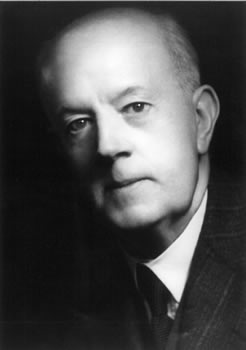
An exploration of the world of Alan Hovhaness

October 2025

This week’s meeting of the Society was an exploration of the work of

Hovhaness a composer probably unknown to many. The presenter was Peter Horwood who had done a lot of research to illuminate his works and music. Peter kindly gave us his notes and these are presented below.

Hovhaness was an extremely prolific composer and addition to symphonies composed 10 operas, 3 oratorios, a great mass of orchestral, chamber, vocal and instrumental pieces – 434 opus numbers plus a considerable number of unnumbered compositions. There is well over 500 known pieces. A man of considerable energy he was also married 6 times! The first extract was:

Symphony 22 Op 236 ‘City of Light’ 1st movement excerpt     

That excerpt from Symphony 22, ‘City of Light’ demonstrates some key features of Hovhaness’s mature style – a luminous (maybe even numinous (spiritual) tone/quality, long breathed melodies, block chords, modal harmony, and exotic sounds (bells, percussion effects in clusters etc).

Written in 1971, this symphony is one of no less than 67!

Certainly, the music appeared to flow unceasingly from him. Inevitably with such a large output there are variations in quality, but the best, as I hope you will hear is fully worthy of our attention and appreciation.   

John Cage, a friend and longtime advocate of the composer said his music was like ‘inward singing’, ‘his melodies are often long and arching, clear and consonant, generally modal and run the gamut from western diatonicism to rhythmically complex Indian Ragas – with many cultural variations woven in. Echoes of Renaissance choral polyphony and Baroque instrumental part writing course through much of his music.’

This alchemy/mix of Western and Eastern, Ancient and modern, produces a very individual and recognisable voice. Sometimes one particular influence may take precedent, let’s hear a couple of examples, firstly two bagatelles for string quartet:

Bagatelles for string quartet Op 30 1, 2

Now lets hear a short piano piece called

Piano piece mystic flute –

This piece was a favourite of the composer Rachmaninov who used it as an encore when he was on tour.

I think you will agree that there is a distinct middle or far eastern sound to these pieces.

Born in 1911 in Massachusetts to a Scottish mother and Armenian father the composer showed amazingly precocious talent, from the age of 4!

As a boy, he acquired a love of mountains through long walks and apparent metaphysical experiences in the hills of New England. Such landscapes were the frequent subjects of his paintings and drawings. Mountains always remained important to him, determining the locales in which he chose to live, such as Lucerne in Switzerland and Seattle on the Pacific Coast, and would prove to be a lifelong inspiration

Hovhaness explained ‘Mountains are symbols of man’s attempt to know God. They are symbolic meeting places between the mundane and spiritual worlds.’

This not an unusual conception. Mountains have figured prominently in many spiritual and religious situations.

Studied piano and then composition at The New England Conservatory, with amongst others Frederick Converse, a noted but relatively conservative composer.

In the 1930’s gained a basic living through teaching and performing. He also composed prolifically throughout this decade. In 1935, prompted by his great love of the music of Sibelius, Hovhaness and his then-pregnant first wife (artist Martha Mott) visited Finland to meet Sibelius. A friendship was struck up, and the Finnish master later became godfather to their child, a daughter, who in homage was named Jean Christina.

Surviving examples of work from this stime include the Mystic Flute piece just heard and this following piece, Song of The Sea:

Song of the Sea – part 1

This is relatively conventional, but Hovhaness was due to radically change his style.  He was strongly affected by meeting Uday Shankar (Ravi’s brother) and North Indian musician Vishnu Shirali when they performed in Boston in 1936, a time when Indian music was scarcely known in the West.

In 1942, Hovhaness won a scholarship at Tanglewood to study in Bohuslav Martinu’s Master Class. This period turned sour when he also came into contact with Bernstein, Copland and their impressionable circle in the composition class. Already something of an outcast amongst this clique (not being Jewish, homosexual, or Paris-trained), he left this situation immediately

At this artistic crisis point, Hovhaness found strength from friendships with two Boston artists, Hyman Bloom (who later on became rather famous) and Hermon di Giovanno. In 1943 di Giovanno, a Greek painter and mystic, supposedly guided Hovhaness into the ancient worlds of Greece, Egypt, Armenia and India. Hovhaness described di Giovanno as the “spiritual teacher who opened the gate to the spiritual dimension”. He was a pivotal influence in that he encouraged Hovhaness to seek out his paternal Armenian heritage and be true to himself in his pursuits.

In addition, during 1940’s Hovhaness sustained his living by being appointed organist at St James’s Armenian Church in Waterstone, Massachusetts.

This 1940’s were looked upon as his ‘Armenian period’ where he found authenticity and spiritual inspiration and Hovhaness destroyed most of his earlier music in order to make a ‘fresh start’.

 This change of direction is exemplified in the 1944 concerto for piano and strings, Lousadzak (means ‘Coming of Light’) where the soloist’s part is an exquisitely filigreed giant melody, monophonic throughout, which imitates Armenian and Turkish stringed instruments. In this seminal work Hovhaness introduced his aleatory technique, initially called ‘spirit murmur’. Here, performers individually repeats a designated melodic phrase over and over without synchronicity to the rest of that section’s players. The invention of this so-called ad libitum technique has mistakenly been attributed to Polish composer Witold Lutoslawski, because some 17 years later he first employed it in his 1961 orchestral work Jeux Venitiens.

This piece was premiered at the composers memorable New York debut and marked a step change in his standing.

Piano concerto ‘Lousadzak’ (1944) excerpt

Composer and newspaper critic Lou Harrison recalled it thus:

“’I remember the premiere of that work in Town Hall, and the enormous excitement that Alan’s sudden appearance in New York produced. The intermission that followed [Lousadzak] was the closest I’ve ever been to one of those renowned artistic riots. In the lobby, the Chromaticists and the Americanists were carrying on at high decibels. What had touched it off of course, was that here came a man from Boston whose obviously beautiful and fine music had nothing to do with either camp, and was in fact its own very wonderful thing to begin with. My guest John Cage and I were very excited, and I dashed off to the lamented Herald Tribune and wrote a rave review while John went back to the Green Room to meet Alan”.

Lou Harrison had moved to New York to be employed as music critic and his association with John Cage, Virgil Thomson and now Alan Hovhaness, formed a lifelong connection and mutual support. 

At first sight what seems an unlikely combination of individuals to befriend each other made sense in that there was a mutual attraction to seek alternative musical formats and cultures, rather than follow western ‘conventional modernism’.  

Composer writer and teacher Lou Harrison was a cultural polymath, who worked across a number of areas, not just music. His own music combines serial and aleatory procedures, used quarter tones, emulates ancient polyphony and gamelan rhythms, – using extraordinary devices for producing unusual sounds. As well as a leading reviewer and writer he had an intense interest in eastern music, especially Balinese gamelan music. This is reflected in this next piece:   

LOU HARRISON – Concerto in Slendro

Slendro refers to an Indonesian five tone mode with no semitones.

During the 1950’s and 60’s Hovhaness was awarded a series of Rockefeller and Fullbright scholarships to travel and study Indian, Korean and Japanese music. The composer wrote and conducted pieces in these countries and undertook study in Korean Ah-ak (ancient court music), Japanese Bunraku and Gagaku (traditional ceremonial music) and also music applied to Noh theatre)    

This period of study and related composition is known as his oriental period.

 Hovhaness composed for a wide range of instrumental and vocal forces so let’s now hear an example of a cantata, written in 1968 for soloists, choir and orchestra. We will hear the introductory section –   (lyrics)

Lady of Light – cantata – Op 227 – ‘Great is the Power of Love’

Hovhaness, along with his chosen colleagues, was always looking to expand his compositional tonal palette, or means of expression. It is difficult in any epoch to accredit change or innovation to any specific person or events; things happen through the chemistry of interaction and creative association. This next piano piece uses innovative performance techniques, realised at the time that John Cage was working in a similar vein.  

Pastorale No. 1 for piano

In 1966/67, Hovhaness had been Composer in Residence with the Seattle Symphony. In the early 1970s Hovhaness moved permanently to Seattle, Washington. His recent links with the Seattle Symphony Orchestra had unwittingly brought about a love affair with the landscape: “I like the mountains very much. I don’t have to go to Switzerland, I expect to stay here.”

Also, in the early 1970s, the music itself was in demand for live performance. The 1975 Hovhaness royalty statement from publisher C.F. Peters Corp. was 17 pages long. Nearly all of his 240 compositions had sold that year, from 1 copy of the Accordion Concerto to 5,620 copies of the 4-page choral piece From the Ends of the Earth. Let’s now hear that piece:

From the end of the Earth – choral

We have previously mentioned the composers use of ‘long breathed’ or giant melodies.  Commissioned in 1967 by the Detroit Symphony Orchestra the tone poem Fra Angelico portrays the work of the Italian artist who painted in an Eastern spirit, of celestial musicians descending heaven to earth, accompanied by celestial trumpets.  

Fra Angelico – excerpt

John Cage was born in Los Angeles in 1912. From an early age he showed and particular interest in dance and percussive music, as well as developing techniques to alter the tone and character of instruments ‘prepared piano’.     From the 1940’s lived in New York where he pursued his interests in composition and music by chance –originating the first ‘musical happening’, random performance by throwing coin etc and developing aleatory techniques. Also, like Hovhaness he had an intense interest in Eastern philosophy and Buddhism. He met Lou Harrison when he was organising concert events in the San Francisco Bay area. Having much in common in their search for new sounds and unusual musical formats, especially for potential percussion instruments they spent much time rummaging the junk yards and import stores for brake drums, dustbin lids, flower pots etc! 

This is a piece that they jointly composed for percussion quartet, each writing two parts.

LOU HARRISON/JOHN CAGE – Double music

Hovhaness, from his youthful enthusiasm of studying Bach, probably more fugues than any other western 20th century composer. We will hear and example of a double fugue taken from perhaps his most famous work, Symphony no.2, ‘Mysterious Mountain’ , played here by one of Hovhaness’s fervent advocates, Fritz Reiner conducting the Chicago Symphony Orchestra in 1958. 

Symphony 2 ‘Mysterious Mountain’ 2nd movement – double fugue

From the 1970s (and thereafter) the composer retreated from overtly oriental/Eastern sounding devices. If anything, Hovhaness veered towards a more Western neo-romantic approach, but still within the realms of rhapsodic melody and mystical expression. Noteworthy is the expansion of harmony from purely modal (as in the 1960s) to fully chromatic, including whole-tone and diminished chords

We will conclude this presentation with two works that represent the mature or final style statements of the respective composers.

We have noted that John Cage was a close friend and lifelong advocate of Alan Hovhaness. From their initial meeting each composer took a number of creative routes before finally establishing a mature style.  We will hear a work from John Cage that is part of his ‘number’ works completed in the last two years of his life. These works have been described as ‘products of a profound and brilliantly imaginative musical mind.’  42 was composed in 1990 for a High School choir in Oregon (the text is built on letters of that state) in the style of a harmony textbook, one can visualise the whole notes on four staves.  

JOHN CAGE – 42    Choral

In May 1981, Henry Hinrichsen, president of C.F. Peters, approached Hovhaness with a one-off commission for a symphony on the theme of Mount St. Helens, the famous volcano that had erupted in 1980. Both the Seattle Symphony and the San Jose Symphony wanted to give the work’s premiere, which was eventually decided by the composer on the flip of a coin.

Between 1980 and 1989 Hovhaness penned some 80 works, including almost 20 symphonies. 1986 alone witnessed the creation of six symphonies.

Symphony is somewhat misleading term as these are not classically structured,  goal orientated works, as a lot of contemporary symphonies, but rather a series of movements, almost baroque in nature, that together express a collective feeling or impression.

We will hear the finale that describes a volcanic eruption and concludes with a song of awe to creation.

Symphony No. 50 ‘Mount St Helens’ op 360  –  Finale

Copyright©Peter Horwood 2025


I hope you will agree this is a serious piece of work on this composer and the Society was grateful to Peter for bringing this largely unknown composer to our attention.

PC
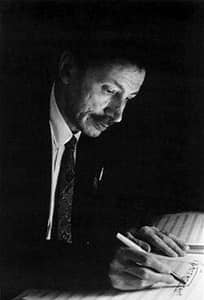
Next meeting

October 2025

Tomorrow, 6 October is the date of our next meeting and it an exploration of

the world of Alan Hovhaness an American. A prolific composer with around 67 symphonies to his name, there will clearly be lots to chose from.

We meet at 7:30 as usual and finish at 10:00. Programmes are available in the Library and in the Tourist Information Centre.

The music of Edgar Bainton

Final meeting focused on this somewhat forgotten English composer

May 2025

This was the last evening of the current season and we were delighted to welcome Michael Jones who enlightened us about the life and work of this somewhat forgotten English composer. Michael is an accomplished musician in his own right with a number of recordings to his name as well as his special interest in Bainton (pictured). He is developing a website which should be completed soon.

Well, you might not recognise the name but you will recognise one of his pieces And I Saw a New Heaven which was performed at Grenfell Tower memorial and at the Hillsborough memorial. First some history. His father was a Congregational minister who later moved with his family to Coventry. His musical abilities at the piano were noticed early and he made his first public appearance as solo pianist age 9, and at 16 he won an open scholarship to the Royal College of Music to study piano with Franklin Taylor and theory with Walford Davies. In 1899 he won a Scholarship to study composition with Sir Charles Villiers Stanford, and thus became one of the rising generation of British composers destined to contribute extensively to the English Musical Renaissance.

In 1901 he was appointed piano professor to the Newcastle-upon-Tyne Conservatory of Music, and after over thirty years of service emigrated to Australia to take up the Directorship of the Sydney Conservatorium of Music. I should add at this point that the above biography was accompanied with photos, images of his original scores and programmes which amply displayed Michael’s erudition and scholarship. Many items were not the sort of thing you could turn up with a quick Google* search.

He composed pieces in most of the main genres. We heard for example, a tone poem Pompilia; part of The Blessed Damozel; a lovely song Slow, Slow Fresh Fount; and part of a ‘cello sonata.

To demonstrate his diversity we also heard extracts from his second Symphony, an early and most accomplished Fugue, a Viola Sonata and a movement from a String Quartet. Michael finished with a second extract from Prometheus.

This surely has to be a composer who deserves more attention. It is strange how some composers – and most artists I suppose – seem to drift out of fashion and then suddenly their time comes again. We shall see.

We were most grateful for Michael’s presentation delivered with a great deal of enthusiasm and as I say, erudition. His photos illustrated life at the beginning of the last Century.

This was the last evening of the current season and it has been another successful year. We have been pleased to welcome some new faces. A feature has been several evenings exploring the works of composers whose work – like that of Bainton – have been overlooked or who have gone out of fashion. We’ve had music from Scotland, Wales and England as well as Poland and France.

Peter Howard, our chair, thanked all those who have come and supported us during the year and promised next year’s programme will be just as good. We start again in September. A printed programme will be in Salisbury and Amesbury libraries in September and in the Tourism Information Office as well as here on line.

If you want to widen your interest in music keep and eye out here and on Facebook. We look forward to seeing you.

Peter Curbishley

*other search engines available

Final meeting tonight

May 2025

The last meeting of the current season is tonight, 12 May at 7:30 as usual in the Guides Centre, St Ann Street, Salisbury. It will be on the music of Edgar Bainton and we are delighted to welcome Michael Jones to present.

We will resume our new season in the Autumn and the programme has been finalised. It will be posted here soon.

Tonight’s meeting

March 2025

Our next meeting will be tonight, Monday 24th March, when we shall welcome Peter Jarvis who will be reminiscing about his life in the orchestra pit as a clarinettist.

At the following meeting on 7th April Peter Curbishley will be discussing the somewhat overlooked French Composer Francis Poulenc.

I hope we can welcome you to one or both of these evenings.

PC

Christmas Quiz!

December 2024

The first half of the season ended in cracking style with a quiz ably put together by Ruth Barlow. Music you won’t be surprised to learn, formed the basis of the questions which taxed the team’s knowledge. We had to guess both composer and piece with some questions on what linked the different compositions. There was a round based on photos of musicians. A challenging round was guessing the end of compositions. It was very much enjoyed and were very grateful for the work and cunning that Ruth had put into compiling the questions.

It brings to an end the first half of our season which has been a great success with a varied and interesting programme. We start again in the New Year on 27 January with an interesting first session enabling us to polish up our knowledge of Polish composers.

PC

Scottish piano music

Christopher Guild plays piano music from Scottish composers

October 2024

The Society was delighted to welcome back Christopher Guild who played a selection of largely unfamiliar piano music by Scottish composers. Many will remember his previous visit where he discussed the problems of producing recordings during the Covid lockdown.

One wonders whether the course of Scottish music might have taken a different turn if a certain Alexander Grieg had decided to stay in Scotland. Instead, he went to Norway and married a Norwegian girl who gave birth to a certain Edvard Greig – note the change in spelling – who put Norwegian music on the map. Just think what might have been …

Christopher is an accomplished pianist and has played at the Wigmore Hall and at St John Smith Square. He has also appeared on Radio 3. He has made a number of recordings and some of these were played this evening. Indeed, the Society was the first to hear one recording, a ‘world first’ in St Ann St, Salisbury no less.

A key influence is a form of music called ‘Pibroch’ an exact definition of which is a little challenging unless your Gaelic grammar is up to scratch and you have downed a few glasses of Scotland’s finest. A not altogether accurate summary is an extended compositional form for pipes – which effectively means bagpipes – with a number of variations. It is in contrast to shorter forms such as dances and reels.

We started with Eric Chisholm’s Piano Concerto No 1. Scottish born, he was highly regarded by fellow musicians and a number of his compositions were published and recorded. He is sometimes compared to Bartók, whom he encouraged to come to Scotland, and it was indeed possible to hear his influence in the piece. He was keen to encourage contemporary music.

This was followed by pieces by Francis George Scott and David Charles Johnson. We heard the latter’s Prelude No 6 which included an impressive fugue based on a Scottish folk song.

William Wordsworth, distantly related to the poet, had a somewhat troubled compositional history and was not always in favour. He was born in Surrey and moved to Scotland. We heard his Valediction.

Ronald Center, from Aberdeen, did not have a big compositional output – one symphony and a quantity of chamber music and solo piano works. The last composer was another Ronald, Ronald Stevenson who was born in Blackburn but spent most of his life in Scotland. Christopher introduced us to his work nine years ago. Much influenced by Grainger, he composed many works and was a teacher working in South Africa and New York. There is a society: https://ronaldstevensonsociety.org.uk

It was a pleasure to have an evening presented by someone with knowledge and enthusiasm for his subject. Here was a varied collection of pieces by a range of composers some, sadly, seldom heard. The Chair of the Society said it was an ‘ear opening’ evening.


The next meeting is on 21 October and is a members’ evening. Please let Robin know what your favourite piece is.

The ‘curse of the ninth’

April 2024

This was the intriguing title of a fascinating talk by Alan Forshaw on why the ninth symphony seems to loom large in composer’s lives. Beethoven’s 9th is well known although he did attempt a tenth and he left some sketches. It was with him that the myth started and it does seem to have had some kind of effect on those who followed him. Alan played the second movement in a version with a brisk tempo by Toscanini.

Schubert was second, a composer who died tragically young but nevertheless, left a vast treasure trove of music including – nine – symphonies. It has often been suggested that he died of syphilis but medical research suggests this is not true and it is much more likely, in view of the suddenness and the symptoms, he died of typhoid fever which was common at the time. As is well known, his eighth was unfinished. We heard the first movement from the ‘Great’ Symphony – his ninth. Schubert never heard either of them before his death.

Thence to Bruckner who, as Alan reminded us, was a huge admirer of Wagner and said he only worshiped two Gods and the other one was Wagner. He can’t have heard his symphony though … Bruckner was a famous organist and it was he who played the organ at the opening of the Albert Hall. We listened to one of the movements of his ninth, of which he only completed three, and died before finishing it. There may be something in this ‘curse of the ninth’ after all.

Dvořák next who was helped in his composing career by Brahms and was very lucky to get a very generous appointment in New York which gave him plenty of time for composing. We heard a movement from the famous New World Symphony and – you’re getting the hang of this, his ninth. The symphony was hugely important in the development of American music and was discovered after his death. It was premiered in 1893 in New York. Dvořák’s house can be visited just on the outskirts of Prague by the way.

Now Mahler did believe in the curse and went to some lengths to try and avoid labelling it the ninth. No matter, the curse got him and he died the following year.

On to Glazunov who enjoyed much fame and admiration in his day, both in Russia and in the west. He found the more modern composers, and in particular Stravinsky, hard to swallow and thought Petrushka little more than orchestrated dissonance. He never got far with his ninth and we heard an extract of the piano version – perhaps the world was spared. He did however have a pupil at the Leningrad Conservatory called Shostakovich who did go on to write 15 symphonies.

Next was Vaughan Williams who also managed to complete nine and we listened to a movement from it, his ‘last tune’ as he termed it. He died a few months after its premiere in 1958. The symphony is a little unusual in having scored saxophones – perhaps reflecting Ravel’s influence with whom he studied for a year.

And so to Kurt Atterberg, not a name which is that familiar even to keen classical music fans. Swedish, he studied both music and electrical engineering and indeed, it was this latter skill that kept him employed at the Swedish Patent Institute until his retirement. Preferring harmonics to harmony perhaps. He is another composer who had a degree of fame in his lifetime but is little known or played today.

Finally to Northampton born Malcolm Arnold who was a prolific composer well known for his film scores including for example, the St Trinian movies and the Bridge over the River Kwai among many others. An accomplished trumpet player having heard Louis Armstrong play he composed many pieces and including nine symphonies. He was not a pleasant character by all accounts and had a drink problem. He had mental health issues as well. At one point he was given two years to live but manage to live on for another 20. We heard a short extract from his ninth. His musical legacy seems assured.

So is there anything in the ‘curse of the ninth’? Probably not. The idea was created by Mahler who tried to beat it by calling what was his ninth as a song cycle. Looking at the list of composers of symphonies from the nineteenth century onwards it is striking that there is a vast number who wrote a handful, just one, two or three. It is also striking that there are few who wrote between three and 9. Most therefore will compose a small number of symphonies, which consume a significant chunk of time but achieve little success and even less financial reward, and decide to stick to shorter forms.

So how to explain the cluster around nine with few either side having composed eight or eleven symphonies for example? Perhaps the reason is mundane: a modern symphony seems to have taken most composers around two years to complete and not always in a continuous burst. Allowing time between each of say, a year, means each work represents around 3 years out of a composer’s life. Allowing for a productive life of around 40 years which may also include conducting and teaching, means a serious composer of symphonies will end up at the nine or ten mark. So those who do achieve some success at the start of their careers, then go on to reach it: those who don’t stop after one, two or three.

Whatever, it was a really interesting evening and as ever a mixture of the familiar with a handful of rarely heard pieces. The chair of SRMS thanked Alan for putting together an interesting and intriguing topic.

Our last meeting of the current season is on Monday 13 May at 7:30 as usual and is on the subject of Puccini to celebrate the anniversary of his death this year.

Finally, to say we are getting on well with the 2024/25 programme which is all planned and the programme will be available sometime in the summer. For clarity, I should say August since when and if summer comes is not at all certain.

Peter Curbishley

Nino Rota

April 2024

There are few who do not know the instantly recognisable theme to The Godfather, the composer of which is less well known. Nino Rota, real name Rinaldi, born in 1911, composed this and over a hundred other film scores as well as much other music during the course of a prolific career.

Last evening, Robin Lim gave an excellent presentation of this composer’s life. He was a prodigy and, aged 11, while the rest of us were reading Enid Blyton or looking at our stamp collections, he was composing an oratorio which was performed in Milan. Aged 14, following his father’s death and with the help of the Italian conductor, Arturo Toscanini, he went to the Curtis Institute in America to study composing and conducting.

Apart from The Godfather, another film score which received critical acclaim was for the Glass Mountain. The film itself was not a success but the music – of which we heard and saw an extract – was recognisable.

We heard a movement from the Clarinet Sonata composed in 1945 and also from a symphony. The sonata was very moving but the Symphony might need another hearing to appreciate it more. He composed four symphonies but they have been somewhat overshadowed by his film and operatic scores.

The overture to the opera I Cappello di Paglia di Firenze was lively and tuneful. For the film The Leopard by Visconti, he adapted the music from an unfinished symphony and we watched an excerpt featuring a waltz.

We could not of course escape hearing his famous composition but this was not the familiar version but one played on a harp.

He has sometimes been described as a musical chameleon – perhaps not always flatteringly – as his style is sometimes a little derivative of other composers.

In any event, it was a fascinating evening and we certainly learned more of this prolific composer.

And talking of unfinished symphonies. the next meeting on 29th April is ‘The curse of the ninth’ looking at those composers who never quite manage ten symphonies.

Peter Curbishley

Robin has kindly sent the full playlist:

1. Cello Concerto (1925) excerpt                                                                                          

2. Symphony No. 1 (1936 – 39) – 1st movement (Allegro con moto)                                                       

3. Clarinet Sonata (1945) – 1st movement (Allegretto scorrevole)                                         

4. “The Glass Mountain” (Henry Cass,1949) – Opera sequence                                                            

5. Sinfonia on a Love Song (1947, 1st Perf 1972) – 1st movement                                                         

6. “Obsession” (Edward Dmytryk, 1949) – Opening titles                                          

7. “The Stranger’s Hand” (Mario Soldati, 1954) – Opening titles and scene

INTERVAL

8. Overture to The Florentine Straw Hat, operetta (1st perf 1955)                                                                           

9.  “La Dolce Vita” (Federico Fellini, 1959) – Opening Titles                                                     

10. “La Dolce Vita” – Blues                                                       

11. Concerto Soiree for piano and orchestra (1958) – 1st Movement (Walzer-fantasia)                                               

12. “The Leopard” (Luchino Visconti, 1963) – Opening Titles                                                                   

13. Sinfonia on a Love Song – 3rd movement                                                    

14. “The Leopard” – Ball scene                                                                                               

15. “The Godfather” (Francis Ford Coppola, 1972)  – Love Theme – transcribed by Rota for solo harp

16. Le Moliere Imaginaire , Ballet (1976) excerpts