
April 2024
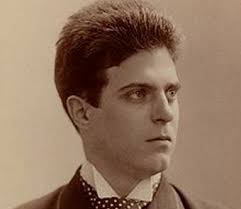
There are few who do not know the instantly recognisable theme to The Godfather, the composer of which is less well known. Nino Rota, real name Rinaldi, born in 1911, composed this and over a hundred other film scores as well as much other music during the course of a prolific career.
Last evening, Robin Lim gave an excellent presentation of this composer’s life. He was a prodigy and, aged 11, while the rest of us were reading Enid Blyton or looking at our stamp collections, he was composing an oratorio which was performed in Milan. Aged 14, following his father’s death and with the help of the Italian conductor, Arturo Toscanini, he went to the Curtis Institute in America to study composing and conducting.
Apart from The Godfather, another film score which received critical acclaim was for the Glass Mountain. The film itself was not a success but the music – of which we heard and saw an extract – was recognisable.
We heard a movement from the Clarinet Sonata composed in 1945 and also from a symphony. The sonata was very moving but the Symphony might need another hearing to appreciate it more. He composed four symphonies but they have been somewhat overshadowed by his film and operatic scores.
The overture to the opera I Cappello di Paglia di Firenze was lively and tuneful. For the film The Leopard by Visconti, he adapted the music from an unfinished symphony and we watched an excerpt featuring a waltz.
We could not of course escape hearing his famous composition but this was not the familiar version but one played on a harp.
He has sometimes been described as a musical chameleon – perhaps not always flatteringly – as his style is sometimes a little derivative of other composers.
In any event, it was a fascinating evening and we certainly learned more of this prolific composer.
And talking of unfinished symphonies. the next meeting on 29th April is ‘The curse of the ninth’ looking at those composers who never quite manage ten symphonies.
Peter Curbishley
Robin has kindly sent the full playlist:
1. Cello Concerto (1925) excerpt
2. Symphony No. 1 (1936 – 39) – 1st movement (Allegro con moto)
3. Clarinet Sonata (1945) – 1st movement (Allegretto scorrevole)
4. “The Glass Mountain” (Henry Cass,1949) – Opera sequence
5. Sinfonia on a Love Song (1947, 1st Perf 1972) – 1st movement
6. “Obsession” (Edward Dmytryk, 1949) – Opening titles
7. “The Stranger’s Hand” (Mario Soldati, 1954) – Opening titles and scene
INTERVAL
8. Overture to The Florentine Straw Hat, operetta (1st perf 1955)
9. “La Dolce Vita” (Federico Fellini, 1959) – Opening Titles
10. “La Dolce Vita” – Blues
11. Concerto Soiree for piano and orchestra (1958) – 1st Movement (Walzer-fantasia)
12. “The Leopard” (Luchino Visconti, 1963) – Opening Titles
13. Sinfonia on a Love Song – 3rd movement
14. “The Leopard” – Ball scene
15. “The Godfather” (Francis Ford Coppola, 1972) – Love Theme – transcribed by Rota for solo harp
16. Le Moliere Imaginaire , Ballet (1976) excerpts
 Salisbury Recorded Music Society