Salisbury Musick

New music event coming to the City this Autumn

May 2025

A music festival is coming to Salisbury between 3rd and 5th October. It claims that in the eighteenth century, annual three-day festivals were common in Salisbury to great acclaim. They hope to bring together local musicians and visiting professionals to provide a range of concerts. Details can be found on their website.

The music of Edgar Bainton

Final meeting focused on this somewhat forgotten English composer

May 2025

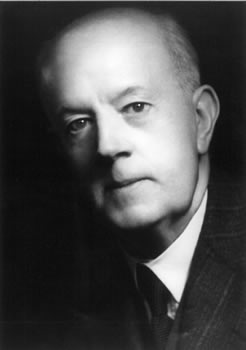
This was the last evening of the current season and we were delighted to welcome Michael Jones who enlightened us about the life and work of this somewhat forgotten English composer. Michael is an accomplished musician in his own right with a number of recordings to his name as well as his special interest in Bainton (pictured). He is developing a website which should be completed soon.

Well, you might not recognise the name but you will recognise one of his pieces And I Saw a New Heaven which was performed at Grenfell Tower memorial and at the Hillsborough memorial. First some history. His father was a Congregational minister who later moved with his family to Coventry. His musical abilities at the piano were noticed early and he made his first public appearance as solo pianist age 9, and at 16 he won an open scholarship to the Royal College of Music to study piano with Franklin Taylor and theory with Walford Davies. In 1899 he won a Scholarship to study composition with Sir Charles Villiers Stanford, and thus became one of the rising generation of British composers destined to contribute extensively to the English Musical Renaissance.

In 1901 he was appointed piano professor to the Newcastle-upon-Tyne Conservatory of Music, and after over thirty years of service emigrated to Australia to take up the Directorship of the Sydney Conservatorium of Music. I should add at this point that the above biography was accompanied with photos, images of his original scores and programmes which amply displayed Michael’s erudition and scholarship. Many items were not the sort of thing you could turn up with a quick Google* search.

He composed pieces in most of the main genres. We heard for example, a tone poem Pompilia; part of The Blessed Damozel; a lovely song Slow, Slow Fresh Fount; and part of a ‘cello sonata.

To demonstrate his diversity we also heard extracts from his second Symphony, an early and most accomplished Fugue, a Viola Sonata and a movement from a String Quartet. Michael finished with a second extract from Prometheus.

This surely has to be a composer who deserves more attention. It is strange how some composers – and most artists I suppose – seem to drift out of fashion and then suddenly their time comes again. We shall see.

We were most grateful for Michael’s presentation delivered with a great deal of enthusiasm and as I say, erudition. His photos illustrated life at the beginning of the last Century.

This was the last evening of the current season and it has been another successful year. We have been pleased to welcome some new faces. A feature has been several evenings exploring the works of composers whose work – like that of Bainton – have been overlooked or who have gone out of fashion. We’ve had music from Scotland, Wales and England as well as Poland and France.

Peter Howard, our chair, thanked all those who have come and supported us during the year and promised next year’s programme will be just as good. We start again in September. A printed programme will be in Salisbury and Amesbury libraries in September and in the Tourism Information Office as well as here on line.

If you want to widen your interest in music keep and eye out here and on Facebook. We look forward to seeing you.

Peter Curbishley

*other search engines available

Final meeting tonight

May 2025

The last meeting of the current season is tonight, 12 May at 7:30 as usual in the Guides Centre, St Ann Street, Salisbury. It will be on the music of Edgar Bainton and we are delighted to welcome Michael Jones to present.

We will resume our new season in the Autumn and the programme has been finalised. It will be posted here soon.

Members’ evening

April 2025

Due to illness, our speaker for the evening was unavailable. Undaunted, we held a members’ evening which was – shall we say – diverse with a wide range of contributions.

First was a well-known piece by Hamish MacCunn called Land of the Mountain and the Flood. It was used as the theme music to the TV series Sutherland’s Law. It is one of those melodies which are recognisable but you can never place who might have composed it.

Next was the first movement of Pierre Rode’s Violin Concerto No 7 thought by many to be the best example of his work. Rode was one of those composers who was all the rave when he was young at the turn of the 18th Century and hugely popular. He was admired by Beethoven and Spohr. He left France, spending several years in Russia and upon his return, his star had faded. There was some suggestion that he had picked up an infection which affected his playing. Anyway he left Paris and returned to his home town of Bordeaux. Sadly, he died quite young.

Next we watched – and listened – on screen to the music of Leroy Shield. Who? I

hear you say: he was the composer of the sound track of the Laurel and Hardy movies. So you are likely to be able to call to mind the jaunty theme to their films without knowing who wrote them. He was significant because it was the time of the ‘talkies’ which were hugely disruptive for the industry. Many actors and actresses never survived once people heard their voices. Some studios struggled with the technology especially matching the sound track to the images. Hal Roach and others overcame the problems and helped the comic team to their huge success

Also another familiar piece from those times was the theme to Charlie Chaplin’s film Modern Times which he composed. Chaplin was slow to adapt to sound – his humour was essentially visual – but did so to further enhance his reputation.

Vivaldi was played and no, not the Four Seasons beloved of Classic FM, but Nisi Dominus composed at the beginning of the 18th Century and a setting of Psalm 127. It is a highly regarded piece and shows why he was much admired by JS Bach.

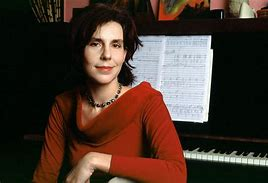
Hanna Kulenty (pictured) is Polish and it was good to feature a female composer. Born in

1961, she has an impressive range of compositions in a variety of genre to her name. Tonight we heard Music for Roy – intriguing and quite different in style to what had gone before.

Still on the subject of women, next was a performance of a movement from Shostakovich’s Cello Concerto No. 1 performed by the Argentinian cellist Sol Gabetta. We watched this on screen and her amazing talent was plain to see. She first started playing the violin at the age of 4 and switched to the larger instrument a year or two later.

Next some jazz by Steve Reich and something completely different. I Sixteenths is typical of his style and can be heard on this clip.

Anouard Brahem is not a name known to many but is a Tunisian player of the oud, a Middle Eastern instrument similar in many ways to the Lute from which the name derived. It differs in having no frets and a shorter neck than a lute. We heard Dances with Waves which started with a bass clarinet solo and then joined by a solo oud piece.

Tchaikovsky: well everyone’s heard of him. But they were unlikely to have heard this recording which was made a century ago and has now been digitised. We forget that stereo recordings were effectively unknown in the ’20s but the vigour and brightness of this exciting piece – oh, didn’t I say, it was an excerpt from his 4th Symphony.

Altogether an fascinating evening with jazz, film and TV scores, and other curiosities.

Peter Curbishley


Our next and last meeting is on Monday 12th May and is a presentation of the music of Edgar Bainton. We look forward to seeing you there. 7:30 as usual.