
Fascinating talk on this conductor
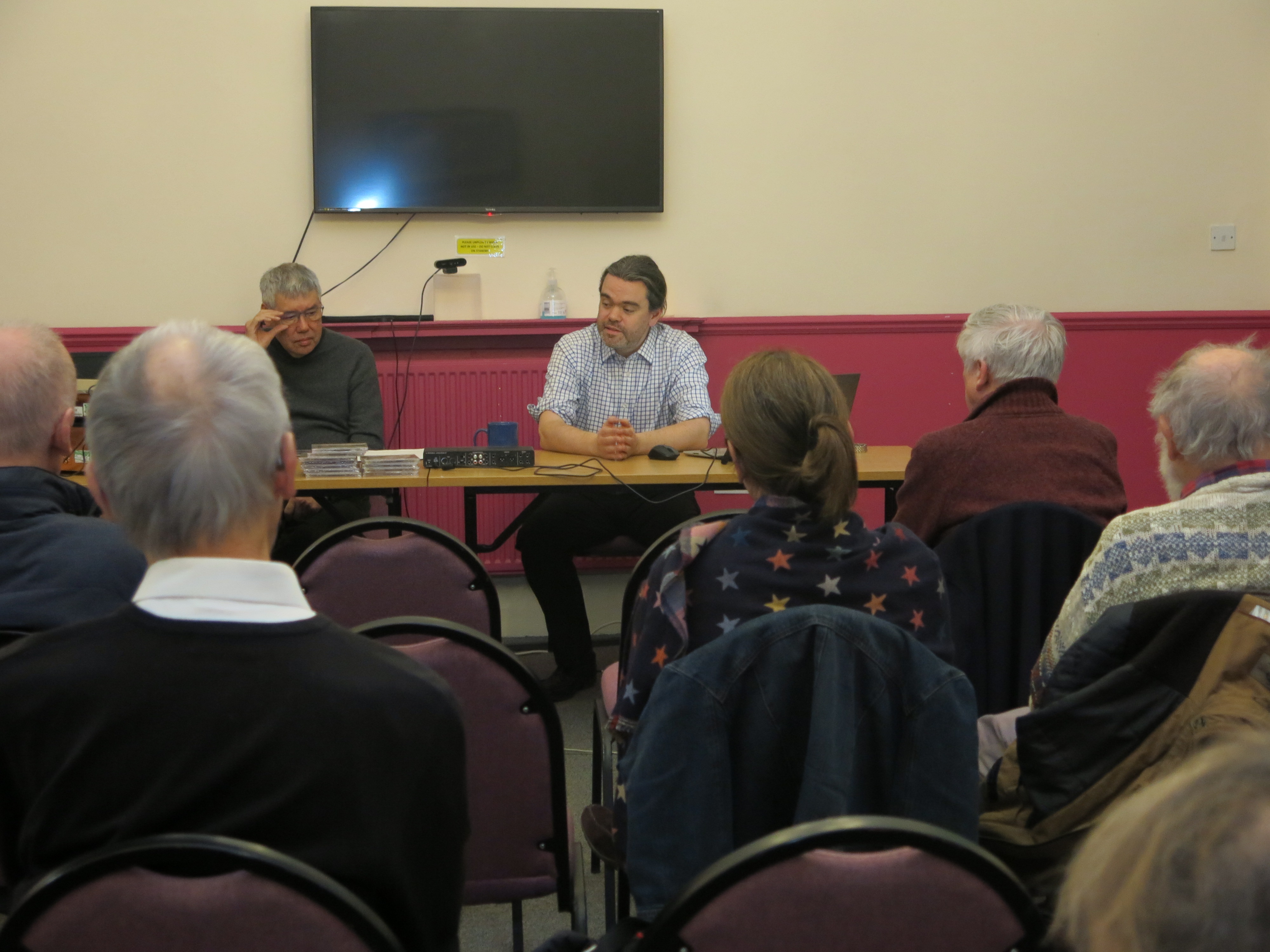
At its meeting on 27 March, Robin Lim gave a fascinating talk about this famous conductor. If you did not know anything about his life story, you would assume from his showmanship and conducting history, that he was a quintessential American. Indeed, as Robin explained, he went to some pains to conceal his age and his place of birth, at times claiming it to have been Poland or Pomerania. In fact he was born in the rather more mundane St Johns Wood in London in 1882.
For many older people in the audience and more widely, their introduction to classical music came from the 1940 Disney film Fantasia which was recently reworked and reissued. This combination of film and music was in its day, quiet a feat and getting the sound to emerge from the right (correct) part of the screen required a considerable degree of technical expertise. Stereo was in its infancy at the time and the film was the first successful attempt to bring multi-track sound to the cinema. We sometimes forget today, surrounded as we are by the wonders of technology, that it was not always thus: I can recall seeing Fantasia in Manchester as a child and being enthralled by the sound as well as the animations. Fantasia’s remixed multi track soundtrack is still extant, the original takes prior to the remixing have been lost unfortunately .
Stokowski had a colourful life which included having three wives one of whom was Gloria Vanderbilt as well as a number of affairs including one – it is alleged – with Greta Garbo.
He was keen to promote new music and one piece played was the second movement from Shostakovich’s Symphony No. 5 – a 1958 recording which sounded amazing considering its age. Shostakovich was lucky to be alive and was only able to leave Russia because his prestige in the West led Stalin to give him permission to leave.
Another interesting item was a recording of Stokowski rehearsing Tchaikovsky’s 5th Symphony. Tchaikovsky’s parent’s original name was Chaiko as they hailed from Ukraine: interesting in view of attempts to ban his music after the Russian invasion of that country. But I digress.
We heard his impressive arrangement for orchestra of the Toccata and Fugue in D minor played by the Czech Philharmonic. Indeed, all the recordings we heard demonstrated Stokowski’s ability to get the most from an orchestra, particularly the string sections, a point Robin made. On the subject of orchestras, we take for granted the current arrangement of orchestras with strings on the left cellos on the right etc. but this arrangement is down to Stokowski after much experimentation with different arrangements.
He also appeared in films including One Hundred Men and a Girl, (1937) – the mind boggles – as well as Fantasia.
Towards the end of his life, he returned to the UK and decided to live in Nether Wallop, Hampshire, buying Place Farm House in 1972. He had a fatal heart attack in 1977. Local residents recall his strange habit of taking a stroll around the village wearing a sinister full-length opera coat. Another curiosity was his habit of speaking in a curious pseudo East European accent: odd since he was born in London.
A truly interesting evening and Robin had gone to great efforts to research his subject, a point made by the chair in his vote of thanks.
Peter Curbishley
Robin provided an extract written by Michael Draper from the September 2009 issue of Wallop Parish News, reproduced with permission, and some parts of this review were taken from that.
 Salisbury Recorded Music Society